

The signs of adult ADHD in women can include difficulty focusing, staying organized, managing time, or regulating emotions, and they may be less obvious than hyperactive behavior. ADHD begins during childhood and almost always starts before age 12, according to the National Institute of Mental Health. It can involve inattentive, hyperactive/impulsive, or mixed symptoms.
If you’ve spent years feeling overwhelmed by everyday tasks or wondering why concentration and follow-through take so much effort, those experiences deserve attention, not judgment. Signs of adult ADHD in women can differ from person to person, and hormonal changes may affect how symptoms feel at different life stages. This article explains common presentations, how emotional regulation and hormones may relate to ADHD, and what clinicians consider during an assessment. You’ll also learn about treatment options and how personalized care can support daily functioning.
Key Takeaways
- ADHD symptoms can be less visible in women, often appearing as difficulty with focus, organization, time management, or completing everyday tasks.
- Notice whether symptoms shift around menstruation or other hormonal changes; tracking patterns can help you describe them during an assessment.
- Emotional overwhelm, frustration, or anxiety may accompany ADHD symptoms, so consider how they affect daily life alongside attention and organization.
- An ADHD assessment looks at persistent symptoms, their impact across areas of life, and whether other mental health concerns may also be involved.
- Learn how medication and psychotherapy may support symptom management, and what ADHD diagnosis and treatment can involve.
What is ADHD in women?
ADHD can affect attention, activity, and impulse control, but its signs may be less visible in women. ADHD develops during childhood and almost always begins before age 12, according to the National Institute of Mental Health.
ADHD subtypes and symptom thresholds
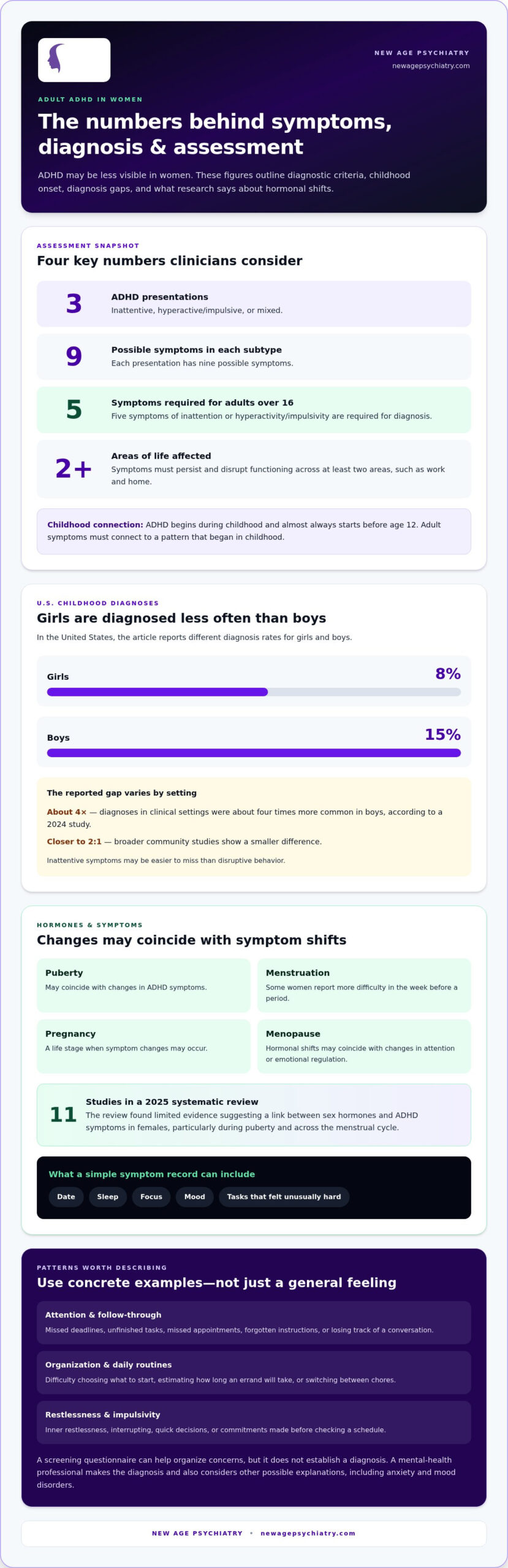
The National Institute of Mental Health identifies three ADHD subtypes: inattentive, hyperactive/impulsive, and mixed. Each subtype has nine possible symptoms, and adults over 16 must show five symptoms of inattention or hyperactivity and impulsivity for diagnosis. Symptoms must persist and disrupt functioning across at least two areas, such as work and home. These criteria help distinguish a persistent condition from occasional distraction or restlessness.
Adult diagnosis and screening tools
An adult ADHD diagnosis considers symptom history, current difficulties, and their impact on daily life. Screening questionnaires can help organize concerns, but they don’t establish a diagnosis; a mental-health professional makes the diagnosis. Bring specific examples, such as missed deadlines, unfinished tasks, or difficulty following conversations, to show how symptoms affect work, relationships, and responsibilities at home.
An assessment also considers other possible explanations. Anxiety and mood disorders can cause symptoms that resemble ADHD, and adults with ADHD may also experience depression or anxiety. Untreated ADHD can contribute to work problems, financial difficulties, strained relationships, and poor self-image. Persistent disruption in more than one area is a reason to seek an assessment, rather than dismissing the pattern as a personal failing.
Childhood symptoms and adult diagnosis
Adult symptoms must connect to a pattern that began in childhood, even if the difficulties became disruptive later. Memories of school can offer useful clues: perhaps you often forgot assignments, misplaced belongings, or struggled to follow instructions. Some women reach adulthood without recognizing these patterns as symptoms, especially if they compensated with extra effort or relied on others for structure. Looking back can explain why adult demands expose difficulties that once seemed manageable.
Diagnosis rates in girls and boys
ADHD is diagnosed more often in boys during childhood, while inattentive symptoms may be easier to miss in girls. In the United States, 8% of girls and 15% of boys are diagnosed with ADHD. A 2024 study found diagnoses in clinical settings were about four times more common in boys; broader community studies show a difference closer to 2:1. These gaps matter because quiet inattention may draw less attention at school than disruptive behavior.
Hormonal changes and ADHD symptoms
Hormonal shifts can coincide with changes in attention, restlessness, and emotional regulation. Tracking symptoms alongside menstrual or life-stage changes may help reveal patterns.
Hormonal changes and symptom shifts
Puberty, menstruation, pregnancy, and menopause can coincide with changes in ADHD symptoms. For some women, emotional dysregulation and impulsivity become more difficult in the week before a period, when hormone levels drop. These shifts can make daily demands feel harder to manage, even when responsibilities stay the same.
A 2025 systematic review of 11 studies found limited evidence suggesting a link between sex hormones and ADHD symptoms in females, particularly during puberty and across the menstrual cycle. The evidence is still limited, but noticing patterns can make experiences easier to describe. A simple record can note the date, sleep, focus, mood, and tasks that felt unusually hard. For example, repeated difficulty starting work before menstruation may be useful context in a clinical discussion.
Inattentive symptoms and forgetfulness
Inattentive symptoms can affect how a person directs and sustains attention, remembers details, and follows through. Forgetfulness might mean leaving a phone in another room, missing an appointment, or losing track of a conversation before it ends. These are more than isolated lapses when they form a persistent pattern that disrupts daily routines.
Executive dysfunction can add another layer. Planning a meal, choosing which task to start, estimating how long an errand will take, and switching between chores all require coordination. You might remember that laundry needs doing but forget to move it after starting the wash. Writing tasks in one place and setting reminders can help identify situations that repeatedly cause difficulty. Record concrete examples, such as missed instructions or unfinished errands, rather than relying only on a general feeling of disorganization.
Hyperactivity and impulsivity
Hyperactive symptoms in women can appear as inner restlessness, excessive talking, or difficulty relaxing, rather than obvious physical activity. Impulsivity might involve interrupting, making quick decisions, or spending money without pausing to consider the consequences. These behaviors matter when they repeatedly interfere with relationships, finances, or responsibilities.
For example, you may find silence uncomfortable and fill pauses in conversation, or agree to commitments before checking your schedule. Frustration might also rise quickly when a task is delayed, making it harder to return to it calmly. ADHD can involve inattention, hyperactivity and impulsivity, or both. Comparing symptoms across settings, such as work conversations and home routines, helps show whether restlessness or impulsive choices are persistent. Note how often they occur and what follows, rather than judging yourself for them.
Emotional dysregulation
Emotional dysregulation means difficulty managing the intensity or duration of feelings. It can shape how ADHD symptoms present in women and girls, affecting conversations, work, and close relationships.
Difficulty regulating emotions is estimated to affect up to 70% of people with ADHD. A small setback, such as a changed meeting time, may trigger frustration that feels hard to settle. Someone may react quickly, then feel regret or embarrassment after the moment passes. These experiences can add strain to ordinary demands, especially when focus or task completion already takes effort.
A 2020 expert consensus statement noted that emotional lability and dysregulation may be more severe or common in girls and women with ADHD. Emotional reactivity can look like tears during criticism, sharp frustration when interrupted, or feeling overwhelmed by several requests at once. Intense responses don’t by themselves establish ADHD. Their pattern matters, including how often they happen and whether they interfere with daily life.
Anxiety and depression can occur alongside ADHD, and symptoms may overlap. Difficulty concentrating, for example, can occur with ADHD or anxiety, while low motivation may accompany depression or challenges managing daily tasks. Many adults with ADHD also have at least one other mental-health condition, such as anxiety or depression. Considering attention-related difficulties alongside emotional symptoms gives a clearer picture than treating each concern as unrelated.
Women with ADHD may be misdiagnosed with anxiety disorders, mood disorders, or personality disorders. That possibility makes a detailed history important: note when emotional changes began, what situations trigger them, and whether attention, organization, or impulsivity difficulties also occur. A student who felt intense self-doubt after missing assignments, for example, may need an assessment that considers both emotional distress and longstanding attention difficulties.
After a difficult moment, try recording a brief example: what happened, what you felt, how you responded, and what helped you recover. Compare situations such as criticism at work, conflict at home, and unexpected changes in plans. These notes can help explain whether emotional reactions follow particular triggers or accompany broader ADHD symptoms. If anxiety or depression also affects daily functioning, raise both concerns during a mental-health assessment.
How is ADHD treated, and is there a cure?
ADHD can present differently by gender, affecting how it is recognized and treated. Adult care commonly includes medication, usually stimulant medication, and psychotherapy, such as behavioral or cognitive behavioral therapy. These approaches aim to manage symptoms and support daily functioning. Why is ADHD often missed or diagnosed late in women? Inattentive symptoms can be less obvious and disruptive than hyperactive behavior, so difficulties may go unnoticed at school or earlier assessments may focus elsewhere.
Girls and women generally show more inattentive symptoms than hyperactive or impulsive behavior compared with boys and men. A girl who quietly loses track of instructions or forgets assignments may draw less attention than a classmate who interrupts lessons. Signs of adult ADHD in women can remain hidden behind coping strategies, considerable effort, or anxiety about mistakes. When work, household, or relationship demands grow, previously manageable difficulties may become harder to compensate for.
Diagnosis rates reflect part of this recognition gap. In the United States, 8% of girls and 15% of boys are diagnosed with ADHD. A 2024 study found that clinical diagnoses are about four times more common in boys than girls, while broader community studies show a difference closer to 2:1. In childhood, estimates of the male-to-female ratio also vary, with most around 2 to 1. These figures describe diagnosis patterns, not proof that girls experience the condition less often.
Recognition can change across a person’s life. ADHD is diagnosed more often in boys during childhood, while men and women seem to be diagnosed equally often in adulthood. Roughly half of U.S. adults with a current ADHD diagnosis in the 2023 national survey received their diagnosis at age 18 or older. A woman may seek clinical support after years of missed deadlines, disorganization, or difficulty managing competing responsibilities. An assessment can consider current symptoms alongside childhood history and other mental health concerns, including depression or anxiety.
Medication and psychotherapy address different aspects of ADHD. Medication is a common option for adults, while behavioral and cognitive behavioral therapy can help with routines, planning, and responses to daily challenges. The right treatment plan depends on a person’s symptoms and needs. ADHD care is ongoing rather than a single intervention; symptoms and daily functioning guide conversations about what support may help. For example, someone struggling to finish work tasks may focus on attention and planning, while another person may need support with impulsivity and relationship stress.
ADHD presentations in adult women
In adult women, ADHD may show up as repeated friction with everyday tasks, rather than one unmistakable behavior. You might arrive prepared for a meeting but lose track of its discussion, then struggle to finish the follow-up work. Or you may keep a household running with alarms and lists, yet feel overwhelmed when one routine changes. These examples show how symptoms can affect daily functioning even when someone appears capable from the outside.
Compensation can make difficulties harder to spot. A student who spends hours completing an assignment may earn good grades while hiding the effort it takes to plan, start, and finish. Later, work deadlines, household demands, and relationships may compete for the same attention and energy. The visible result might be missed appointments or unfinished chores; the underlying pattern may involve difficulty organizing steps, estimating time, or switching between tasks.
Women with ADHD may describe inner restlessness rather than obvious physical hyperactivity. During a long conversation, you may feel compelled to interrupt or jump quickly between ideas. At work, you might start several tasks after noticing urgent requests, then find it difficult to return to the original priority. These patterns can affect colleagues and family members, even when you’re trying hard to stay attentive and follow through.
A history of academic or work challenges can add useful context. Old report cards, for example, may mention careless errors, forgotten materials, or difficulty completing independent work. In adulthood, similar challenges might show up as missed details in emails or repeated trouble tracking bills. Difficulty with attention or planning does not mean a lack of ability or commitment. Looking for similar patterns across school, work, and home can make your history clearer.
Practical supports can target the specific point where a routine breaks down. If getting started is difficult, divide a project into a first action small enough to begin, such as opening the document and writing its heading. If transitions cause trouble, set a calendar reminder before the next appointment, not only at its start time. Keep one task list instead of scattering reminders across notebooks, messages, and memory. These strategies can help reveal persistent barriers and where support may be useful.
Therapy and other mental health care can be part of a broader plan when ADHD affects daily functioning. To explore support for attention and follow-through, take the next step toward ADHD care.
New Age Psychiatry: ADHD Diagnosis and Treatment
New Age Psychiatry provides ADHD diagnosis and treatment for adults experiencing persistent difficulties with attention, organization, or follow-through. A psychiatric assessment can help clarify whether symptoms fit ADHD and inform medication management based on individual needs. This may be a useful next step when these challenges affect work, relationships, or daily routines, or when symptoms overlap with concerns such as anxiety, depression, or insomnia.
New Age Psychiatry provides virtual psychiatric assessment and treatment for adults in Florida. If you’re ready to explore whether an assessment or treatment may help, visit newagepsychiatry.com.
Take the Next Step Toward Support
Recognizing signs of adult ADHD in women can help you describe what feels difficult. You don’t need to have every answer before seeking care. A useful next step is to note the situations that repeatedly disrupt your routines, relationships, or work, then bring those examples to an assessment. Your questions and personal history can help shape a conversation about support that fits your needs.
New Age Psychiatry offers ADHD Diagnosis and Treatment, as well as Insomnia Treatment and Depression Treatment through telehealth for adults in Florida. These concerns can overlap in daily life, so discussing them together can help you explain the full picture of what you’re experiencing. Care can begin with understanding your concerns and discussing appropriate treatment options.
If you’re ready to discuss your symptoms and possible next steps, contact New Age Psychiatry. Asking for support is a practical move toward understanding your needs and finding a manageable path forward.
Frequently Asked Questions
How is ADHD diagnosed?
ADHD is diagnosed through a professional assessment of symptoms, history, and their impact on daily life. For adults, the criteria include at least five symptoms of inattention or hyperactivity and impulsivity, persisting for at least six months and affecting at least two areas of life. The assessment also considers childhood patterns and other possible explanations. A screening questionnaire can help organize concerns, but it cannot confirm ADHD by itself.
How can a provider know if I showed ADHD symptoms as a child?
A provider may ask about childhood routines, school experiences, and family observations. Report cards mentioning forgotten materials, incomplete assignments, or difficulty following instructions may help, as can memories from relatives who knew you then. Records aren’t always available, and memories can be incomplete. Describe specific examples and when they began, such as regularly losing track of homework before adolescence.
How long does ADHD last?
ADHD can continue from childhood into adulthood, although the symptoms that cause the most difficulty may change over time. In adults, inattentive symptoms often persist, while hyperactivity and impulsivity are more likely to decline with age. For example, visible restlessness may become an ongoing sense of inner agitation. Treatment and practical supports can help manage the effects, even when symptoms remain part of your life.
What can I expect if I have this condition?
Your experience depends on which symptoms affect you and where they cause difficulty. You might manage complex work well but repeatedly miss household appointments, or find social conversations harder to follow than written instructions. ADHD can affect organization, time management, relationships, and emotional responses in different combinations. Noting which situations cause the most disruption can help you discuss useful supports and treatment goals.
What medications or treatments are used?
Common adult ADHD treatments include medication, usually stimulant medication, and psychotherapy, including behavioral or cognitive behavioral therapy. Medication management focuses on symptoms and their effects on daily functioning; therapy can address routines, planning, and coping patterns. Adults residing in Florida can access psychiatric care through telehealth. Treatment choices depend on a person’s health needs and symptoms, and the care plan may be adjusted as those needs are discussed.
What are common signs and symptoms of ADHD in adult women?
Common signs of adult ADHD in women include losing track of conversations, forgetting appointments, difficulty prioritizing tasks, or struggling to finish work despite intending to. Some women also experience restlessness, impulsive decisions, or strong frustration when plans change. The pattern matters more than one isolated lapse: symptoms are relevant when they persist and interfere with responsibilities, relationships, or routines.
How can ADHD symptoms present differently in women than in men?
Women with ADHD more often show inattentive symptoms, while hyperactive or impulsive behaviors may be more noticeable in men. A woman might appear quiet in a classroom or meeting while internally struggling to track instructions and organize next steps. Because these difficulties can draw less attention, they may be overlooked or attributed to anxiety, low motivation, or stress instead of prompting an ADHD assessment.
What does inattentive ADHD look like in adult women?
Inattentive ADHD may look like repeatedly overlooking details, losing track of tasks, or needing extra effort to follow spoken directions. For example, you might open a message to reply, get interrupted, and later forget it entirely. You may also misjudge how long errands will take or leave multi-step chores unfinished. Look for recurring patterns across settings, rather than treating one forgotten task as proof.