

Positive low-dose ketamine for depression reviews in Florida can’t show whether treatment is right for you. Ketamine may ease symptoms for some people, but it can also cause sedation, dissociation, and elevated blood pressure. The FDA has warned that compounded ketamine products can carry these risks, making clinical screening and monitoring important parts of care.
If you’re considering reviews because depression hasn’t improved with other approaches, it’s reasonable to want clear information about potential benefits and safety. Individual experiences can offer perspective, but they can’t replace evidence or an assessment of your health and treatment history.
This article explains what ketamine treatment and dosing may involve, which side effects and risks to understand, and what research says about depression, anxiety, and PTSD. You’ll also learn how to consider reviews alongside clinical evidence when evaluating treatment.
Key Takeaways
- Learn which side effects and safety concerns to understand, and when urgent support is available.
- Understand the difference between off-label ketamine use and FDA-approved esketamine when depression and anxiety occur together.
- See what clinicians consider when planning infusion sessions, dosage, and ongoing treatment.
- Explore what research says about ketamine for depression and PTSD, including the limits of the evidence.
What Are the Side Effects and Risks of Ketamine Therapy for Depression?
Ketamine infusions can cause sedation, dissociation, and elevated blood pressure. The FDA has also warned that compounded ketamine products may involve dosing variability. These potential effects make clinical assessment and monitoring central to treatment, especially for people considering care for treatment-resistant depression or anxiety. A Florida clinic’s listing or a patient review can’t predict an individual response or establish whether treatment is appropriate.
A 2024 crossover study of 25 people with treatment-resistant depression found anxiety and depression ratings fell within one hour after ketamine. Lower ratings lasted up to seven days. On the anxiety scale, 18 of 25 participants responded after ketamine, compared with 3 of 25 after the comparison drug. The study used intramuscular ketamine, not an IV infusion, so its results shouldn’t be treated as direct proof about every infusion program.
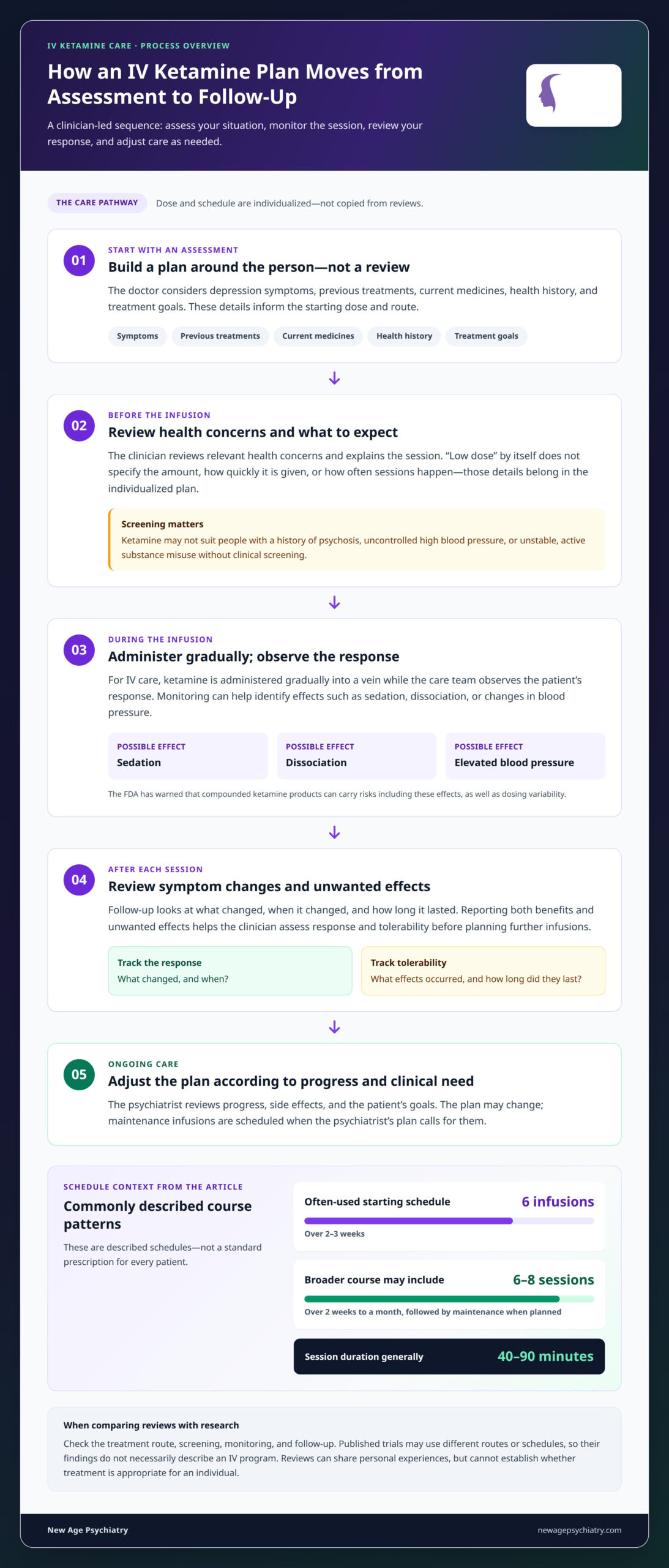
For IV care, an often-used starting schedule is six infusions over two to three weeks. Sessions generally last 40 to 90 minutes. A broader course may include six to eight sessions over two weeks to a month, followed by maintenance infusions when the psychiatrist’s plan calls for them. The route and schedule matter when comparing published findings with reviews of Florida treatment centers.
Ketamine may not suit people with a history of psychosis, uncontrolled high blood pressure, or unstable, active substance misuse without clinical screening. Florida-specific telehealth and compounding requirements concern how care and products are provided; the FDA warning addresses risks of compounded ketamine, not whether a particular patient is eligible. An assessment weighs health history and current symptoms before treatment. People in the United States thinking about self-harm or in immediate danger can call or text 988, according to the Substance Abuse and Mental Health Services Administration.
Reviews can describe a patient’s experience, but they don’t replace an assessment or published evidence about depression outcomes. Look for clear information about the treatment route, screening, monitoring, and follow-up when interpreting listings. If depression symptoms feel urgent, use 988 rather than waiting for a routine ketamine appointment.
Does Ketamine Help When Anxiety and Depression Occur Together?
Depression and anxiety often overlap, so treatment decisions should consider both symptom groups. In STAR*D, 53.2% of depressed outpatients had anxious depression. A controlled ketamine trial compared 45 participants with high anxiety and 54 without. That comparison matters because anxiety levels can shape how findings apply to patients experiencing both conditions.
A review of six trials found that four reported significantly improved anxiety-rating scores with ketamine compared with control groups. These findings support further study of ketamine when depression and anxiety occur together, but don’t show that every patient will improve in both areas. When reading low-dose ketamine for depression reviews in Florida, compare individual accounts with study findings. Check whether reports distinguish anxiety scores from depression scores and describe the treatment approach.
Approval status is another important distinction. Ketamine is FDA-approved only as an anesthetic; using it for depression or anxiety is off-label. This means prescribing it for a purpose outside its FDA-approved labeling. Off-label use isn’t automatically inappropriate, but patients should understand which medicine and use are being discussed.
Esketamine, marketed as Spravato, is a different medicine from ketamine and is FDA-approved for treatment-resistant depression. It isn’t an FDA-approved ketamine infusion. The medication and route matter when comparing Florida reviews, research, and treatment plans. In low-dose ketamine for depression reviews in Florida, note which medication is described, which symptoms were measured, and whether the study involved adults with treatment-resistant depression.
For a useful discussion of combined symptoms, organize the conversation around depression severity, anxiety symptoms, prior antidepressants, and the intended treatment setting. An integrated psychiatric depression care approach can help frame those factors without treating anxiety as an afterthought.
Infusion dosage and session process
An IV ketamine plan begins with a clinical assessment, not a standard dose copied from reviews. The doctor considers depression symptoms, previous treatments, current medicines, health history, and treatment goals. These details inform the starting dose and route. The term “low dose” alone doesn’t explain the amount, how quickly it’s given, or how often sessions take place. Those details belong in an individualized plan.
Before treatment, the clinician reviews relevant health concerns and explains what the session involves. During an infusion, ketamine is administered gradually into a vein while the care team observes the patient’s response. Monitoring can help identify effects such as sedation, dissociation, or changes in blood pressure. These risks matter, as the FDA has warned about them with compounded ketamine products.
After a session, the doctor reviews changes in symptoms and any unwanted effects. A useful follow-up describes what changed, when it changed, and how long it lasted. For example, a patient might report improved mood alongside temporary dissociation. That information helps the clinician assess response and tolerability before planning further infusions. Published trials may use different routes or schedules, so their findings don’t necessarily describe an IV program.
Ongoing care follows the psychiatrist’s plan, with maintenance infusions scheduled according to clinical need. The plan may change as the doctor reviews progress, side effects, and the patient’s goals. Before starting, understand the proposed route, how dose decisions are made, what monitoring is included, and how follow-up will assess progress. These details offer a clearer basis for comparing treatment plans than the phrase “low dose” alone, and distinguish a monitored treatment process from a general account of ketamine use.
Evidence for ketamine in depression and PTSD
For treatment-resistant depression, evidence includes controlled trials and systematic reviews. One controlled trial included 99 adults with treatment-resistant depression. In a study of some adults without psychosis, intravenous ketamine showed similar effectiveness to electroconvulsive therapy. These findings address specific patient groups and protocols, not every low-dose program. Research results depend on the condition studied, the route used, and how improvement is measured.
In its review of 16 drugs, Cochrane found only ketamine and esketamine more effective than placebo at reducing depression symptoms. A 2021 Cochrane review also found ketamine outperformed placebo for reducing depression symptoms, including suicidal thoughts, and increasing response rates. However, certainty varied across the included studies. That qualification matters: a positive average effect doesn’t establish the same result for every patient or treatment schedule.
PTSD evidence is developing through distinct controlled studies. A randomized trial of repeated ketamine administration for chronic PTSD appeared in the American Journal of Psychiatry, volume 178, issue 2, pages 193-202. Another randomized clinical trial of intravenous ketamine for chronic PTSD appeared in JAMA Psychiatry, volume 71, issue 6, pages 681-688. A systematic review identified six randomized trials examining ketamine for treatment-resistant social anxiety, PTSD, and OCD. These studies concern different disorders, so their findings shouldn’t be treated as interchangeable.
Ketamine’s approval as an anesthetic doesn’t by itself establish approval for depression or PTSD. Evidence of effects must also be weighed alongside clinical risks, including elevated blood pressure. When reading reviews, notice whether they describe a controlled study, the diagnosis, and the treatment route. To discuss how evidence relates to your depression history, explore depression treatment options.
New Age Psychiatry: Depression Treatment
New Age Psychiatry offers depression treatment and Low Dose Ketamine Therapy for adults considering next steps after reviewing the evidence. A psychiatric assessment can help clarify symptoms, previous treatment experiences, and whether ketamine therapy may fit into an individual care plan. Depression can also occur alongside concerns such as ADHD or insomnia, which may shape the broader treatment discussion.
Consider seeking psychiatric care when depression continues to affect daily life or you want to discuss treatment options. New Age Psychiatry provides completely virtual psychiatric care for adults in Florida, including depression treatment and medication management.
Contact New Age Psychiatry to discuss depression treatment and possible next steps.
Take the Next Step With a Clearer Picture
Reviews of low-dose ketamine for depression in Florida can help you frame questions, but your next step is to connect your priorities, symptoms, and treatment history with a psychiatric assessment. Consider what you hope to address and how you would describe meaningful progress. That gives the discussion a personal focus beyond ratings or testimonials.
New Age Psychiatry offers depression treatment, ADHD diagnosis and treatment, and insomnia treatment through completely virtual care for adults in Florida. If several concerns affect your daily life, sharing the broader context can help guide a relevant care conversation.
You don’t need to have every treatment decision settled before starting a discussion. Bring the questions that matter to you, including how options relate to your goals and health history. Contact New Age Psychiatry to discuss a next step that feels right for your needs.
Frequently Asked Questions
How Does Ketamine Work Differently Than the Antidepressants You Already Tried?
Ketamine is a different medicine from familiar antidepressants, with a distinct prescribing and monitoring profile. Traditional antidepressants such as SSRIs typically require 4-6 weeks for results. Some ketamine research has observed earlier symptom changes, but speed alone doesn’t show whether treatment is suitable. A clinician considers what you’ve tried, how long you took it, and which symptoms remain before discussing another option.
How Quickly Can Ketamine Lift Depression, and Why Does One Session Not Settle It?
New Age Psychiatry describes low-dose ketamine treatment as often providing relief within hours. An early change, however, doesn’t show how long it will last or whether other symptoms will improve. Clinicians consider progress over follow-up, daily functioning, and unwanted effects rather than treating one session as a final measure. Note changes in mood, sleep, concentration, and anxiety between appointments to help explain your experience.
Is Ketamine for Depression FDA Approved, and What Else Should You Ask?
Ketamine is FDA-approved as an anesthetic, while its use for depression is off-label. Before considering treatment, ask which medicine and route are proposed, whether the product is compounded, what monitoring is provided, and how the clinician will assess your response. These questions clarify the treatment plan and help distinguish ketamine from esketamine, a separate medication.
Which Is Right for You: IV Ketamine or Esketamine (Spravato)?
IV ketamine and Spravato aren’t interchangeable terms: IV describes ketamine delivered into a vein, while Spravato is esketamine, a different medicine. Their FDA approval also differs. Esketamine is approved for treatment-resistant depression, while ketamine is approved as an anesthetic. A psychiatric assessment considers diagnosis, previous treatment, delivery route, and your preferences when determining an appropriate plan.
Can I keep taking my antidepressant or anti-anxiety medication?
Don’t stop, reduce, or change prescribed medication without guidance from the clinician managing your care. Share a complete medication list, including doses and recent changes, during your assessment. Include antidepressants and anxiety medicines, for example, even if you take them only as needed. This helps the clinician consider your current treatment alongside ketamine and identify questions to discuss before changing your plan.
Do I need a referral or a formal diagnosis?
A prior diagnosis isn’t necessary to seek a psychiatric evaluation; the assessment can establish whether your symptoms fit a diagnosis. New Age Psychiatry provides psychiatric diagnosis for adults. Referral requirements are separate administrative rules and can depend on the care or payment arrangement. You can begin by arranging an evaluation and sharing your symptoms, treatment history, and any records from previous care.