

What if an online insomnia appointment focused on understanding your sleep before discussing treatment? If you’re searching for “telehealth for chronic insomnia Florida,” you may want care that fits your life while taking persistent sleep difficulties seriously. Trouble sleeping can affect mood, concentration, energy, and daily routines. A thorough evaluation can help put those concerns in context before you consider next steps.
A virtual psychiatric evaluation gives you space to discuss your sleep, relevant health history, and possible treatment approaches. New Age Psychiatry provides telehealth insomnia care for adults in Florida, including individualized medication management when clinically appropriate. An evaluation does not guarantee a diagnosis or prescription, and psychiatric care is distinct from cognitive behavioral therapy for insomnia (CBT-I).
This guide explains what a Florida telehealth evaluation can address, how CBT-I and medication management differ, and what to prepare before your appointment. You’ll find practical ways to describe your sleep pattern and decide what questions to bring to the conversation.
Key Takeaways
- Recurring sleep difficulties that affect daytime life are worth discussing with a clinician.
- A virtual evaluation considers sleep patterns, health context, current treatments, and daily functioning.
- CBT-I and medication management have different purposes. The right approach depends on individual needs and assessment.
- Prepare for telehealth for chronic insomnia Florida by noting sleep and treatment details and choosing a private place for your appointment.
- New Age Psychiatry offers virtual psychiatric evaluations and individualized medication management for adults, including insomnia care. An evaluation is a discussion of possible next steps, not a promise of a diagnosis or prescription.
Chronic Insomnia in Florida: When Telehealth May Be Worth Considering
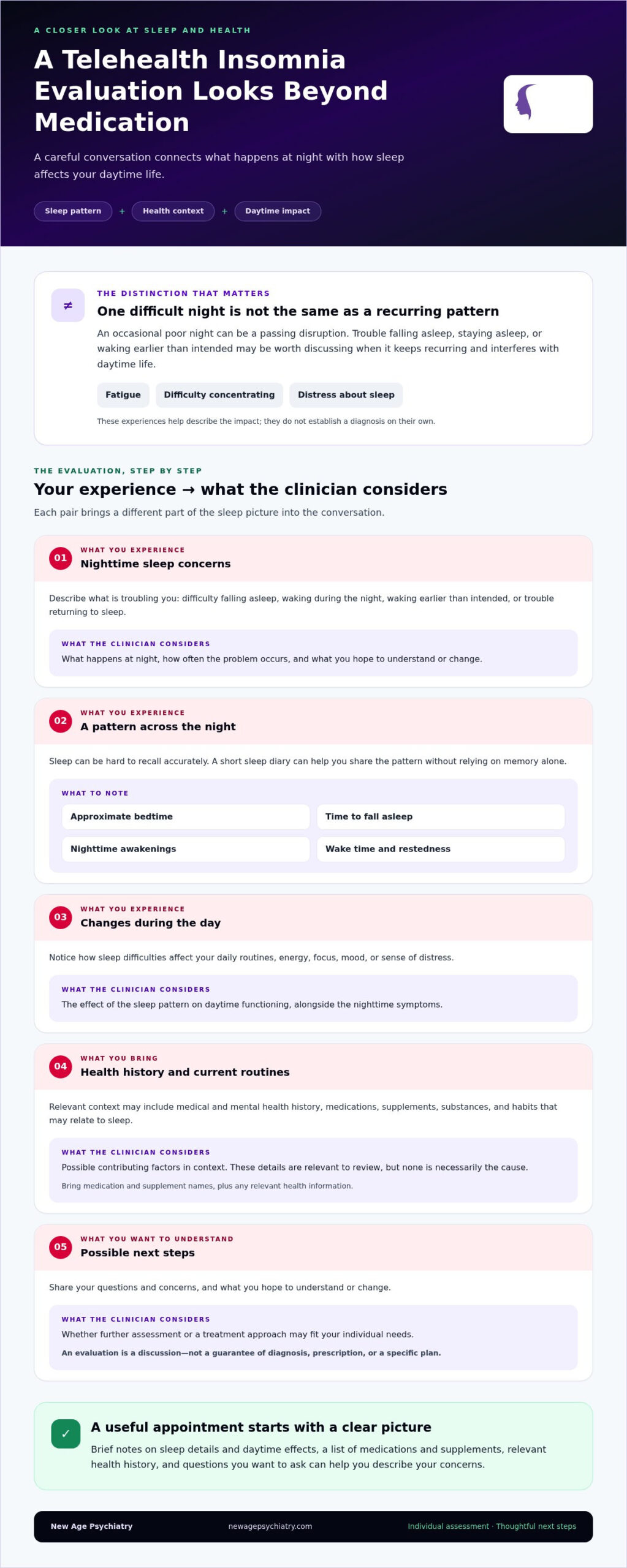
A poor night of sleep can happen to anyone. It may be worth seeking care when trouble falling asleep, staying asleep, or returning to sleep keeps recurring and affects how you feel or function during the day. Fatigue, difficulty concentrating, or distress about sleep can help explain the impact, but these experiences alone do not establish a diagnosis.
An occasional poor night is a passing disruption; persistent insomnia symptoms are a recurring pattern that can interfere with daytime life. A clinician considers your sleep history and broader health context rather than relying on one difficult night or a checklist alone. For a general overview of insomnia, its types, possible causes, and treatment approaches, see Insomnia.
What makes insomnia a persistent concern?
Insomnia can involve difficulty falling asleep, waking during the night, or waking earlier than intended. When these problems recur and leave you fatigued, less focused, or distressed during the day, discussing them with a clinician may help. Be ready to describe both how often the problem occurs and how it affects everyday activities.
Sleep concerns can occur alongside medical conditions, behavioral patterns, or mental health factors such as anxiety or low mood. Medications and substances may also be relevant. None of these factors is necessarily the cause. A clinician can review your history and consider what may be contributing before discussing next steps. Avoid diagnosing yourself based on symptoms alone.
What telehealth can offer Florida adults
Telehealth describes how care is delivered, not a specific insomnia treatment. A virtual psychiatric evaluation lets you discuss sleep concerns remotely from a private location. It can make it easier to fit an appointment into your routine while giving a clinician the opportunity to review your concerns and relevant health history. The format does not guarantee a particular diagnosis, treatment, or outcome.
For telehealth for chronic insomnia Florida, plan to attend from Florida and be ready to confirm where you are physically located. A patient’s location can affect which clinician is able to provide care, so share it accurately during the appointment process. Florida law allows evaluations through telehealth when they are sufficient to assess and treat the patient; the format does not mean the discussion should be rushed or limited to medication.
Virtual psychiatric care is not emergency or crisis support. If you’re in immediate danger or need urgent help, use emergency services rather than waiting for a routine appointment. For ongoing sleep concerns, a virtual evaluation can be a practical way to start a careful conversation about possible next steps.
How a Telehealth Psychiatric Evaluation Can Assess Chronic Insomnia
A useful insomnia evaluation is a conversation about more than whether you want medication. The clinician hears what is troubling you, asks about your sleep pattern and health context, and reviews what you have already tried. Together, you can discuss whether further assessment or a treatment approach may be appropriate. The evaluation does not guarantee a diagnosis or a specific plan.
An insomnia assessment considers both sleep symptoms and the ways they affect your daytime functioning. Difficulty falling asleep, repeated awakenings, and early waking may lead to different questions. Daytime fatigue, concentration problems, or changes in mood help describe how the pattern affects you.
- Your concerns: Describe what happens at night and what you hope to understand or change.
- Your sleep pattern: Discuss bedtimes, time to fall asleep, awakenings, wake time, and how rested you feel.
- Your health context: Review relevant medical and mental health history, including mood or anxiety concerns.
- Current treatments and routines: Talk about medications, supplements, substances, and habits that may relate to sleep.
- Possible next steps: The clinician considers the information and discusses whether further assessment or a treatment approach fits your needs.
For telehealth for chronic insomnia Florida, the clinician’s assessment still depends on an individual conversation. Florida’s official Florida Telehealth Regulations resource offers information about telehealth requirements. Your clinician can explain how the appointment applies to your circumstances.
What information may come up during an appointment?
A short sleep diary can help you describe patterns without relying on memory alone. Before your appointment, note approximate bedtimes, nighttime awakenings, wake times, and how you felt during the day. Bring a list of current medications and supplements, along with relevant health history. Questions about mood and anxiety provide context; they are not a judgment or an assumption about what is causing the sleep difficulty.
- Record sleep details and daytime effects in brief notes.
- Gather medication names and relevant health information.
- Write down questions or concerns you want to discuss.
How psychiatric assessment differs from CBT-I
CBT-I, or cognitive behavioral therapy for insomnia, is a structured behavioral and cognitive treatment focused on sleep-related patterns, thoughts, and habits. A psychiatric evaluation has a different purpose: it reviews sleep concerns alongside mental health and medical context, then considers appropriate next steps. Medication management may be discussed when clinically appropriate, but it is not automatic. CBT-I and psychiatric care are distinct approaches, and an evaluation helps clarify what considerations matter for you.
To discuss persistent sleep concerns through an individualized psychiatric evaluation, learn about New Age Psychiatry’s insomnia care.
CBT-I, Medication Management, or Both: Comparing Insomnia Care Options
Insomnia care is not a one-size-fits-all choice between therapy and medication. Cognitive behavioral therapy for insomnia (CBT-I) and psychiatric medication management have different roles. A clinician can help determine what may fit after considering your sleep concerns, health history, and preferences. Telehealth describes the appointment format; it does not automatically mean medication, and a psychiatric evaluation does not make behavioral approaches irrelevant.
| Approach | Purpose | What sessions may address | Who guides the decision |
|---|---|---|---|
| CBT-I | Address patterns and thoughts that may contribute to insomnia | Structured behavioral strategies and sleep-related beliefs | A clinician providing CBT-I, based on your needs and assessment |
| Psychiatric evaluation and medication management | Assess sleep concerns in the context of mental health and overall history | Symptoms, relevant health factors, current medications, and whether medication may be appropriate | A psychiatric clinician, using individualized clinical judgment |
| More than one approach | Consider complementary forms of care when appropriate | How behavioral treatment and psychiatric care may address different aspects of the concern | The relevant clinicians, in discussion with you |
What CBT-I may involve
CBT-I is a structured behavioral and cognitive treatment, not simply a collection of general sleep-hygiene suggestions. Depending on the treatment plan, it may address sleep-related thoughts and habits through strategies such as stimulus control or adjusting time spent in bed. These components are tailored as part of treatment. Advice like keeping a regular bedtime may support sleep routines, but by itself it is not the same as structured CBT-I.
CBT-I is distinct from psychiatric medication management. If you’re considering telehealth for chronic insomnia Florida, clarify which kind of care an evaluation addresses and how it relates to other approaches that may be relevant to your situation.
Where psychiatric medication management may fit
A psychiatrist may consider medication after reviewing your symptoms, health and mental health history, current medications, potential risks, and preferences. Medication is not appropriate for everyone, and discussing it does not mean you’ll receive a prescription. The goal is to assess the full picture, including possible contributing factors, rather than treating the medication question in isolation.
Behavioral care and psychiatric care are not necessarily competing options. Depending on the individual evaluation, a clinician may discuss one approach, more than one, or further assessment. If mood concerns overlap with sleep difficulties, include them in the conversation. New Age Psychiatry also offers telehealth care for depression.
How to Prepare for Chronic Insomnia Telehealth in Florida
A little preparation can make it easier to describe what has been happening and use your appointment time well. You do not need to arrive with a diagnosis or a perfect record of every night. A few notes about your sleep, health history, and questions can give the clinician useful context. These steps support the conversation but do not guarantee a particular diagnosis or treatment.
A simple pre-appointment checklist
Gather details you can refer to during your visit instead of trying to remember everything on the spot. Keep your notes brief and practical. The clinician can ask follow-up questions and help clarify what information matters.
- Write down approximate bedtimes, awakenings, wake times, and any patterns you’ve noticed.
- Note daytime effects, such as fatigue, concentration difficulties, or changes in your routine.
- Gather current medication and supplement names, along with relevant health diagnoses or history.
- List questions or concerns you want to make sure you discuss.
- Choose a quiet, private place, test your internet connection, and use a device that lets you hear and speak comfortably.
Questions that help clarify treatment fit
It’s reasonable to ask how the clinician approaches an insomnia evaluation and what may happen after the first conversation. These questions can help you understand how decisions are made without assuming a particular treatment is right for you.
- How will you assess my sleep concerns and relevant health history?
- How would you discuss the possible benefits, risks, and alternatives if medication is considered?
- How will we review ongoing symptoms and decide whether the plan needs to change?
Medication is not an automatic outcome of a psychiatric appointment. A clinician considers your individual history and symptoms before discussing possible options. You can also ask how behavioral approaches, such as CBT-I, differ from psychiatric evaluation and medication management.
Plan to attend from a private location where you can speak openly. The clinician may ask where you’re physically located during the appointment, so be ready to share your current location. If your connection falters, let the clinician know and follow their guidance for continuing the visit. Having a phone available as a backup can help you communicate if your device or internet has a problem.
Mention concerns that may seem separate from sleep, too. For example, difficulty focusing during the day may relate to poor sleep or prompt broader questions about attention and health history. Those questions do not establish a diagnosis; they provide context. If attention concerns are part of your experience, New Age Psychiatry also provides information about adult ADHD diagnosis and treatment in Florida.
When you’re ready to discuss persistent sleep concerns, schedule a virtual insomnia evaluation to talk through your history and possible next steps.
New Age Psychiatry Telehealth for Chronic Insomnia in Florida
New Age Psychiatry provides virtual psychiatric evaluations and medication management for adults in Florida, including insomnia care. An evaluation gives you space to discuss how sleep has been affecting you, review relevant history, and consider possible next steps with a clinician. Bring the details that feel important, even if you’re unsure how they connect.
What patients can expect from an insomnia-focused psychiatric visit
An insomnia-focused psychiatric visit centers on your experience, not an assumed solution. You can talk about what happens at night, how you feel during the day, and any health or mental health history that may provide context. The clinician considers whether medication management may be appropriate based on an individual assessment. A conversation about medication is not a promise of a prescription or a particular outcome.
If medication is discussed, decisions are individualized. The clinician may consider potential benefits, risks, and alternatives alongside your symptoms, current treatments, and relevant history. This keeps the discussion grounded in your circumstances rather than a standard plan applied to everyone. You can ask questions and share preferences as you consider what may be appropriate.
Taking the next step with virtual care
Before an evaluation, gather a brief record of your sleep patterns, daytime effects, current medications, and questions. You do not need to have every detail figured out. These notes can make it easier to explain what you’ve noticed and what you’d like help understanding.
Virtual psychiatric care provides an evaluation and a chance to discuss possible treatment. It does not guarantee a diagnosis, medication eligibility, or a specific result. It is also distinct from CBT-I, a structured behavioral treatment for insomnia. An evaluation can help clarify what psychiatric care may address and what options could be worth discussing for your needs.
If you’re an adult in Florida considering telehealth for chronic insomnia Florida, an insomnia-focused evaluation can be a clear next step. Bring your sleep history and questions so you can talk through your concerns without assuming medication is the only path. New Age Psychiatry’s virtual care is intended for ongoing psychiatric assessment and treatment, not urgent crisis support. If you have an urgent safety concern or are in immediate danger, seek emergency help rather than waiting for a routine telehealth appointment.
Explore insomnia care with New Age Psychiatry and take the next step toward a virtual evaluation.
Take a Thoughtful First Step Toward Better Sleep
You do not need to have every answer before seeking support. Start by identifying what you want help with most: understanding a persistent sleep pattern, exploring possible contributing factors, or discussing what care could look like. A clear question can make the first conversation feel more manageable, even if the path forward is not yet clear.
Exploring telehealth for chronic insomnia Florida can be a way to begin that conversation from a familiar setting. An evaluation gives you an opportunity to share your concerns and consider appropriate next steps. It is not a commitment to one treatment or a guarantee of a particular result. You can ask questions, share your preferences, and take time to understand the options discussed.
If you’re ready to explore care, explore virtual insomnia care with New Age Psychiatry. Bring your questions and sleep history to start a thoughtful conversation about your needs.
Frequently Asked Questions
Can telehealth help with chronic insomnia in Florida?
Yes. Telehealth for chronic insomnia Florida offers a way to discuss ongoing sleep concerns with a psychiatric clinician. You can describe changes such as waking earlier than usual or feeling too tired to complete daily tasks. Telehealth is the format for care, not a treatment by itself. The clinician considers your circumstances before discussing next steps, and a virtual visit does not guarantee a diagnosis, prescription, or specific result.
Is online psychiatric care enough to assess chronic insomnia?
A virtual psychiatric evaluation can explore sleep patterns, daytime effects, medications, and relevant mental health history. Whether that information is enough to guide next steps depends on your individual situation. If you report a new physical symptom alongside sleep changes, mention it so the clinician can consider whether additional medical assessment is appropriate. A routine online visit is not a substitute for emergency services or every type of medical evaluation.
Does telehealth treatment for insomnia always involve medication?
No. A telehealth appointment does not mean medication will be recommended. A psychiatric clinician considers your symptoms, history, and preferences before discussing options, including potential benefits and risks. Share concerns such as wanting to understand non-medication approaches or how follow-up would work. CBT-I is a separate behavioral treatment, not another name for medication management, and the approaches may serve different needs.
Can CBT-I be done through telehealth for chronic insomnia?
CBT-I is a structured behavioral and cognitive treatment, and some care may be delivered remotely. It is distinct from psychiatric evaluation and medication management, so a psychiatric appointment should not be assumed to include CBT-I. If you’re considering it, ask how the approach relates to your goals and what kind of care is being discussed.
What should I prepare for an online insomnia appointment?
Bring a brief record of sleep and wake times, nighttime awakenings, and how you felt during the day. A current medication and supplement list can help you avoid relying on memory during the conversation. Write down your top questions, too. For instance, note whether you’re concerned about medication, daytime fatigue, or changes in mood. These details can make it easier to explain your experience, but they do not guarantee a particular outcome.
Can a Florida telehealth psychiatrist prescribe medication for insomnia?
A psychiatric clinician may discuss medication management if it appears clinically appropriate, but an evaluation does not guarantee a prescription. The decision depends on your history, symptoms, safety considerations, and applicable requirements for the medication and telehealth care. Do not assume a particular medicine will be offered. Ask the clinician to explain possible benefits, risks, alternatives, and how ongoing symptoms would be reviewed as you consider options together.
When should I seek urgent help instead of scheduling telehealth for insomnia?
Seek emergency help now if you or someone else is in immediate danger, may have taken a harmful amount of medication, or cannot stay safe. Contact emergency services or go to an emergency department rather than waiting for a scheduled appointment. Routine psychiatric telehealth is not crisis care. If the sleep concern is persistent but there is no immediate safety risk, an appropriate clinical evaluation can help you discuss what is happening and possible next steps.