

Stigma can make seeking psychiatric care feel harder than the care itself. Dealing with psychiatrist stigma in Florida starts with recognizing how shame, fear of judgment, and misconceptions about mental illness can discourage people from seeking support or speaking openly about their needs. These barriers do not mean someone is weak or undeserving of care.
If you’ve hesitated to discuss psychiatric treatment, that concern is understandable. Open, respectful conversations can replace assumptions with accurate information and make it easier for people to feel heard rather than judged. This article explains how stigma can affect access to care, why conversations about mental health matter, and how individuals can challenge stereotypes in everyday life. It also explores how person-first language, listening without judgment, and sharing reliable information can help reduce discrimination. Understanding these barriers can make it easier to recognize when stigma is influencing a decision and consider a supportive next step.
Key Takeaways
- Recognize how fear of judgment and common misconceptions can make it harder to seek psychiatric care.
- Use open, respectful conversations to make mental health treatment easier to discuss and understand.
- Notice how stigma can affect everyday opportunities and relationships, not just access to care.
- Challenge stereotypes with person-first language, accurate information, and supportive listening.
Mental health stigma and barriers to treatment
Stigma can make psychiatric care feel risky, while practical barriers can also delay support. In Florida, understanding both can help you make an informed decision about care.
Mental Health Education and Public Awareness
Mental health education shares accurate information to replace misconceptions with understanding. It matters because beliefs about weakness or unpredictability can make people feel ashamed of seeking psychiatric care. An estimated 31.1% of adults in the United States experience an anxiety disorder at some point in their lives, according to the National Institute of Mental Health. Person-first language, such as “a person with an anxiety disorder,” keeps someone’s identity separate from a diagnosis. Public awareness can also encourage people to respond supportively when someone shares a concern.
Barriers to Psychiatric Treatment in Florida
Barriers include stigma, cost, insurance terms, privacy concerns, and uncertainty about what an appointment involves. People may worry that others will label them as weak or dangerous. For workplace discrimination, protections may depend on the circumstances and whether a condition meets applicable disability criteria. The specific legal protections and options depend on the situation.
There is no single cost for an uninsured psychiatrist visit; the amount depends on the visit and care involved. Insurance coverage also varies: Medicaid eligibility and private-plan benefits affect what psychiatric services are covered, and insurance may cover only part of treatment or none. A confidential psychiatrist can explain privacy practices and how personal information is handled before care begins.
At a first appointment, expect to discuss symptoms, health history, concerns, and goals for treatment. The clinician uses that information to understand what support may fit, including the appropriate level of care. For stigma education and support, the National Alliance on Mental Illness offers programs and resources that teach people about mental health conditions. Sharing accurate information and listening without judgment can help make seeking care feel more acceptable.
Speaking openly and normalizing treatment
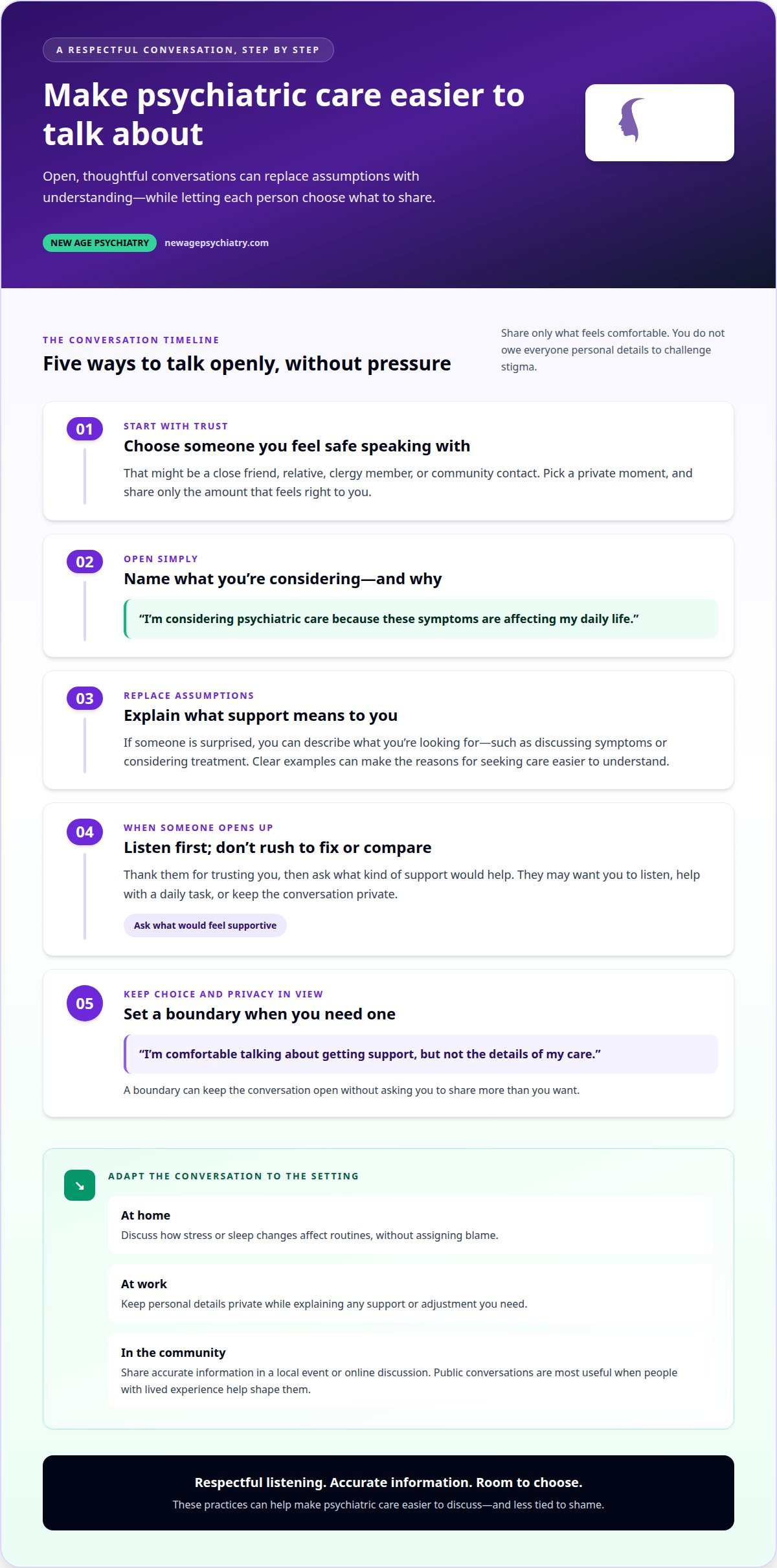
Open conversations can frame psychiatric care as a health decision, not a character judgment. You might start with someone you trust, such as a close friend, relative, clergy member, or community contact. Choose a private moment and share only what feels comfortable. You do not owe everyone personal details to challenge stigma.
A simple statement can make the conversation manageable: “I’m considering psychiatric care because these symptoms are affecting my daily life.” If someone is surprised, explain what support means to you, such as discussing symptoms or considering treatment. Clear examples can replace assumptions with practical reasons for seeking care.
When someone opens up, avoid rushing to offer advice or comparing their experience with another person’s. Thank them for trusting you, then ask what kind of support would help. They may want you to listen, help with a daily task, or keep the conversation private. Respecting their choice gives them control over what happens next.
- At home: Discuss how stress or sleep changes affect routines, without assigning blame.
- At work: Keep personal details private while explaining any support or adjustment you need.
- In the community: Share accurate information at a local event or online discussion.
Public conversations are most useful when people with lived experience help shape them. Their perspectives can show how stereotypes affect real decisions while keeping discussion grounded in individual experience. If you are unsure how much to share, set a boundary first: “I’m comfortable talking about getting support, but not the details of my care.” That still makes treatment easier to discuss.
For readers considering psychiatric support, exploring psychiatric care options can be one practical next step. You can decide what concerns to raise and what information to keep personal. Each respectful conversation helps make care a more ordinary topic, rather than a reason for shame.
Mayo Clinic recommends getting treatment because it can help identify the cause of symptoms and lessen symptoms that are causing difficulties in life.
Setbacks do not mean someone is undeserving of care. If symptoms persist or return, discuss them with the treating clinician so the care plan can be reviewed and next steps considered.
Harmful effects of stigma and discrimination
Stigma can affect more than a person’s willingness to seek psychiatric care. It can narrow opportunities at work, school, and home. Someone may avoid applying for a job, joining a class, or discussing a needed accommodation because they fear others will judge them. These choices can limit participation even when symptoms are manageable and support is available.
Self-stigma can also shape how people view their own potential. A person who accepts stereotypes about mental illness may feel undeserving of help or doubt that recovery is possible. In a study of more than 200 people with mental illness, greater self-stigma was associated with poorer recovery at one- and two-year follow-ups. The finding highlights why supportive relationships and respectful care matter over time.
Discrimination may take the form of exclusion, harassment, bullying, or unfair assumptions about someone’s reliability. For example, a coworker might treat a colleague as dangerous after learning about a diagnosis, despite having no evidence of risk. People with mental health problems are more likely to be victims of violence than perpetrators. Confusing these roles can reinforce fear and isolate people who need community support.
A psychiatric diagnosis alone does not determine how a specific employment decision, insurance policy, or professional licensing process will apply. Relevant factors include job requirements, policy terms, licensing criteria, and the information requested through each process. Stigma and formal eligibility decisions are not the same.
In Florida, stigma can affect daily routines: someone may avoid appointments, withdraw from social activities, or hide symptoms from trusted people. These responses can make it harder to seek help early or explain what support would make participation possible. Notice practical effects, such as missed opportunities or fear-driven silence, rather than treating them as personal failure. Respectful responses can reduce isolation and help address specific barriers.
Mental health stigma can contribute to shame, discrimination, and social exclusion for people living with mental illness. Recognizing these harms can help communities respond with greater understanding and respect.
Mental health stigma can contribute to discrimination, social exclusion, and violence. Shame, discrimination, social exclusion, and violence are all outcomes linked with mental health stigma.
Individual actions to reduce stigma
Start by noticing self-stigma: thoughts such as “I should handle this alone” can discourage support. Counseling, learning about a condition, and connecting with people who share similar experiences can help challenge those beliefs. Choose one practical step, such as writing down a question for an appointment or reading a reliable explanation of symptoms. For people dealing with psychiatrist stigma in Florida, these steps can make seeking support feel more manageable.
Language matters. Person-first wording, such as “I have a bipolar condition,” avoids defining someone by a diagnosis. If someone makes a hurtful or inaccurate comment, respond calmly: “That assumption isn’t fair, and it can keep people from seeking help.” A clear correction focuses on the impact of the words without turning the conversation into a personal attack.
Use everyday settings to share accurate information. A conversation at a church, school, community event, or online can correct misconceptions about psychiatric care. When possible, include perspectives from people with lived experience to keep educational messages grounded in real concerns rather than stereotypes. Share only what you are comfortable making public. These conversations can help people dealing with psychiatrist stigma in Florida by making respectful discussion more visible.
- At work: Encourage managers to learn how to respond respectfully to accommodation needs.
- In conversation: Listen without interrupting, then ask what support would be useful.
- In your community: Support efforts that promote fair access and coverage for mental health care.
Support can be practical, not only verbal. Helping with a daily task, checking in after a difficult conversation, or recognizing someone’s effort can communicate care without pressure. If a friend declines to talk, respect that boundary and leave the door open. Consistent, respectful actions can make support feel safer than judgment.
If you’re ready to discuss attention-related concerns, take a next step with ADHD diagnosis and treatment. Seeking an assessment is a personal health decision, not a measure of character.
New Age Psychiatry
New Age Psychiatry offers adults telehealth psychiatric diagnosis and medication management, providing a care option when stigma or uncertainty makes seeking support feel difficult. Care can address concerns such as ADHD, insomnia, depression, and anxiety. A psychiatric evaluation can help clarify symptoms and discuss treatment options in a focused, supportive setting.
You do not need to have every concern figured out before beginning. Describe what has changed, what feels difficult, and what questions you have about care. This can shift the focus from judgment to your health needs and personal goals. New Age Psychiatry’s completely virtual care gives adults in Florida a way to access psychiatric services remotely, with secure messaging and text communication available.
If you’re ready to discuss psychiatric care, contact New Age Psychiatry.
Choose a Next Step That Feels Right for You
Seeking psychiatric care is a personal health decision, not something you need to justify to everyone around you. Start by identifying what you want help with and the questions you would like answered. Dealing with psychiatrist stigma in Florida can also mean choosing support at your own pace and keeping personal details within the conversations where they belong.
New Age Psychiatry provides psychiatric diagnosis and treatment for ADHD, along with care for insomnia and depression. These services may help when symptoms affect daily life and you are ready to discuss care with a psychiatric practice. The completely virtual appointments are for adults residing in Florida.
Contact New Age Psychiatry to start a conversation about psychiatric care. Your next step can be a thoughtful one, guided by your needs and made without shame.
Frequently Asked Questions
How can I deal with stigma about psychiatric treatment from family, friends, or coworkers?
Respond in a way that protects your privacy and keeps the focus on your needs. With family or friends, try: “I’m getting professional support, and I’d appreciate listening rather than advice.” With coworkers, keep details limited: “I’m managing a health matter; I’ll let you know if I need a work adjustment.” If comments continue, note what happened and consider discussing it through a trusted workplace channel.
How can I find a confidential psychiatrist in Florida?
Before care begins, ask how your personal information is handled and what privacy practices apply.
What Florida resources offer support for mental health stigma and discrimination?
Learning about mental health conditions can help people understand what others are experiencing. Supportive community conversations and public education can also challenge stigma and encourage respectful responses.