

A sleepless night isn’t the same as chronic insomnia. Insomnia can make it hard to fall asleep, stay asleep, or return to sleep after waking too early; chronic symptoms occur at least three times a week for three months or longer, according to the American Psychiatric Association. For adults seeking chronic insomnia treatment in Tampa, understanding that pattern can help clarify when sleep problems may need clinical attention.
Repeated nights of poor sleep can affect concentration, mood, energy, and daily routines. If sleep difficulties have become a regular part of life, you’re not alone. There are practical ways to understand what may be contributing and explore care.
This guide covers common insomnia symptoms and causes, how cognitive behavioral therapy for insomnia (CBT-I) works, and what medication management may involve. It also explains how insomnia can overlap with anxiety and depression, so you can understand your options and consider a next step.
Key Takeaways
- Notice whether trouble falling or staying asleep is affecting your daytime energy, mood, or concentration, not just your nights.
- Insomnia can occur alongside anxiety or depression, so consider how your mental health and sleep patterns may be connected.
- Sleep diaries and, when appropriate, sleep studies can help clarify the pattern and rule out other sleep disorders.
- CBT-I addresses thoughts and behaviors that interfere with sleep through structured strategies such as stimulus control and relaxation training.
- Medication management depends on your symptoms, health history, and other medications; learn what clinicians weigh when considering options.
Do you treat insomnia linked to mental health conditions?
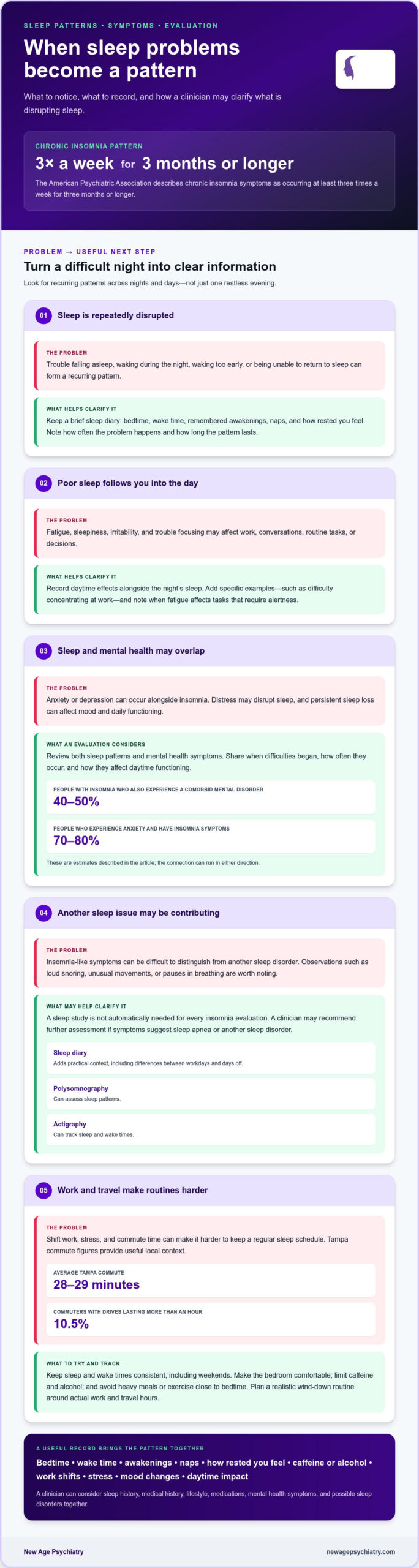
Yes. Insomnia can occur alongside anxiety, depression, and other mental disorders, so an evaluation should consider both sleep and mental health. An estimated 40% to 50% of people with insomnia also experience a comorbid mental disorder. Insomnia symptoms are prevalent in about 70% to 80% of people who experience anxiety. These connections can run in either direction: distress may disrupt sleep, while persistent sleep loss can affect mood and daily functioning.
Tampa residents can seek insomnia evaluation through local psychiatrists or psychiatric nurse practitioners, or discuss sleep concerns through virtual psychiatric appointments. These professionals can review sleep problems alongside anxiety or depression symptoms. During an evaluation, describe when sleep difficulties began, how often they occur, and how they affect daytime functioning. Include a clear example, such as waking repeatedly before work or feeling unable to concentrate during the day.
A useful assessment considers your sleep history, medical history, lifestyle, and medications. Record your bedtime, wake time, nighttime awakenings, naps, and how rested you feel. Note caffeine or alcohol use, work shifts, stress, and mood changes. Share prescription and nonprescription medications, since treatment decisions depend partly on your overall health. A clinician may ask about your symptoms and medical history and perform a physical exam to identify contributing factors or signs of another sleep disorder.
A sleep study is not automatically needed for every insomnia evaluation. A clinician may recommend one if symptoms suggest sleep apnea or another sleep disorder. Polysomnography can assess sleep patterns, while actigraphy can track sleep and wake times. A sleep diary adds practical context, including how your schedule differs between workdays and days off. These tools can help distinguish insomnia from another condition disrupting rest.
Start with a consistent sleep and wake schedule, including weekends, then track how it affects your nights. Make the bedroom comfortable, limit caffeine and alcohol, and avoid heavy meals or exercise close to bedtime. Tampa work schedules can make regular sleep harder, especially for shift workers. Commutes matter, too: the average Tampa commute is 28-29 minutes, while 10.5% of commuters face drives lasting more than an hour. Plan a realistic wind-down routine around your actual work and travel hours.
Bring your sleep schedule and diary to a mental health evaluation if sleep problems persist or affect your mood, focus, or health. A clinician can consider mental health symptoms, medical conditions, medication effects, and possible sleep disorders together. This broader view is useful when anxiety or depression overlaps with insomnia. It can also guide next steps, such as stabilizing sleep timing, addressing lifestyle factors, or considering further assessment for sleep apnea.
Insomnia symptoms
Insomnia can affect sleep, daytime energy, mood, and concentration. The pattern and its effect on your routine can help distinguish occasional disruption from an ongoing concern.
Symptoms of Chronic Insomnia
Consider how often sleep problems occur and how long the pattern lasts. Symptoms may include difficulty falling asleep, waking during the night, waking too early, or being unable to return to sleep. The American Psychiatric Association describes chronic insomnia symptoms as persisting for three months or longer and occurring at least three times a week. A symptom history can clarify whether the pattern is ongoing.
Daytime Effects
Short or disrupted sleep can lead to fatigue, sleepiness, irritability, or trouble focusing the next day. You might reread a work email because concentration feels difficult, or wake unrested despite spending time in bed. Notice whether these effects follow nights of repeated waking or difficulty falling asleep. Recording the connection gives you concrete details to discuss at an appointment.
Effects on Daily Functioning
Insomnia symptoms can interfere with responsibilities that require attention and sound decisions. After a restless night, you may struggle to finish routine tasks, follow a conversation, or stay patient with family. Track which activities are harder and when symptoms disrupt them. These details explain the impact more clearly than simply saying, “I slept badly.”
Keep a brief daily record before a psychiatry appointment. Note when you went to bed, when you woke, how often you remember waking, and how you felt during the day. Add relevant details such as naps, changes in work hours, or late-day caffeine. A consistent record can reveal patterns that are easy to miss when recalling several nights at once.
Note the difference between the time available for sleep and the sleep you actually get. Lying awake for a long time, waking repeatedly, and waking too early can each create a different pattern. If someone notices loud snoring, unusual movements, or pauses in your breathing, include that observation in your notes. These details can help a clinician assess whether symptoms fit insomnia or suggest another sleep disorder.
Symptoms can vary from night to night, so don’t judge the pattern by one difficult evening. Review your notes across multiple days and look for recurring sleep problems alongside daytime effects. If fatigue affects driving, work, or another task requiring alertness, include a specific example in your history. Clear descriptions of frequency, duration, and impact make an evaluation more informative.
Cognitive behavioral therapy for insomnia
Cognitive behavioral therapy for insomnia, or CBT-I, is considered a first-line treatment for chronic insomnia. In Tampa, adults can look for CBT-I through a mental health referral or an insurance directory using terms such as “CBT-I” and “therapy for insomnia.”
CBT-I is structured therapy that addresses thoughts and behaviors that disrupt sleep. It focuses on sleep patterns, not just the time spent in bed.
Finding CBT-I Treatment in Tampa
Start by describing your sleep concerns to a mental health clinician and asking about CBT-I referral or care coordination. A clinician can help connect sleep concerns with anxiety, depression, or other mental health needs. If you use insurance, filter its directory for CBT-I, behavioral sleep medicine, and virtual or in-person appointments. Search terms matter because general cognitive behavioral therapy may not focus specifically on insomnia.
Before discussing therapy, identify what you most want to address. For example, note whether bedtime worry, irregular sleep habits, or repeated waking is most disruptive. Share that pattern during the conversation. It gives the clinician a clearer starting point and can support coordination with another mental health professional when needed.
What to Expect During CBT-I
CBT-I combines cognitive and behavioral strategies. Sleep restriction adjusts time in bed to strengthen the connection between bed and sleep, while stimulus control encourages using bed for sleep rather than prolonged wakefulness. Cognitive restructuring addresses sleep-related thoughts, and relaxation training offers tools to ease tension. These approaches are tailored to the patterns identified during treatment.
Expect to observe your sleep and practice strategies between sessions. A sleep diary can track bedtime, waking, and daytime effects. You and your therapist can use it to discuss what is changing and where difficulties remain. CBT-I is active therapy, and regular practice helps make session strategies part of your routine.
Treatment Duration
CBT-I uses a planned course of therapy, but the length depends on the treatment approach and the sleep patterns being addressed. A randomized trial described in the research included 65 adults taking a six-session CBT-I course, delivered through video or in-person sessions. That study offers an example of a structured course, not a fixed schedule for every person.
Ask how sessions are organized, what practice is expected between appointments, and how progress is reviewed. A therapist may use your sleep diary to identify improvements and ongoing barriers. If anxiety or depression also affects sleep, addressing those concerns can shape the therapy plan. The aim is to build practical skills for changing thoughts and behaviors that keep insomnia going.
Common causes of insomnia
Insomnia can have several contributing causes, and triggers may overlap. Stress, anxiety, and depression can make it harder to settle at bedtime or return to sleep after waking. A difficult workday, persistent worry, or low mood may coincide with disrupted nights. Tracking when sleep worsens can help identify possible links to emotional strain, lifestyle, or health concerns.
The body’s stress response may also play a role. In people with insomnia, increased hypothalamic-pituitary-adrenal axis activity and elevated cortisol levels can interfere with falling asleep and staying asleep. This is one possible biological mechanism, not a complete explanation for everyone. Note whether restless nights cluster around periods of heightened stress, then share that pattern during an evaluation.
Physical health can contribute, too. Chronic pain may interrupt sleep when discomfort increases at night, while asthma symptoms can make uninterrupted rest difficult. Neurological conditions, including Parkinson’s disease, are also possible contributors. If sleep changes alongside pain, breathing problems, or a neurological condition, record what happens and when. That timeline can help distinguish a possible trigger from a coincidental change.
Other potential causes and triggers include:
- Schedule changes: Irregular bedtimes and wake times can disrupt the body’s sleep routine.
- Sleep habits: Caffeine or alcohol use and screens before bed can interfere with sleep.
- Substances and medications: Note what you take and when, including changes in use.
- Hormonal fluctuations: Changes in hormones may coincide with altered sleep patterns.
Inherited factors may matter alongside daily circumstances. About a third of insomnia risk is inherited, while stress, mood disorders, lifestyle, and health conditions can also contribute. An apparent trigger, such as a demanding week, may not explain the whole pattern. Compare sleep notes with work schedules, medication changes, pain, and mood to look for recurring links.
Addressing insomnia can involve more than changing bedtime habits. If depression or anxiety is part of the picture, care may consider both mental health and sleep. CBT-I uses cognitive and behavioral strategies to address patterns that interfere with sleep. Lifestyle adjustments, such as a regular sleep schedule and limiting evening caffeine or alcohol, may also support care. Identify which factors recur and how they affect your nights.
Medication management
For adults seeking chronic insomnia treatment in Tampa, care may include CBT-I, lifestyle changes, and medication when appropriate. CBT-I is considered a first-line treatment for chronic insomnia.
Medication management considers the insomnia diagnosis, difficulty falling or staying asleep, other health conditions, and current medications. These details help guide treatment choices and duration.
Medication Options for Chronic Insomnia
Medication options include non-benzodiazepine hypnotics, often called Z-drugs, and melatonin receptor agonists, which regulate the sleep-wake cycle. Low doses of sedating antidepressants may be prescribed for people with insomnia, particularly when depression or anxiety is also present. The choice depends on the sleep problem and the person’s broader medical history.
Psychiatric medication management also considers how mental health symptoms and sleep affect each other. For example, anxiety that keeps someone alert at bedtime may call for a different plan than repeated waking without anxiety. Share current prescriptions, nonprescription products, and previous responses to sleep medication during the evaluation. This information helps the clinician assess your symptoms and options.
Short-Term Medication Options
Benzodiazepines are generally recommended for short-term use because of dependence and tolerance risks. Prescription sleep aids may also be used short term when necessary and under medical supervision. For chronic insomnia treatment in Tampa, prescribing decisions should account for symptoms, health history, and other medications, rather than treating every difficult night the same way.
A medication plan should clarify its purpose and how progress will be reviewed. Discuss whether the goal is to address difficulty falling asleep, staying asleep, or both. Track changes in sleep and daytime functioning, and share them at follow-up. Don’t change a prescribed medication or combine it with other products without discussing the plan with your prescriber.
Medication isn’t the only part of chronic insomnia care. CBT-I addresses thoughts and behaviors that interfere with sleep, while a steady sleep schedule and improved sleep habits can support treatment. If insomnia occurs with depression or anxiety, care planning can account for both concerns. A psychiatric evaluation brings sleep symptoms, mental health, medical history, and current medications into one discussion.
Looking for psychiatric care that includes insomnia medication management? Explore insomnia treatment options and the role of medication in a personalized care plan.
New Age Psychiatry: ADHD Diagnosis and Treatment
New Age Psychiatry provides virtual psychiatric evaluation and medication management for adults with insomnia. Consider reaching out when sleep problems persist, affect daily life, or occur alongside anxiety or depression. An assessment can consider sleep and related mental health symptoms together to inform an individualized care plan.
New Age Psychiatry provides all visits virtually to adults residing in Florida. Its services include depression, anxiety, and ADHD treatment, which may be relevant when these concerns accompany sleep difficulties. Care focuses on understanding your symptoms and discussing appropriate options, including medication management when indicated.
If ongoing sleep problems are affecting your well-being, contact New Age Psychiatry to discuss care.
Make room for a steadier path forward
Better sleep doesn’t have to begin with a perfect routine. It can start with a clear conversation about what you want daily life to feel like, whether that means waking with more energy, concentrating at work, or feeling less overwhelmed at bedtime. For adults considering chronic insomnia treatment in Tampa, naming one meaningful change can make the next step feel more manageable. Consider which parts of life feel most affected, such as work, relationships, or time for yourself. This perspective can keep your care goals grounded in what matters to you.
New Age Psychiatry provides insomnia, depression, and ADHD treatment for adults through virtual psychiatric care in Florida. These services may be relevant when sleep concerns occur alongside mental health symptoms or attention-related challenges. Care begins with discussing your concerns and considering an appropriate psychiatric treatment plan.
If you’re ready to discuss support for persistent sleep problems, contact New Age Psychiatry today. Taking that first step can open a conversation focused on your needs and a more rested, connected life.
Frequently Asked Questions
What is Insomnia?
Insomnia involves ongoing difficulty falling asleep, staying asleep, or returning to sleep after waking, with effects on daytime well-being. It can be short-term or chronic. The American Psychiatric Association describes chronic insomnia symptoms as occurring at least three times a week for three months or longer. Repeated early waking that leaves you struggling to concentrate, for example, may be worth discussing during an evaluation.
Can you help if I’ve tried other treatments without success?
Yes. New Age Psychiatry provides insomnia treatment for adults, including those whose earlier efforts haven’t resolved their sleep difficulties. Start by describing what you tried, how long you used it, and what changed. Include prescription and nonprescription products, past diagnoses, and any side effects. That history helps a psychiatric evaluation consider your current symptoms and possible next steps without assuming the previous approach should simply be repeated.
How can I find a psychiatrist who specializes in sleep issues?
Look for psychiatric care that includes adult insomnia evaluation and medication management, and confirm that virtual appointments are available to Florida residents. Search terms such as “psychiatrist for insomnia” or “sleep-related medication management” can make directories more relevant. Before an appointment, write down your sleep concerns, current medications, and any related anxiety or depression symptoms. This helps keep the conversation focused on what you want addressed.
How quickly can I start treatment?
New Age Psychiatry offers same-week telehealth appointments to patients residing in Florida. Appointment requests are processed the same day or next business day. Care begins with a psychiatric evaluation to clarify your concerns and inform next steps. Having your medication list, relevant health history, and a short description of your sleep difficulties ready can make the conversation more focused.
What’s the difference between CBT-I and sleep therapy?
CBT-I is a structured form of cognitive behavioral therapy designed specifically for insomnia. “Sleep therapy” is a broader phrase that may describe different approaches to sleep concerns. CBT-I typically addresses sleep-related thoughts and behaviors through strategies such as stimulus control, sleep restriction, cognitive restructuring, and relaxation training. When reviewing care options, look for an approach specifically identified as CBT-I rather than relying on a general sleep-therapy label.
Will I need to take medication?
Not everyone with insomnia needs medication. CBT-I is considered a first-line treatment for chronic insomnia, and sleep habits or related health concerns may also be addressed. Medication may be considered as part of a psychiatric plan based on symptoms, medical history, current prescriptions, and mental health needs such as anxiety or depression. Be ready to discuss what you’ve tried and what makes it difficult to fall or stay asleep.
Which Tampa sleep clinics and specialists treat chronic insomnia?
For adults in Tampa seeking psychiatric evaluation and insomnia care, New Age Psychiatry provides virtual psychiatric services to Florida residents. A psychiatric provider can consider sleep concerns alongside relevant mental health symptoms and medication history. If an evaluation raises concern about sleep apnea or another sleep disorder, a sleep study may be considered to help clarify the cause. The appropriate care depends on the symptoms being assessed.
How much does CBT-I cost in Tampa, and is it covered by insurance?
CBT-I costs vary by clinician, appointment format, and treatment plan, while insurance coverage depends on your plan’s behavioral health benefits and network rules. New Age Psychiatry does not accept insurance for service fees; insurance may be used for medication purchases at a pharmacy. CBT-I and psychiatric medication management are different forms of care, so coverage for one doesn’t establish coverage for the other.