

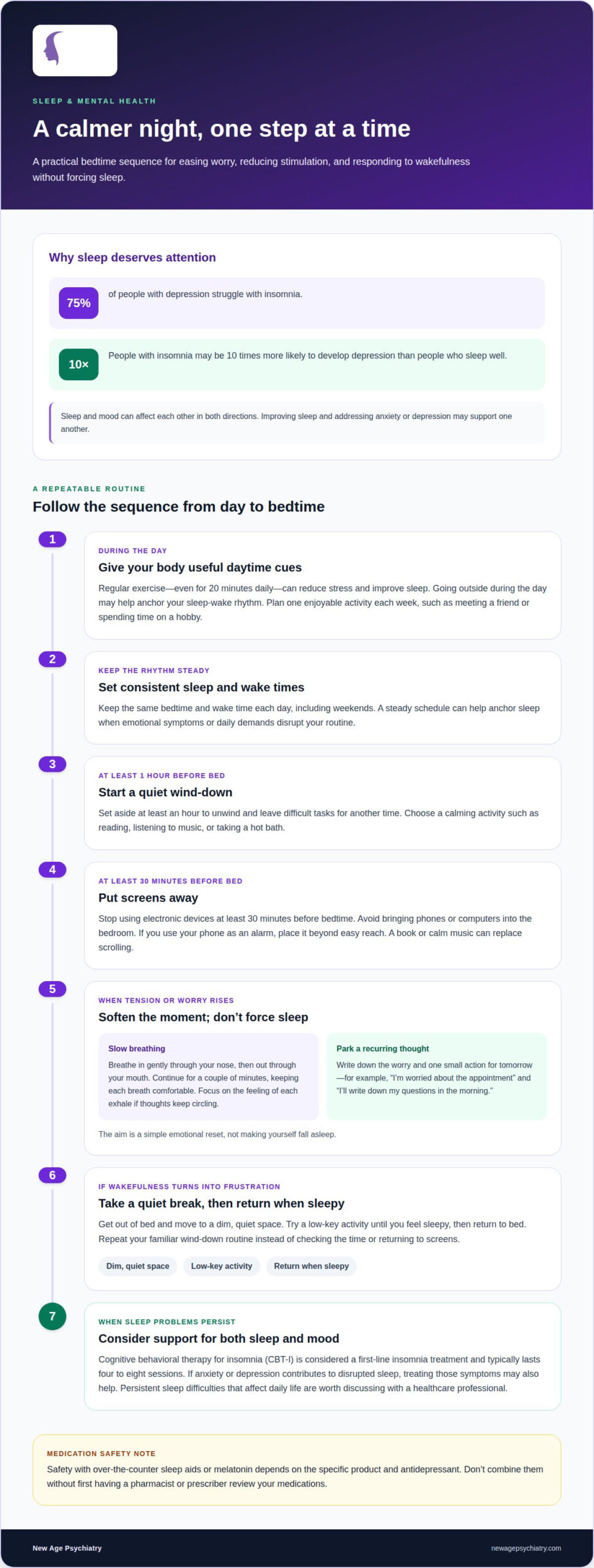
About 75% of people with depression struggle with insomnia, and poor sleep can also affect mood and mental health. If you can’t sleep due to anxiety and depression, help can start with calming bedtime habits and breathing strategies, alongside care that addresses the underlying symptoms. The relationship goes both ways, so improving sleep and treating anxiety or depression may support each other.
It can feel discouraging to be exhausted while your mind won’t settle, especially when another restless night makes the next day harder. That experience is real, and it doesn’t mean you’re doing anything wrong. If you can’t sleep due to anxiety and depression, help may involve understanding how sleep and mood affect each other, using practical ways to settle at bedtime, and getting mental health support when problems persist. This article explains what sleep anxiety can feel like and how to take a useful next step.
Key Takeaways
- Notice how changes in sleep and mood may affect each other, and track patterns that could help clarify what’s keeping you awake.
- Build a calming wind-down routine with slow breathing and fewer screen distractions before bed.
- Learn to recognize sleep anxiety, including worry that grows as bedtime approaches.
- If sleep difficulties persist or affect daily life, consider professional support that addresses both sleep and mental health.
1. What Is the Connection Between Sleep and Depression?
Sleep and mental health affect each other in both directions. Among people with depression, 75% struggle with insomnia. At the same time, people with insomnia may be 10 times more likely to develop depression than people who sleep well. Poor sleep can intensify irritability and make daily tasks feel harder. Depression can also disrupt sleep, creating a cycle that affects mood, energy, and concentration.
Rest supports brain function, mood, energy, and immune health. Adults generally need seven to nine hours of sleep daily. The National Institute on Aging recommends 7 to 9 hours of sleep for older adults. Persistent, recurring sleep difficulty that affects daytime functioning is the pattern clinicians assess as chronic insomnia. Safety with over-the-counter sleep aids or melatonin depends on the specific product and antidepressant. Don’t combine them without first having a pharmacist or prescriber review your medications.
Several factors can contribute to sleep problems, including anxiety, depression, irregular schedules, and sleep apnea. Sleep apnea raises the risks of depression and anxiety about threefold. A circadian rhythm, the body’s internal sleep-wake clock, can also affect when someone feels sleepy or wakes up. Teenagers’ melatonin production is delayed by about two hours compared with younger children and adults, and up to 80% of U.S. teens don’t get recommended sleep.
Small daytime habits can support healthier rest. Regular exercise, even for 20 minutes daily, can reduce stress and improve sleep. Choose balanced meals and notice whether eating patterns affect your energy or bedtime comfort. Going outside during the day may help anchor the sleep-wake rhythm. For self-care, plan one enjoyable activity each week, such as meeting a friend or spending time on a hobby. These steps support mental and behavioral well-being, but ongoing sleep or mood symptoms deserve attention as possible signs of an illness that needs care.
2. Bedtime relaxation and breathing strategies
Give your body a predictable signal that bedtime is approaching. Keep the same bedtime and wake time each day, including weekends. A steady routine can help anchor sleep when emotional symptoms or daily demands disrupt your schedule. Set aside at least an hour to unwind, and leave difficult tasks for another time. Choose a quiet activity, such as reading, listening to music, or taking a hot bath.
Put screens away before your wind-down begins. Stop using electronic devices at least 30 minutes before bedtime, and avoid bringing phones or computers into the bedroom. If you rely on your phone for an alarm, place it beyond easy reach. Replacing scrolling with a book or calm music gives your mind fewer stimulating cues as you prepare to fall asleep.
Try slow breathing when tension rises. Breathe in gently through your nose, then breathe out through your mouth. Continue for a couple of minutes, keeping each breath comfortable rather than forced. Deep breathing can activate the parasympathetic nervous system, which supports a calmer response. If your thoughts keep circling, focus attention on the feeling of each exhale. The goal is a simple emotional reset, not forcing sleep.
If wakefulness turns into frustration, get out of bed and move to a dim, quiet space. Try a low-key activity until you feel sleepy, then return to bed. This can help keep the bed associated with rest rather than prolonged worry. Repeat your familiar wind-down routine instead of checking the time or returning to screens.
Cognitive behavioral therapy for insomnia, or CBT-I, is considered a first-line insomnia treatment and typically lasts four to eight sessions. If anxiety or depression contributes to disrupted sleep, treating those symptoms can also help; depression care may include therapy, such as CBT, and medication. If persistent sleep problems are affecting daily life, support for insomnia can help address the pattern.
3. What is sleep anxiety?
What is sleep anxiety?
Sleep anxiety is worry or fear about sleeping that can make bedtime stressful. If you can’t sleep due to anxiety and depression, help may begin with noticing when the worry starts and what thoughts accompany it. You might anticipate being exhausted tomorrow, then feel more alert as you try to force sleep. If this fear regularly affects your evenings or daytime plans, discuss the pattern with a mental health professional.
What Is the Connection Between Sleep and Depression?
Depression and sleep can influence each other, and the timing of symptoms offers useful context. Consider whether sleep changes began before low mood, during it, or after a life change. Share that sequence with a healthcare professional, along with specific effects, such as difficulty concentrating after a restless night. This can guide a fuller discussion of mood, sleep, medications, and other possible contributors.
What are common sleep disorders associated with depression?
Insomnia and sleep apnea are sleep disorders associated with depression, but they involve different concerns. Insomnia can mean difficulty falling asleep, staying asleep, or waking earlier than intended. If you wake feeling unrefreshed despite spending time in bed, mention that too. Describe your sleep pattern and daytime effects rather than assuming depression explains every problem.
What can I do tonight to sleep when anxiety and depression keep me awake?
If you can’t sleep due to anxiety and depression, help tonight can begin by writing down the thought that keeps returning and one small action for tomorrow. For example, note, “I’m worried about the appointment,” then add, “I’ll write down my questions in the morning.” Choose a quiet activity until you feel sleepy, and focus on easing the next few minutes rather than judging the night by the clock.
What symptoms mean anxiety or depression-related sleep problems are an emergency?
Thoughts of suicide, plans to hurt yourself, or feeling unable to stay safe need immediate support. In the United States, call or text 988 to reach the 988 Suicide & Crisis Lifeline. If you can, tell someone you trust what’s happening and stay connected while seeking help. Don’t wait for sleep problems to resolve before reaching out about an immediate safety concern.
What daily habits can improve sleep when I have anxiety or depression?
Use a simple daily log to spot patterns without turning sleep into a test. Record when you have caffeine or alcohol, any changes in medication timing, and how rested you feel the next day. If sleep changes persist, share your notes with a clinician or pharmacist. The record can help you discuss habits or possible medication effects without overinterpreting a single difficult night.
4. The two-way relationship between depression and sleep
Depression can disrupt sleep, and poor sleep can affect mood and daily functioning. The pattern may involve difficulty falling asleep, waking repeatedly, or sleeping longer than usual. Fatigue can make ordinary tasks harder the next day, adding strain and making low mood or bedtime worries more difficult to manage.
Look at the pattern, not just the time spent in bed. Note whether low mood comes with early waking, restless sleep, or trouble getting up. Record when symptoms feel strongest and what happened before bed. A brief sleep-and-mood diary can give you a clearer picture to discuss during an appointment.
Some habits can add to the cycle. Alcohol before bed can reduce sleep quality and lead to more frequent interruptions. Stressful thoughts may also keep your mind alert even when your body feels tired. Rather than trying to force sleep, notice the thought, write down a practical next step for tomorrow, and return to a quiet activity until you feel sleepy.
Responding to both sleep and mood can help you understand the pattern. Keep a steady sleep schedule and track changes in mood alongside sleep. If depression symptoms persist, therapy and medication are among the approaches a healthcare professional may discuss. Addressing depression and insomnia together can make it easier to see which symptoms are improving and which still need attention.
Consider professional support if poor sleep and low mood keep interfering with work, relationships, or self-care. A conversation about depression treatment options can help you explore care for persistent symptoms.
New Age Psychiatry: ADHD Diagnosis and Treatment
New Age Psychiatry offers psychiatric care for adults whose sleep difficulties may be connected to insomnia, depression, or anxiety. If persistent symptoms are affecting your rest or daily life, its Insomnia Treatment, Depression Treatment, and Anxiety Treatment can address concerns through a telehealth care model. ADHD Diagnosis and Treatment is also available when attention-related symptoms are part of the picture.
A psychiatric assessment can help clarify symptoms and inform medication management. Sharing how your sleep, mood, and daytime functioning have changed can guide a conversation about care. Support can focus on the concerns affecting you, rather than treating each restless night as an isolated problem.
If you’d like to explore care, contact New Age Psychiatry or visit newagepsychiatry.com.
Take the Next Step Toward Restful Nights
If you can’t sleep due to anxiety and depression, help can start with a conversation about what’s making rest difficult. You don’t need to have every answer ready. Noticing how sleep, mood, and daily life affect one another is a useful place to begin.
New Age Psychiatry offers Insomnia Treatment and Depression Treatment, and can also assess ADHD when attention-related concerns are part of the picture. A psychiatric evaluation can help clarify symptoms and guide a care plan that reflects your needs. Reaching out doesn’t commit you to a particular treatment; it opens a door to discussing available options.
Contact New Age Psychiatry for support and take a considered next step. Better nights may begin with understanding what’s keeping you awake, and support can help you move forward with greater clarity.
Frequently Asked Questions
What is sleep anxiety?
Sleep anxiety is worry or fear about sleeping that can make bedtime stressful. For example, someone may lie awake anticipating tomorrow’s exhaustion, then become more alert while trying to force sleep. Notice when the worry starts and what thoughts accompany it. If fear of another difficult night regularly affects your evenings or daytime plans, discuss the pattern with a mental health professional.
What Is the Connection Between Sleep and Depression?
Depression and sleep can influence each other, and the timing of symptoms offers useful context. Consider whether sleep changes began before low mood, during it, or after another life change. Share that sequence with a healthcare professional, along with specific effects, such as difficulty concentrating after a restless night. This can guide a fuller discussion of mood, sleep, medications, and other possible contributors.
What are common sleep disorders associated with depression?
Insomnia and sleep apnea are sleep disorders associated with depression. Insomnia can involve difficulty falling asleep, staying asleep, or waking earlier than intended. Sleep apnea is another concern to raise if sleep feels unrefreshing despite time in bed. These conditions need different assessments, so describe your sleep pattern and daytime effects rather than assuming depression explains every problem.
What can I do tonight to sleep when anxiety and depression keep me awake?
Tonight, write down the thought that keeps returning and one small action you can take tomorrow. For example, note, “I’m worried about the appointment,” and, “I’ll write down my questions in the morning.” Then choose a quiet, low-stimulation activity until you feel sleepy. Try not to judge the night by the clock; focus on making the next few minutes calmer.
What symptoms mean anxiety or depression-related sleep problems are an emergency?
Thoughts of suicide, plans to hurt yourself, or feeling unable to stay safe need immediate support. In the United States, call or text 988 to reach the 988 Suicide & Crisis Lifeline. If you can, tell someone you trust what’s happening and stay connected while seeking help. Don’t wait for sleep problems to resolve before reaching out about an immediate safety concern.
What daily habits can improve sleep when I have anxiety or depression?
Use a simple daily log to spot patterns without turning sleep into a test. Record when you have caffeine or alcohol, any changes in medication timing, and how rested you feel the next day. If sleep changes persist, share your notes with a clinician or pharmacist. The record can help you discuss habits or possible medication effects without overinterpreting a single difficult night.