
The baby is finally asleep, and you are lying awake again. You expected to be tired. You did not expect to feel numb, guilty, or on edge most of the day, weeks after coming home. In Miami you tell yourself it is the heat and the night feeds. In Orlando or Tampa you wonder why everyone else seems to be enjoying this. For many new mothers, this has a name worth knowing: postpartum depression, a common and treatable mood condition after childbirth, not a personal failure.
This is an educational overview, not a personal diagnosis and not a promise of a quick fix. You will learn how baby blues vs postpartum depression differ, which postpartum depression symptoms to watch for, what 2023–2026 research says about postpartum anxiety and postpartum depression treatment, and how New Age Psychiatry evaluates mood by video for adults from Fort Lauderdale to Jacksonville.
Key Takeaways
- The “baby blues” are mild mood changes in the first two weeks after birth. Symptoms that are severe or last longer may be postpartum depression.
- Most episodes begin within 4 to 8 weeks after birth, but a CDC study found that most women with symptoms at 9 to 10 months had not reported them at 2 to 6 months.
- A 2026 global review estimated that at any given time during the postpartum year, about 6.8% of women meet criteria for major depression, with the highest rate in the first two weeks.
- A history of depression and current anxiety are among the strongest warning flags.
- Psychotherapy, antidepressants, and newer medications such as zuranolone are evidence-based options.
- A telehealth psychiatry Florida visit can review mood, sleep, and anxiety by secure video, wherever you are in the state.
What Is Postpartum Depression?
Postpartum depression is depression that occurs in the weeks and months after childbirth. The National Institute of Mental Health explains that perinatal depression includes depression during pregnancy and after birth, that most episodes begin within 4 to 8 weeks after the baby is born, and that it can affect any woman regardless of age, race, ethnicity, income, culture, or education. NIMH is also clear that a woman is not to blame for having it.
The U.S. Food and Drug Administration describes postpartum depression as a major depressive episode that typically occurs after childbirth but can also begin during the later stages of pregnancy. In other words, it is a form of major depression with a specific and demanding timing.
Baby Blues vs Postpartum Depression
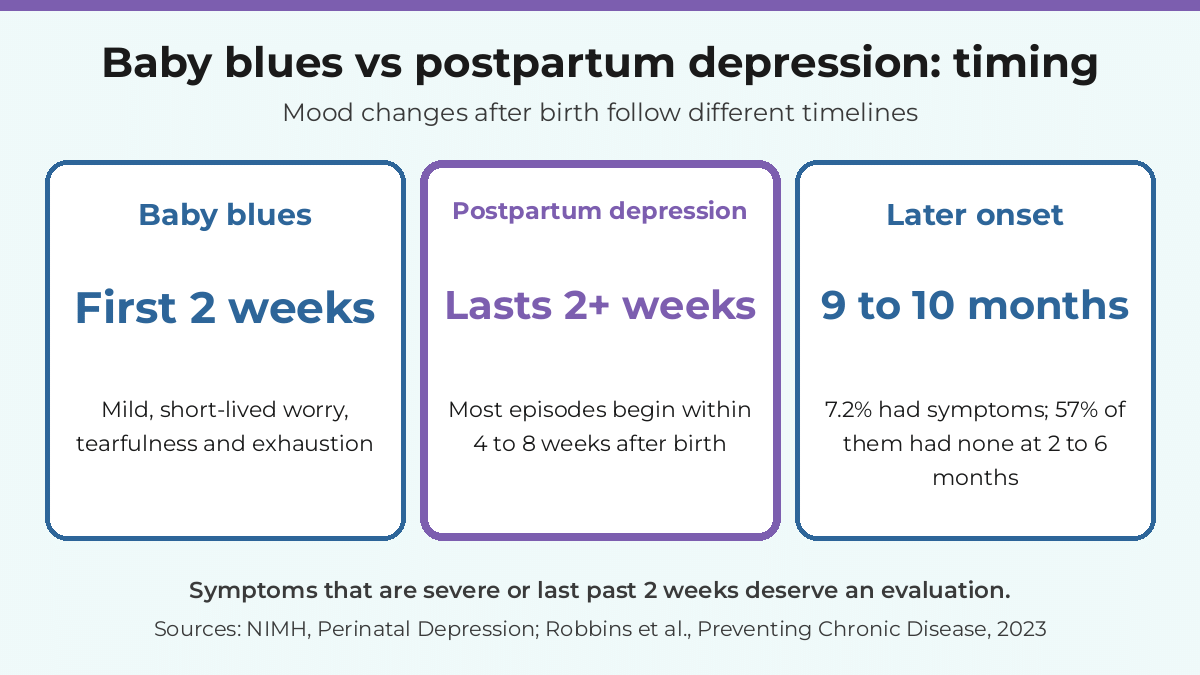
Many new parents feel teary, worried, and wiped out in the first days at home. According to NIMH, the baby blues are mild, short-lasting mood changes in the first 2 weeks after giving birth, while mood changes that are severe or last longer than 2 weeks may be signs of postpartum depression. NIMH adds that women with postpartum depression generally will not feel better without treatment.
It does not always start right away
Postpartum depression can appear months after delivery. In a CDC analysis of the Pregnancy Risk Assessment Monitoring System (PRAMS) in seven states, Robbins and colleagues found that 7.2% of women had postpartum depressive symptoms at 9 to 10 months, and 57.4% of them had not reported depressive symptoms at 2 to 6 months (PubMed). The authors recommended screening throughout the first postpartum year. A National Institutes of Health cohort of 4,866 mothers by Putnick and colleagues found that about one in four mothers had elevated depressive symptoms at some point in the 3 years after giving birth (PubMed).
Postpartum Depression Symptoms to Watch For
NIMH lists common symptoms of perinatal depression, including:
- A sad, anxious, or “empty” mood most of the day, nearly every day, for at least 2 weeks
- Irritability, frustration, or restlessness
- Guilt, worthlessness, or feeling helpless
- Loss of interest or pleasure in things you used to enjoy
- Trouble sleeping even when the baby is asleep
- Trouble bonding with the baby, or persistent doubts about caring for the baby
- Thoughts of death, of harming yourself or the baby, or of suicide
Some symptoms, like fatigue and broken sleep, overlap with ordinary newborn life. That overlap is why a careful evaluation is more useful than a checklist alone.
How Common Is Postpartum Depression?
Estimates depend on how depression is measured. In a 2026 systematic review and meta-regression in The Lancet Psychiatry covering 780 studies and more than two million women, Ferrari and colleagues estimated that the point prevalence of major depressive disorder was 6.8% at any given time during the postpartum year, that prevalence was highest in the first 2 weeks after birth and stayed elevated throughout the year, and that symptom questionnaires overestimated prevalence compared with diagnostic interviews (PubMed). That last point matters: a high score on a screening questionnaire is a reason to get evaluated, not a diagnosis by itself.
Postpartum anxiety often travels with depression
Postpartum anxiety is common on its own and frequently overlaps with low mood. A 2025 meta-analysis of 122 studies and 560,736 women by Ou and colleagues found that about 8% of postpartum women had co-occurring anxiety and depression symptoms, and roughly 1 in 10 women experience both during pregnancy and postpartum (PubMed). Racing worry, constant checking on the baby, or a sense of dread deserve the same attention as sadness.
Who Is at Higher Risk?
NIMH notes that risk rises with a personal or family history of depression or bipolar disorder, or depression in a previous pregnancy, along with life stress, the demands of childbirth and newborn care, and hormonal changes. In the CDC PRAMS study, depression before or during pregnancy was linked to about four times the prevalence of symptoms at 9 to 10 months postpartum (prevalence ratio 4.03), and current postpartum anxiety to about 3.6 times (prevalence ratio 3.58).
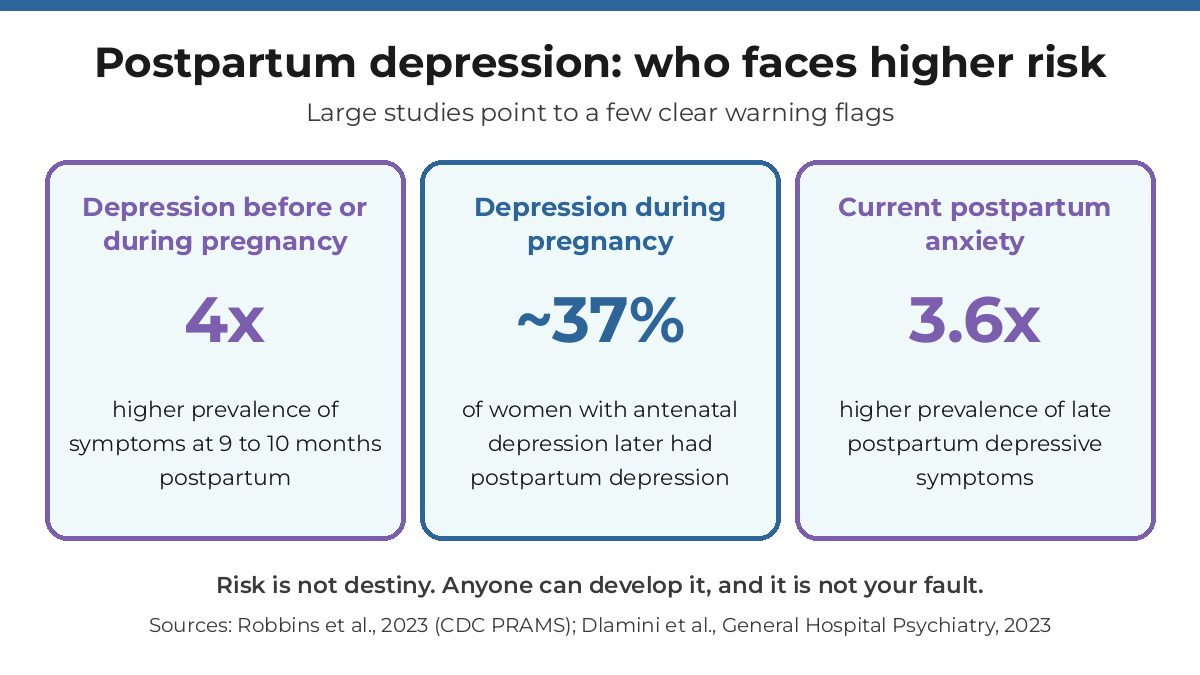
Depression during pregnancy is a particularly strong signal. A 2023 meta-analysis of 88 cohort studies with more than one million women by Dlamini and colleagues found that about 37% of women with antenatal depression later had postpartum depression, and they had more than four times the odds of developing it (odds ratio 4.58) (PubMed). If you struggled during pregnancy, planning follow-up before or soon after delivery is a sensible step.
Postpartum Depression Treatment: What the Evidence Says
The encouraging news is that postpartum depression treatment draws on well-studied options. NIMH reports that treatment usually includes therapy, medication, or a combination, and with proper treatment most women feel better. A 2023 review in Psychiatric Clinics of North America by Stewart and Payne concluded that screening should be done routinely in the care of pregnant and postpartum women, and that the risk-benefit analysis favors antidepressant medications during pregnancy and lactation compared with the risk of untreated maternal depression (PubMed). Choices are individualized based on your symptoms, past response, breastfeeding plans, and health history, ideally in coordination with your OB-GYN or primary care clinician.
Zuranolone: a newer oral option
In August 2023 the FDA approved zuranolone (Zurzuvae) as the first oral medication indicated for postpartum depression in adults, taken once daily for 14 days. In the phase 3 trial by Deligiannidis and colleagues, women with severe postpartum depression who took zuranolone had significantly greater improvement in depressive symptoms than those on placebo at day 15, with improvement also seen at days 3, 28, and 45; the most common side effects were sleepiness, dizziness, and sedation (PubMed). The FDA label carries a boxed warning that it can impair driving, and patients should not drive for at least 12 hours after a dose. It is one option among several, not a fit for everyone.
Can telehealth care work for new moms?
Getting to an office with a newborn is hard. Remote care removes that barrier, and the research is promising. A 2026 meta-analysis of 23 randomized controlled trials by Huang and colleagues found that interactive tele-mental health interventions significantly reduced depressive and anxiety symptoms, with the strongest effects in the postpartum period (PubMed). A 2024 meta-analysis of 21 trials by Xie and colleagues similarly found that eHealth interventions significantly reduced postpartum depression, anxiety, and stress compared with control groups (PubMed). These studies looked mostly at remotely delivered psychological programs, so they support the format of virtual care rather than any single treatment.
What a Telehealth Evaluation in Florida Looks Like
A first visit is a conversation by secure video. You can join from the nursery in Jacksonville or the couch in Fort Lauderdale. Expect questions about:
- When your mood changed, and whether anything similar happened before or during pregnancy
- Sleep, appetite, energy, and how you are coping with feeds and nights
- Anxiety, intrusive worries, and how you feel about caring for the baby
- Breastfeeding plans, current medications, and any medical conditions
- Your support at home and any personal or family history of depression or bipolar disorder
Telemedicine has limits. As our FAQ explains, New Age Psychiatry does not provide telehealth care for people with a recent suicide attempt or suicidal thoughts in the past six months, psychosis, or bipolar I disorder. If your history points that way, we will tell you plainly that a higher level of care is the safer fit.
Practical Steps Before Your First Visit
- Jot down how you have felt most days for the past two weeks, even in a quick notes app.
- Note when the change began: during pregnancy, right after birth, or months later.
- List every medication and supplement you take, and whether you are breastfeeding.
- Write down any personal or family history of depression, anxiety, or bipolar disorder.
- Ask a partner or friend what changes they have noticed. Their view can help.
Who This Guide Is For, and Who Needs Faster Care
This guide is for Florida mothers who feel “not like myself” after having a baby, who struggled with mood during pregnancy, or who wonder whether constant worry is more than new-parent nerves. It is not emergency care. NIMH notes that postpartum psychosis, which can include hallucinations, delusions, paranoia, mania, or confusion, is a psychiatric emergency. If you notice those signs, or if you or someone you know is thinking about suicide or harming the baby, call or text 988, chat at 988lifeline.org, or call 911 or go to the nearest emergency room.
How New Age Psychiatry Approaches Postpartum Depression in Florida
New Age Psychiatry is a telehealth-only psychiatry practice serving adults across Florida, led by Hilary Ortega, PMHNP-BC. Visits are by video, so you can be seen from home whether you live in Miami, Orlando, Tampa, Fort Lauderdale, or Jacksonville. You need to be in Florida at the time of each visit. The focus is a careful evaluation of your mood history, evidence-informed medication choices, and steady follow-up, coordinated with your other clinicians when needed.
If you have been telling yourself this is just what new motherhood feels like, an evaluation is a reasonable next step. You can also read related guides on the New Age Psychiatry blog, including perimenopause depression in Florida, PMDD and mental health, and how to get a psychiatric evaluation online in Florida, or learn more about telehealth psychiatry in Florida.
Frequently Asked Questions
How long do the baby blues last?
The baby blues typically show up in the first two weeks after birth and fade on their own. Mood changes that are severe or last longer than two weeks may be postpartum depression and are worth an evaluation.
Can postpartum depression start months after birth?
Yes. Most episodes begin within 4 to 8 weeks, but a CDC study found that most women with depressive symptoms at 9 to 10 months postpartum had not reported them at 2 to 6 months.
Is postpartum depression treatable?
Yes. Psychotherapy, antidepressants, or both are common approaches, and zuranolone is an FDA-approved oral option for postpartum depression in adults. A clinician can help you weigh options, including breastfeeding considerations.
Can I get a postpartum depression evaluation online in Florida?
Yes. New Age Psychiatry offers telehealth evaluations and medication management to adults located in Florida, from Miami and Fort Lauderdale to Tampa, Orlando, and Jacksonville, within the limits described in our FAQ.
References
Deligiannidis, K. M., Meltzer-Brody, S., Maximos, B., Peeper, E. Q., Freeman, M., Lasser, R., Bullock, A., Kotecha, M., Li, S., Forrestal, F., Rana, N., Garcia, M., Leclair, B., & Doherty, J. (2023). Zuranolone for the treatment of postpartum depression. American Journal of Psychiatry, 180(9), 668–675. https://doi.org/10.1176/appi.ajp.20220785
Dlamini, L. P., Amelia, V. L., Shongwe, M. C., Chang, P. C., & Chung, M. H. (2023). Antenatal depression across trimesters as a risk for postpartum depression and estimation of the fraction of postpartum depression attributable to antenatal depression: A systematic review and meta-analysis of cohort studies. General Hospital Psychiatry, 85, 35–42. https://doi.org/10.1016/j.genhosppsych.2023.09.005
Ferrari, A. J., Miller, P. A., Shadid, J., Herrera, A. M., Ahmed, S. M., Malpani, P., Noyes, T. S., Chihara, I., McHugh, T. A., Ayu Nanditha, N. G., Vos, T., Kassebaum, N. J., Dirac, M. A., & Santomauro, D. F. (2026). The global prevalence of major depressive disorder during the peripartum period: A systematic review and meta-regression. The Lancet Psychiatry, 13(6), 461–471. https://doi.org/10.1016/S2215-0366(26)00085-4
Huang, L., Wang, C., & Wen, J. (2026). Interactive tele-mental health interventions for maternal depression across perinatal stages: A systematic review and meta-analysis. Journal of Affective Disorders, 412, Article 122086. https://doi.org/10.1016/j.jad.2026.122086
National Institute of Mental Health. (n.d.). Perinatal depression. U.S. Department of Health and Human Services, National Institutes of Health. Retrieved October 29, 2026, from https://www.nimh.nih.gov/health/publications/perinatal-depression
Ou, L., Shen, Q., Xiao, M., Wang, W., He, T., & Wang, B. (2025). Prevalence of co-morbid anxiety and depression in pregnancy and postpartum: A systematic review and meta-analysis. Psychological Medicine, 55, Article e84. https://doi.org/10.1017/S0033291725000601
Putnick, D. L., Sundaram, R., Bell, E. M., Ghassabian, A., Goldstein, R. B., Robinson, S. L., Vafai, Y., Gilman, S. E., & Yeung, E. (2020). Trajectories of maternal postpartum depressive symptoms. Pediatrics, 146(5), Article e20200857. https://doi.org/10.1542/peds.2020-0857
Robbins, C. L., Ko, J. Y., D’Angelo, D. V., Salvesen von Essen, B., Bish, C. L., Kroelinger, C. D., Tevendale, H. D., Warner, L., & Barfield, W. (2023). Timing of postpartum depressive symptoms. Preventing Chronic Disease, 20, Article E103. https://doi.org/10.5888/pcd20.230107
Stewart, A. L., & Payne, J. L. (2023). Perinatal depression: A review and an update. Psychiatric Clinics of North America, 46(3), 447–461. https://doi.org/10.1016/j.psc.2023.04.003
U.S. Food and Drug Administration. (2023, August 4). FDA approves first oral treatment for postpartum depression [Press release]. https://www.fda.gov/news-events/press-announcements/fda-approves-first-oral-treatment-postpartum-depression
Xie, H., Cong, S., Wang, R., Sun, X., Han, J., Ni, S., & Zhang, A. (2024). Effect of eHealth interventions on perinatal depression: A meta-analysis. Journal of Affective Disorders, 354, 160–172. https://doi.org/10.1016/j.jad.2024.03.027