

EXECUTIVE SUMMARY
Reaching out for mental health support through telehealth can bring both relief and nervousness at the same time. This guide helps you arrive at your first online psychiatry appointment with more clarity and confidence. It includes what information to prepare (symptoms, medical history, medications), what key questions to bring, and practical tips to help you get the most out of the visit. The goal is for you to leave with a clear plan and a better understanding of your options—not with more uncertainty.
HEADER IMAGE PROMPT
“Realistic healthcare editorial photography, adult sitting on a bright sofa in a Florida home, laptop open with a medical video call visible but softly blurred for privacy, calm yet expectant expression, soft natural light, sky blue and sand color palette, open notebook with handwritten notes and a glass of water in the foreground, hopeful facial expression, professional, warm, trustworthy.”
ARTICLE
Starting therapy or medication for the first time can bring a mix of relief and anxiety. If you have scheduled your first psychiatry appointment through telehealth, that alone is something to be proud of. Seeking help is a strong and meaningful step. The good news is that a first appointment is essentially a full initial evaluation: your psychiatrist gathers information to understand your symptoms, reviews your history, and begins building a treatment plan that may include medication, therapy, lifestyle changes, or a combination of approaches.
One of the best ways to reduce anxiety before your appointment is to prepare a few essentials ahead of time. Start with a simple list of your main symptoms. Write down what you have been feeling, when it started, how often it happens, and what seems to make it better or worse. Instead of writing “I feel anxious,” try something more specific like, “I wake up with anxiety most mornings and sometimes wake up in the middle of the night with a racing heart.” Clear details help your provider see patterns faster.
You should also gather relevant medical and emotional history. That includes past diagnoses, ongoing medical conditions, past traumatic experiences, and any family history of depression, ADHD, anxiety, substance use, or other mental health concerns. This does not need to be formal. Even a rough list on your phone or in a notebook can help you feel more organized.
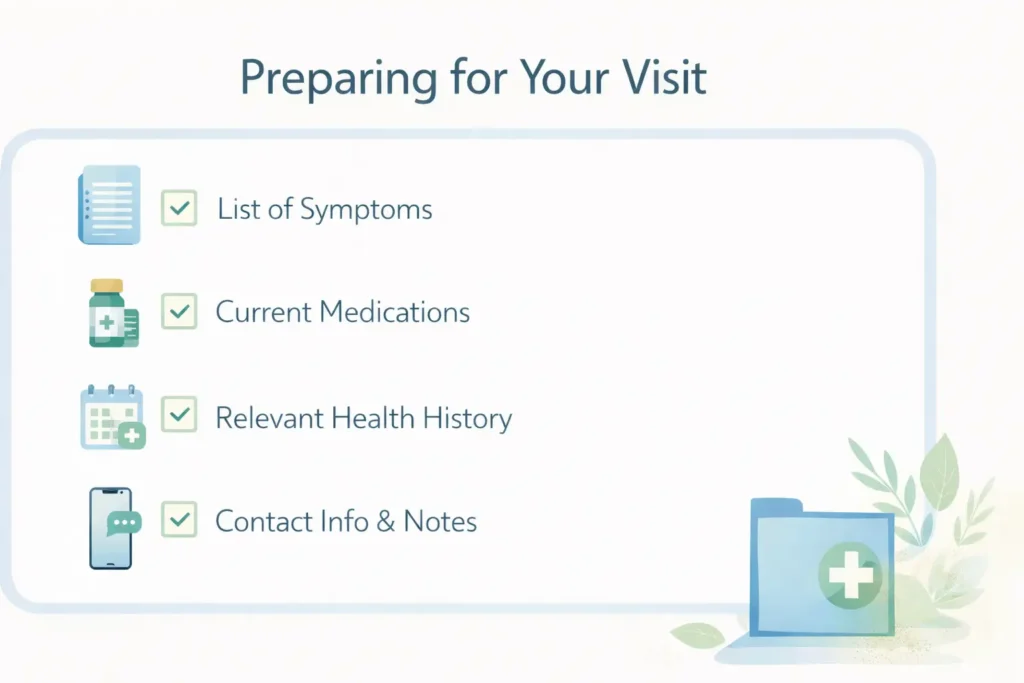
It is also important to have a complete list of medications and supplements you currently take. Include names, dosages, and how often you take them. If you have tried medications in the past and had side effects or did not feel improvement, include that too. This gives your psychiatrist a clearer picture of what may be helpful and what may not be the right fit.
On the day of your appointment, choose a private and quiet space where you can speak openly. Close the door if possible, silence your phone, and use headphones for more privacy. Make sure your device is charged and your internet connection is stable. Keep water nearby, and give yourself permission to feel emotional if the conversation brings something up. This is not a test—it is a conversation designed to support you.
During the appointment, your psychiatrist will likely ask about your symptoms, your daily functioning, your sleep, your mood, your work or school life, your relationships, and your support system. They may also ask about past treatment experiences and use a few short screening questions to better understand your current state. The process is meant to be collaborative, so if something is unclear, you can always pause and ask for an explanation.

A great way to make the appointment more helpful is to prepare three to five questions in advance. For example:
What diagnosis are you considering and why?
What treatment options do you recommend?
If medication is suggested, how long might it take to work and what side effects should I watch for?
How often should follow-up appointments happen?
What is the best way to reach out if I have questions after the visit?
These questions help turn the appointment into an active conversation rather than a passive experience. They also help you leave with a clearer understanding of what comes next.

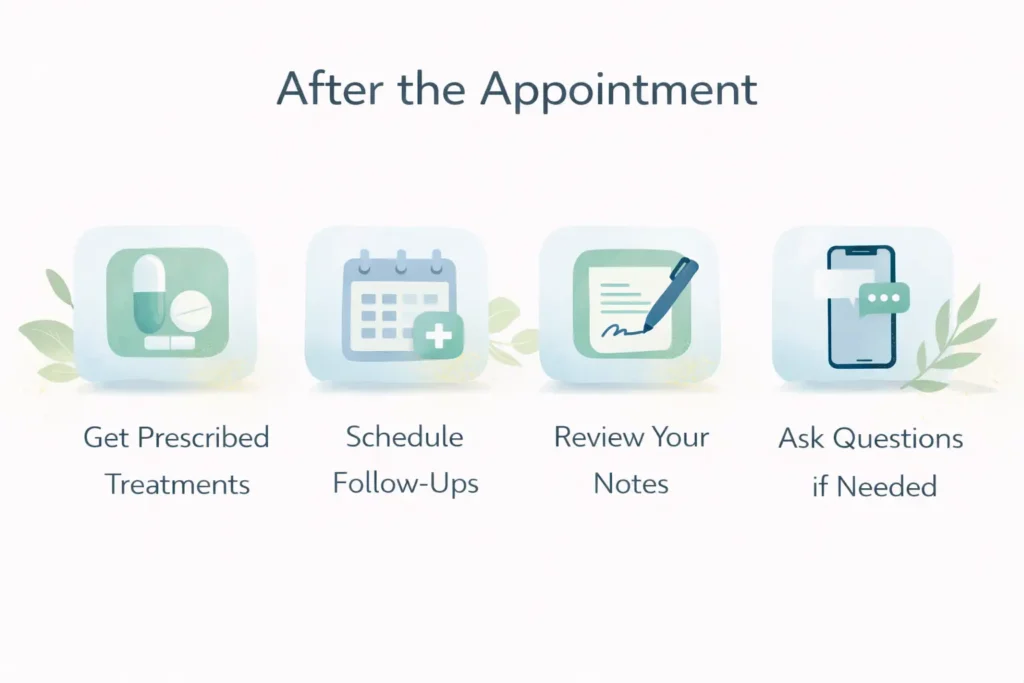
After the appointment, it is normal if you do not feel like everything is solved right away. Sometimes the first visit brings clarity more than immediate relief. Still, clarity matters. In the days and weeks that follow, follow the plan you discussed as closely as possible. If medication is prescribed, take it exactly as directed. If therapy is recommended, schedule it. If you are asked to track your symptoms, do that consistently.
Keep in mind that mental health treatment often involves adjustment. A medication may need time. A dosage may change. A strategy that works for one person may need to be adapted for another. Progress does not have to be dramatic to be meaningful. Small improvements count.
Your mental health matters. A first psychiatry appointment through telehealth in Florida is not just another task on your calendar—it is a brave investment in your well-being. With a little preparation, you can walk into that conversation feeling more informed, more grounded, and more empowered to take the next step.
#mentalhealth #healingjourney #selfgrowth #therapytools #mindsetshift #mentalwellness #florida #newagepsychiatry