

Medication management is more than choosing a prescription. Knowing what happens in an online medication management appointment can make the process clearer: a prescriber reviews your symptoms, health and medication history, then discusses treatment options and what to monitor. Follow-up visits focus on how the plan is working and whether it needs adjustment.
It’s understandable to want practical details before discussing mental health care on screen. During a telehealth visit, you’ll talk with a mental health prescriber by video or phone, share what you’ve been experiencing and ask questions about medication effects and next steps. ADHD care can also involve discussing how attention, focus and other symptoms affect daily life, alongside your previous treatment experiences and preferences. This guide explains what to expect before and during a virtual visit, how ADHD medication management may be discussed, and how follow-ups support ongoing care. It also covers what to track between appointments and when a routine online visit isn’t the right kind of help.
Key Takeaways
- A medication visit gives your prescriber a chance to review symptoms, treatment history, and how medication is affecting daily life.
- Follow-up timing and treatment adjustments depend on your progress, side effects, and the medication being considered.
- For ADHD care, sharing how focus and other symptoms affect everyday activities can help shape a more informed treatment discussion.
- Track changes between visits and ask your prescriber what to do about side effects or missed doses; seek urgent care for an immediate safety concern.
How does your clinician support your safety between visits?
Between appointments, tracking changes helps your clinician assess medication effects and identify concerns. Clear guidance also helps you know what to do if symptoms shift or you miss a dose.
How Clinicians Track Medication Effects
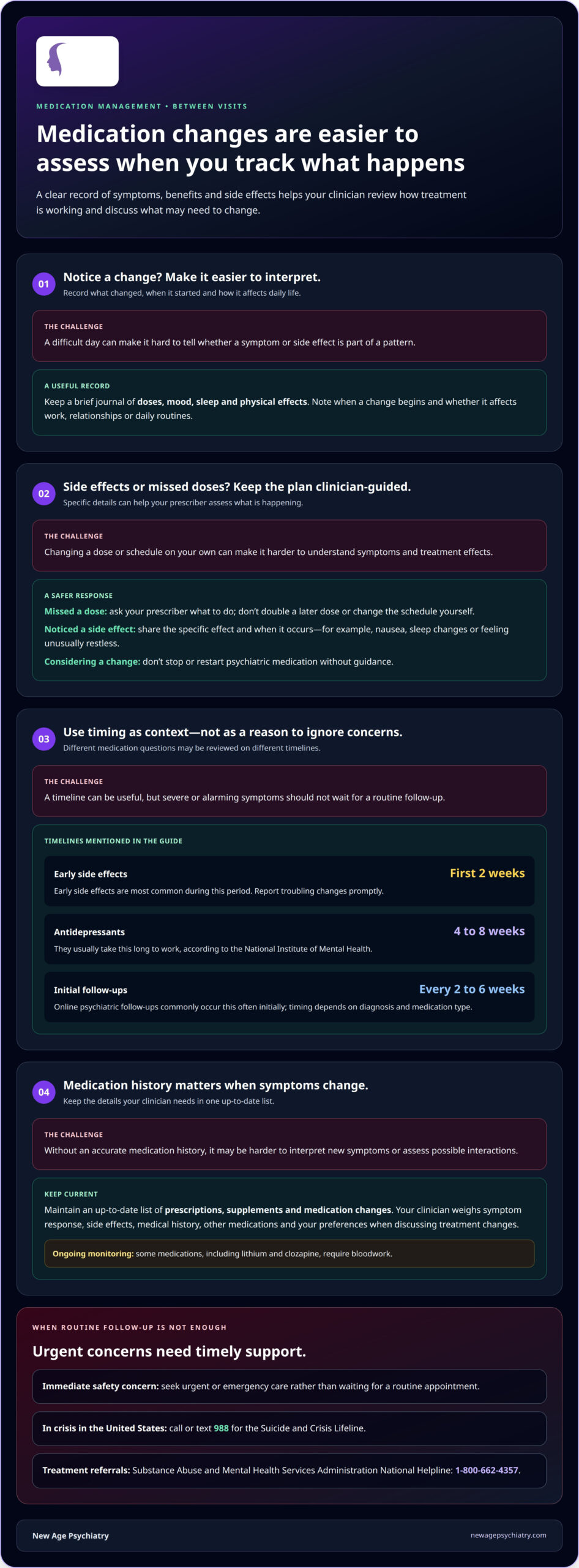
Medication monitoring means reviewing symptom changes, benefits, and side effects over time. A brief journal of doses, mood, sleep, and physical effects can give your clinician useful details between visits. Note when a change begins and whether it affects work, relationships, or daily routines. Early side effects are most common during the first 2 weeks, so report troubling changes promptly. This record can help distinguish patterns from a difficult day.
Missed Doses and Adherence
Adherence means taking medication as prescribed and noting any missed doses. If you miss one, ask your prescriber what to do rather than doubling a later dose or changing the schedule yourself. Keep an up-to-date list of prescriptions, supplements and medication changes. These details help your clinician interpret new symptoms and assess possible interactions. Don’t stop or restart psychiatric medication without guidance, even when you feel stable.
Medication Recommendations and Side Effects
Your clinician weighs symptom response, side effects, medical history, other medications, and your preferences when discussing a treatment change. Share specific effects, such as nausea, sleep changes, or feeling unusually restless, and when they occur. Antidepressants usually take 4 to 8 weeks to work, according to the National Institute of Mental Health. That timeline can inform a review, but severe or alarming symptoms need prompt attention rather than waiting for a routine follow-up.
Ask what side effects to watch for, what to do after a missed dose, and how follow-ups are arranged. Some medications, including lithium and clozapine, require ongoing bloodwork. Contact your clinician about concerns instead of adjusting medication based on online information. If you’re in crisis in the United States, call or text 988 for the Suicide and Crisis Lifeline. For treatment referrals, the Substance Abuse and Mental Health Services Administration National Helpline is 1-800-662-4357. An immediate safety concern calls for urgent or emergency care, not a routine appointment.
What is online medication management?
Online medication management is ongoing psychiatric care focused on how treatment is working and what may need to change. To understand what happens in an online medication management appointment, it helps to know how follow-ups, medication decisions and other supports fit together.
Follow-Up Appointments
A follow-up is a scheduled visit where the provider reviews your response and updates the treatment plan. Online psychiatric follow-ups commonly occur every two to six weeks initially, depending on diagnosis and medication type. These visits help patients describe what has changed since the previous appointment and discuss whether the current approach remains suitable. Later scheduling depends on treatment stage, response, side effects, and clinical risk, rather than following one fixed timetable.
Medication and Dose Adjustments
An adjustment is a change to dosage or medication based on symptoms, response, and treatment needs. If benefits remain limited or side effects interfere with daily life, the provider may discuss adjusting the dose, switching medication, or considering additional therapy. Your previous response, other medications, medical history, and preferences all inform that conversation. A virtual visit gives you space to explain what feels different and understand the reason for a proposed change. Follow the agreed plan rather than changing a dose independently.
Refills and Additional Therapies
Refills keep an ongoing treatment plan supplied, while additional therapies can address needs medication alone may not cover. Refills are commonly handled during follow-up visits or, for stable patients, through a patient portal. The provider can review continued benefit and tolerability before discussing the next prescription. Medication management may also include discussion of therapy, sleep or stress management, exercise, and coping tools for anxiety or low mood. These options can complement medication, with recommendations shaped around your treatment goals.
For example, a patient whose mood improves but sleep remains disrupted can raise both changes during a virtual review. The provider can consider whether the existing plan needs adjustment or whether another support fits. If you’re considering online psychiatric care, a medication evaluation can help connect symptoms and treatment options.
Virtual medication management and telehealth appointments
A virtual medication visit connects you with a mental health prescriber by video or phone. It can support clinical monitoring, although some evaluations or treatment needs require in-person care.
Preparing for a Telehealth Appointment With Your Clinician
Preparing means setting up a private space and working technology before the visit. These steps help you discuss symptoms clearly and protect the conversation from interruptions. Test the video link or app, check your internet connection, and keep your phone nearby in case the appointment switches to audio. Choose a quiet room, use headphones, and let nearby people know you need privacy. Gather prescriptions, supplements, allergies, and questions so you can explain what may affect treatment.
Appointment Length
Appointment length depends on whether it’s an initial evaluation or a follow-up. An online psychiatric first evaluation typically lasts 45 to 60 minutes, allowing time to review medical history, symptoms, and past treatment. Follow-up appointments commonly last 15 to 30 minutes, with the discussion focused on response, side effects, and next steps. Knowing the visit type helps you set aside enough uninterrupted time and prioritize what you want to discuss.
Risks and Limitations
Online care has limits when assessment requires physical examination, vital signs, laboratory testing, or another form of hands-on care. A weak connection can interrupt a conversation, and video cannot provide every clinical observation available in person. Some medications require laboratory monitoring, which may happen locally, with results reviewed during a virtual visit. Telepsychiatry should maintain appropriate clinical, ethical, privacy, and safety standards.
Controlled medication prescriptions have additional rules. As of 2026, federal telemedicine flexibilities for prescribing Schedule II through V controlled medications have been extended through December 31, 2026, when applicable requirements are met, according to the Drug Enforcement Administration. Telehealth prescribers must be licensed in the state where the patient is physically located during the visit. For immediate safety concerns, seek urgent or emergency care rather than waiting for telehealth.
Online ADHD medication management
Online ADHD care brings assessment and medication follow-up into a virtual setting. The focus is how attention-related symptoms affect daily functioning, what treatments you’ve tried and which concerns matter most to you. A secure conversation can cover focus, organization, restlessness, sleep and anxiety without reducing the evaluation to a prescription decision.
During an evaluation, the prescriber reviews symptoms, medical history and previous treatment experiences. Concrete examples help show how ADHD affects work, relationships, hobbies or everyday tasks. Describe what feels hardest, when it happens and how it varies across settings. If anxiety or sleep concerns are also present, mention them so the clinician can understand the wider picture before discussing psychiatric medication.
Medication decisions take into account symptom patterns, past responses, side effects, other medications, medical history and your preferences. For example, explain whether a treatment helped with focus but affected sleep, or whether symptoms remain disruptive during the day. Ask about possible effects, interactions and what changes to monitor. The goal is a treatment discussion grounded in your experience, not a one-size-fits-all choice.
Follow-up visits assess how the plan is working after treatment begins or changes. When starting or changing medication, reviews are commonly scheduled every 4-6 weeks. Two weeks of dose and daily-mood notes, when available, can help make that discussion specific. Include focus, sleep, energy, appetite, and physical symptoms, plus any missed doses or concerns. Don’t adjust medication independently between visits.
Telehealth rules for controlled medications, including some ADHD stimulants, can affect prescribing. The prescriber considers applicable requirements alongside your clinical needs. Online care may also involve local laboratory testing when a medication requires monitoring, with results reviewed virtually. For adults seeking an ADHD evaluation and ongoing treatment, explore online ADHD care as a next step.
New Age Psychiatry
New Age Psychiatry provides virtual psychiatric diagnosis and medication management for adults who want professional support with treatment decisions. If symptoms, side effects, or questions about a current plan leave you unsure about your next step, a clinical evaluation can help clarify your concerns and discuss possible options.
Care may address ADHD, insomnia, depression or anxiety, with recommendations shaped around your symptoms, treatment history and response. Medication management includes reviewing how a plan is working and discussing adjustments when appropriate. New Age Psychiatry is a place to turn when you’re ready to discuss ongoing psychiatric care, rather than making medication changes on your own.
For support discussing your medication management needs, contact New Age Psychiatry.
Take the Next Step Toward Personalized Care
Knowing what happens in an online medication management appointment gives you a clearer starting point for deciding what support fits your needs. Before beginning care, consider what you’d like to discuss, such as changes in focus, sleep or mood, and what you hope treatment will help you manage. Your priorities can guide a conversation about appropriate next steps.
New Age Psychiatry offers ADHD diagnosis and treatment, insomnia treatment and depression treatment for adults in Florida. These services provide an opportunity to discuss psychiatric care related to your concerns. You don’t need to have every question answered before reaching out. Sharing what’s been difficult is a useful place to begin.
Contact New Age Psychiatry to discuss your care needs. Taking that first step can open the door to a thoughtful conversation about moving forward.
Frequently Asked Questions
What happens at a virtual psychiatric appointment?
A virtual psychiatric appointment gives you time to discuss your concerns and treatment goals with a prescriber. You can explain what you hope will change, such as staying focused at work or sleeping more consistently. The clinician uses your account, health history and treatment preferences to guide the discussion. A prescription isn’t automatic; recommendations follow an assessment of your needs.
What Happens Step by Step During the Visit?
The process generally begins with scheduling an initial evaluation and completing health-history forms. At the virtual visit, the clinician discusses your symptoms, medical history and past treatments, then reviews possible next steps with you. You can raise questions before the appointment ends, including what changes to monitor. The treatment plan may include medication recommendations or other supports suited to your concerns.
What if my medication isn’t working?
Tell your prescriber what remains difficult and how medication affects your daily routine. For example, describe whether focus improves in one setting but remains difficult elsewhere, or whether a side effect gets in the way. The clinician can review your response, treatment history and preferences before discussing options. Don’t change or stop psychiatric medication on your own while waiting for guidance.
How Often Do You Need a Medication Review?
Medication reviews are scheduled according to treatment stage, response, side effects and clinical needs. Starting medication or changing a dose may call for closer follow-up than a stable plan. A review can also help when symptoms shift or another medication is added. Share meaningful changes at your next visit so your prescriber has relevant context for deciding what to discuss.
What happens during an online medication management appointment?
The visit is a discussion with a psychiatric provider about your symptoms, treatment experience and possible next steps. You can ask why a medication is being considered, what effects to watch for and when to raise concerns. The clinician considers your preferences alongside your history and response. This conversation helps you understand the reasoning behind recommendations and take part in care decisions.
What information should you provide for a virtual medication management visit?
Share your current prescription names and doses, over-the-counter medications, supplements, allergies and past medication reactions. Include treatments you’ve tried and what you remember about their benefits or unwanted effects. If symptoms affect work, relationships or sleep, a specific example can make their impact clearer. Mentioning changes since your last review helps the prescriber understand your current situation.