

If you’re searching for “managing anxiety without benzodiazepines Florida,” you may be worried about dependence, stopping a medication, or anxiety returning. Those concerns deserve a careful conversation, not an abrupt change. The first step is understanding what is driving your symptoms and what kind of support fits your life.
There are different ways to approach anxiety, and treatment does not look the same for everyone. A psychiatric clinician can review your symptoms, current medications, preferences, and goals with you. If you take a benzodiazepine, do not stop or change your dose without guidance from your prescribing clinician. A gradual, individualized plan can help you consider next steps with care.
This guide covers medication and non-medication approaches, questions to discuss with a clinician, and practical ways to prepare for that conversation. New Age Psychiatry provides virtual psychiatric evaluations and ongoing medication management for adults in Florida, offering a way to review anxiety care and discuss a plan tailored to your circumstances.
Key Takeaways
- Wanting a plan that does not rely on benzodiazepines is a valid preference. Discuss medication changes with your prescriber.
- Clinicians assess anxiety by considering symptom patterns, triggers, sleep, health history, and effects on daily life.
- Medication, psychotherapy, and supportive daily habits are different approaches to discuss with a clinician.
- Prepare for a care conversation by organizing your symptoms, medication details, concerns, and goals.
- Managing anxiety without benzodiazepines Florida can start with a virtual psychiatric evaluation focused on your symptoms and treatment goals.
Managing anxiety without benzodiazepines: what the choice really means
Benzodiazepines are prescription medications that clinicians may use for anxiety. Examples include alprazolam and lorazepam. Their effects vary from person to person, and whether one is appropriate depends on individual symptoms and clinical circumstances. Exploring care that does not rely on benzodiazepines is a valid preference, not a failure or something to feel ashamed about.
People searching “managing anxiety without benzodiazepines Florida” may want to discuss other medication options, non-medication support, or a gradual change to their current treatment. Choosing another approach does not mean going without care. A plan may include a medication that is not a benzodiazepine, psychotherapy, supportive daily habits, or a combination of approaches. An Anxiety Disorder Overview provides general context, while a clinician can help relate your symptoms and history to a personal care discussion.
Why someone may want to explore anxiety care without benzodiazepines
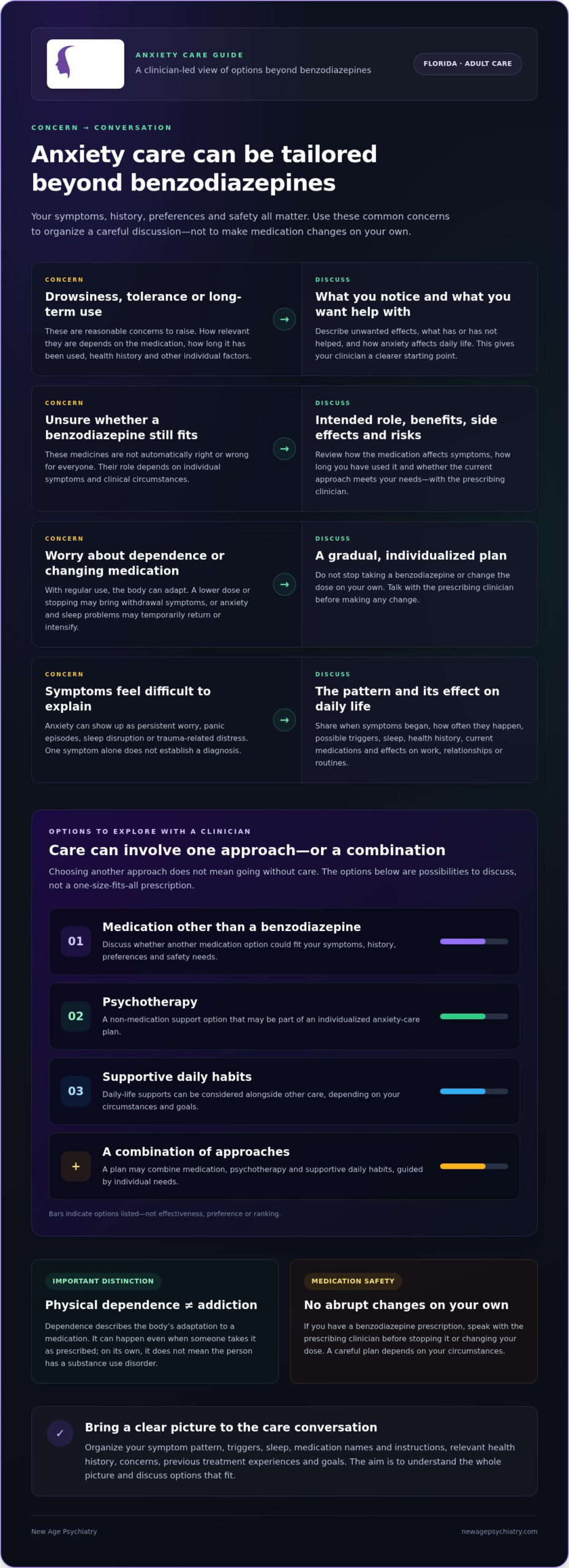
Concerns about drowsiness, tolerance, dependence, or long-term use are reasonable to raise. Their relevance depends on the medication, how long it has been used, health history, and other individual factors. You do not need to decide on a change before seeking guidance. Describe what concerns you, what you have noticed, and what you hope treatment will help you do in daily life.
For example, you might explain that daytime sleepiness is affecting work, or that you are concerned about relying on a medication during periods of intense anxiety. Share what has or has not helped in the past, too. These details give a clinician a clearer starting point for discussing potential benefits, risks, and other options with you.
Benzodiazepine dependence is not the same as addiction
With regular use, the body can adapt to a benzodiazepine. This is called physical dependence. The body may respond to a lower dose or stopping with withdrawal symptoms, or anxiety and sleep problems may temporarily return or intensify. Dependence can occur even when someone takes medication as prescribed; on its own, it does not mean the person has a substance use disorder.
Physical dependence describes the body’s adaptation to a medication; by itself, it does not establish addiction. A clinician can help distinguish medication adaptation from other concerns and discuss an appropriate plan. If you have a prescription, do not stop taking it or change the dose on your own. Talk with the prescribing clinician before making changes.
How clinicians assess anxiety and the role of benzodiazepines
Anxiety care starts with understanding the pattern, not choosing a medication based on one symptom. A clinician may ask when symptoms began, how often they occur, what seems to trigger them, and how they affect work, relationships, sleep, or daily routines. They may also review your medical history and current medications, since health conditions or medication effects can influence symptoms and treatment decisions.
Panic episodes, persistent worry, sleep disruption, and trauma-related distress can call for different questions and support. A clinician may also ask about concerns such as depression or substance use when relevant. These details provide context; one symptom alone does not establish a diagnosis. For people searching “managing anxiety without benzodiazepines Florida,” an assessment can help clarify which options are worth discussing. The NIMH Anxiety Treatment Guidelines provide general information about anxiety disorders and treatment approaches.
What a psychiatric anxiety evaluation may cover
A psychiatric evaluation may explore when symptoms began, how intense and persistent they are, and how they change across situations. You might describe feeling suddenly overwhelmed in specific settings or explain that worry persists through much of the day. A clinician can ask how these experiences affect your functioning and what you most want help with, such as feeling more comfortable in daily activities or improving sleep.
The conversation may also cover previous treatment, medication names and instructions, relevant medical conditions, and substance use where appropriate. Sharing what helped, caused unwanted effects, or did not meet your needs makes the discussion more useful. The goal is to understand the overall picture and consider possible explanations, not to label you based on one experience.
When benzodiazepines may be part of a treatment discussion
If benzodiazepines come up, the clinician can discuss their intended role and weigh potential benefits against side effects and individual risks. That conversation may consider how the medication has affected your symptoms, how long you have used it, and whether the current approach still fits your needs. These medicines are not automatically right or wrong for everyone; context matters.
Anxiety treatment selection depends on symptoms, history, preferences, and safety. Review an existing benzodiazepine prescription with the clinician who prescribes it. Share your concerns and ask what options could be considered, but do not stop or change the dose on your own. Discuss any next steps with the prescriber, who can help weigh your circumstances and guide decisions about your treatment.
A virtual psychiatric evaluation provides a structured setting to review symptoms, medications, and treatment goals. Adults in Florida can learn about virtual psychiatric care for anxiety through New Age Psychiatry. Evaluations and medication management focus on the individual and their circumstances.
Comparing anxiety treatment options beyond benzodiazepines
There is no single replacement that fits everyone. A clinician considers the pattern of anxiety, health history, current medications, preferences, and practical needs before discussing options. Use the comparison below to prepare for a conversation, not as a personal treatment recommendation. Approaches may be combined, and their suitability depends on the individual.
| Approach | General role | What to discuss |
|---|---|---|
| SSRIs and SNRIs | Medication classes a clinician may consider for ongoing anxiety care. | Possible onset, side effects, interactions, medical history, and follow-up. They are not immediate-relief medicines or guaranteed substitutes for benzodiazepines. |
| Buspirone | A medication option a clinician may consider in some circumstances. | Whether it fits depends on symptoms, health history, other medications, and individual assessment. |
| Psychotherapy, including CBT | A structured, non-medication approach that can be part of an anxiety care plan. | Discuss goals, the concerns you want to work on, and how psychotherapy could complement psychiatric care. |
| Supportive daily habits | Practical routines that may support overall well-being alongside other care. | Consider sleep routines, regular movement, reducing excess caffeine, and grounding practices that feel manageable. |
Medication approaches clinicians may discuss
SSRIs and SNRIs are not interchangeable with benzodiazepines, and they may not provide immediate relief. Their intended role, potential side effects, interactions, and suitability depend on the person. A clinician may also discuss buspirone, though it is not appropriate for everyone. Share all current medications and relevant health conditions so potential interactions and other considerations can be reviewed.
Medication decisions may involve follow-up to understand how an option is working and whether concerns need attention. Do not start, stop, or adjust a prescription on your own. If you take a benzodiazepine, include its name and current instructions in the discussion, and coordinate any review or change with the prescribing clinician.
Psychotherapy and everyday supports as part of care
Cognitive behavioral therapy (CBT) and related evidence-informed psychotherapy approaches may help people work with anxiety patterns and responses. Psychotherapy can complement psychiatric evaluation and medication management; it is a distinct part of care, not a medication change. If anxiety is connected with trauma, that history can shape the clinical discussion. Learn more in this Florida guide to virtual trauma care.
Daily habits can offer practical support, but they are not cures. You might keep a consistent wind-down routine, add movement in a way that suits your circumstances, notice whether excess caffeine affects how you feel, or try a grounding practice during a stressful moment. Start with what feels realistic and discuss how these habits fit alongside other care. If you are researching managing anxiety without benzodiazepines Florida, compare options with a clinician based on your needs rather than choosing a substitute from a list.
Planning a safer conversation about benzodiazepines and anxiety
A medication review can feel easier when you arrive with a few notes. You do not need to have decided whether to continue, change, or stop a medication before talking with your prescriber. The goal is to share a clear picture of what you are experiencing and understand your options together.
- Track symptoms. Note what you experience, when it happens, possible triggers, and how it affects sleep or daily activities.
- Gather medication details. Bring the names of your medications and their current instructions, including your benzodiazepine prescription if you take one. Do not change doses before the appointment.
- Describe your concerns and history. Write down side effects, questions about dependence, past treatment experiences, and relevant health or medication changes.
- Name your goals. Consider what you would like help with, such as managing panic symptoms, feeling less sedated, or exploring care that does not rely on benzodiazepines.
- Prepare questions. A short list can help you make use of the appointment, especially if you feel anxious discussing medication.
Questions to bring to a medication review
Ask what goals your current treatment is intended to address and how you and your clinician will review progress. You can ask about possible side effects, dependence concerns, medication interactions, and non-benzodiazepine options. If symptoms change, ask whom to contact and what steps to take. Your prescriber can give instructions suited to your medication and circumstances.
Why stopping suddenly is not a self-care plan
After regular benzodiazepine use, an abrupt change can lead to withdrawal or rebound symptoms, such as a return or worsening of anxiety or sleep problems. If a taper is clinically appropriate, the prescriber should individualize and supervise it. Do not attempt a schedule, dose reduction, or medication substitution on your own.
If anxiety overlaps with persistent low mood or loss of interest, mention both concerns so care can account for the full picture. This telehealth guide to depression care explains how psychiatric care can address mood symptoms as part of a broader clinical discussion.
Seek urgent support rather than waiting for a routine appointment if symptoms become severe or worsen rapidly, or if you are concerned about your immediate safety. Contact local emergency services or crisis support when you need urgent help. Routine medication management is not a substitute for emergency care.
For adults in Florida, a virtual psychiatric evaluation offers a setting to review symptoms, medications, concerns, and treatment goals. To discuss anxiety care, explore virtual psychiatric care with New Age Psychiatry. A clinician can review your individual circumstances and discuss possible next steps.
Florida telepsychiatry for anxiety: what a care conversation can do
Choosing to discuss anxiety care without benzodiazepines does not mean you need to settle on a treatment plan before speaking with a clinician. A psychiatric evaluation can help organize your questions, review your current situation, and clarify which options may be appropriate to consider. New Age Psychiatry provides virtual psychiatric evaluations and medication management for adults in Florida who are seeking anxiety care.
What to expect from virtual psychiatric medication management
A clinician can discuss your anxiety symptoms, current treatment, medication concerns, and goals. Explain what you would like to change or preserve, such as being more alert during the day or feeling more prepared when anxiety arises. Bring your current medication names and instructions, along with questions about side effects or alternatives.
Medication management includes individualized follow-up to review how treatment is going and whether it is tolerable. The discussion may lead to different considerations depending on your symptoms and history. An evaluation gives you a chance to weigh options with a psychiatric professional and decide on appropriate next steps together.
Taking a practical next step in Florida
If you are considering managing anxiety without benzodiazepines Florida, say so openly during an evaluation. You can describe your preference and ask how other approaches might fit your needs. A clinician can review your concerns and current treatment, then discuss options based on your circumstances.
Keep taking medication as prescribed unless your prescriber gives you different instructions. If you already work with a prescriber, coordinate any review or medication change with them. Do not adjust a dose on your own while waiting for an appointment or discussing care.
Telepsychiatry provides psychiatric evaluation and medication management. If symptoms are severe or rapidly worsening, seek urgent support rather than waiting for a routine appointment.
Before an appointment, write down what you want the clinician to understand: when anxiety affects you most, how treatment has felt so far, and what you hope may be different. Note questions about follow-up, medication considerations, and what to do if symptoms change. These notes can keep the conversation focused while leaving room for concerns that arise during the visit.
If you are an adult in Florida and want to review anxiety care in a supportive clinical setting, explore a virtual psychiatric evaluation with New Age Psychiatry.
Take the next step at your own pace
You do not have to decide on a complete treatment plan before asking for support. A first step can be naming what worries you, what you would like to feel different, and what questions you want answered. Your preferences matter, and medication decisions should be made with appropriate clinical guidance, not through sudden changes on your own.
If you are considering managing anxiety without benzodiazepines Florida, let that goal shape an open conversation about care that fits your circumstances. You can explore options without committing to a particular medication or outcome in advance.
New Age Psychiatry offers adults in Florida virtual psychiatric evaluations and ongoing medication management for anxiety. Explore virtual psychiatric care for anxiety and take a thoughtful next step toward a plan you can discuss with a clinician. You deserve care that listens to your concerns and supports you in moving forward.
Frequently Asked Questions
Can anxiety be managed without benzodiazepines?
Yes, anxiety can be addressed without benzodiazepines, though the right plan depends on symptoms, health and medication history, preferences, and clinical assessment. People searching “managing anxiety without benzodiazepines Florida” can discuss options such as clinician-selected medication, psychotherapy, or supportive routines. For example, someone concerned about daytime drowsiness can explain how it affects work or driving. If you already take a benzodiazepine, do not stop or change it without guidance from your prescriber.
Is benzodiazepine dependence the same as addiction?
No. Physical dependence means the body has adapted to a medication, so reducing or stopping it may bring symptoms. This can happen during prescribed use and does not, by itself, establish a substance use disorder. Addiction involves a broader pattern of impaired control or continued use despite harm. If you are worried about your medication use, symptoms, or stopping, share those concerns with a clinician rather than trying to diagnose yourself.
Can anxiety symptoms return after stopping a benzodiazepine?
Yes, anxiety may return or temporarily intensify after a benzodiazepine is stopped, and withdrawal or rebound effects may also occur. What happens varies with the person and their medication history, so an individual experience or timeline cannot be predicted here. If you are considering a change, discuss it with the prescriber before adjusting your medication. Seek urgent help if symptoms become severe or concerning.
Are SSRIs or SNRIs used for anxiety instead of benzodiazepines?
Clinicians may consider SSRIs or SNRIs for some anxiety conditions, but these medication classes are not interchangeable with benzodiazepines. They can differ in intended role, effects, timelines, and risks. Whether either is suitable depends on your symptoms, medical history, other medications, and preferences. A clinician can discuss potential benefits and concerns in context. Do not start, stop, or adjust medication based on general information or someone else’s experience.
Can telepsychiatry help with anxiety medication management in Florida?
Yes, virtual psychiatric care gives adults a setting to discuss anxiety symptoms, current medication, treatment preferences, and follow-up. New Age Psychiatry provides virtual psychiatric evaluations and medication management for adults in Florida. Recommendations depend on an individual assessment and applicable clinical requirements. You can prepare by noting your medication names, current instructions, and the concerns you want to address.
What should I do if I feel worse after a medication change?
Contact the prescribing clinician promptly and describe what changed, which symptoms you are experiencing, and when they began. Do not make further medication changes on your own while waiting for guidance. If symptoms are severe, you are in immediate danger, or you are thinking about self-harm, call 911 or 988 in the United States. For urgent needs, contact emergency services or crisis support.