

Feeling emotionally numb from antidepressants can be a side effect of treatment, but numbness may also reflect depression or another mental health concern that is not fully managed. Often called emotional blunting, it can make both positive and negative feelings seem muted. Do not stop taking your medication or change the dose suddenly without speaking with your prescriber.
If you have noticed this change, it is understandable to wonder whether your medication is helping as you need it to. A clinician may consider whether adjusting the dose or switching antidepressants could help, while weighing how well your current treatment manages your symptoms. This article explains what emotional blunting can feel like, why it may happen, and what options you can discuss with your prescriber.
Key Takeaways
- Emotional blunting can make both positive and negative feelings seem muted, but it may have more than one cause.
- A prescriber may consider a dose adjustment or a switch to another antidepressant based on symptoms and treatment response.
- Don’t stop or change medication suddenly; discuss the timing and options with your prescriber.
- When numbness may be connected to depression, New Age Psychiatry offers depression treatment and medication management to support a personalized review of care.
Switching to bupropion or vortioxetine
A medication switch may be considered if emotional blunting continues or affects daily life. Bupropion and vortioxetine are options to discuss with your prescriber, but any change should be planned with them.
Changing Antidepressant Medication
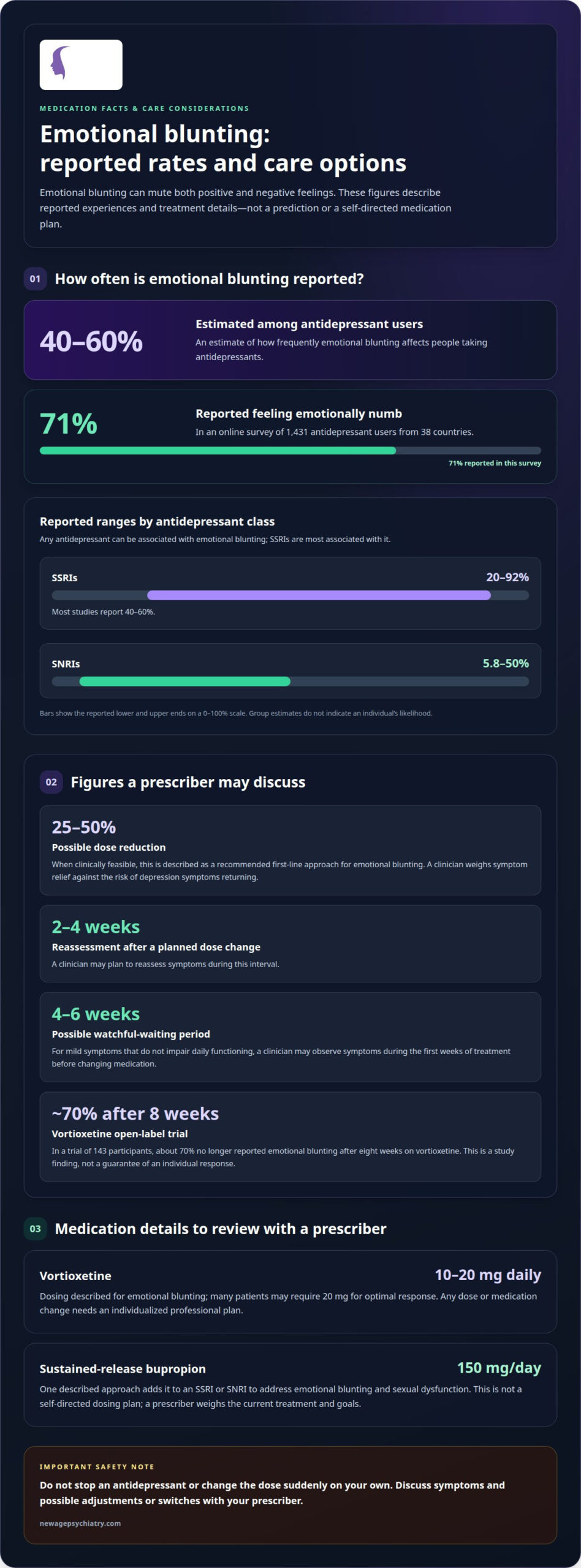
Changing from one antidepressant to another may be considered with professional guidance. It may matter when depression symptoms improve but emotional blunting remains troubling. Don’t stop an antidepressant or switch medicines on your own. A prescriber considers your current medication, its effect on depression, and the symptoms you’re experiencing. Bupropion works differently from SSRIs and SNRIs, while vortioxetine is another possible medication. In an open-label trial of 143 participants, about 70% no longer reported emotional blunting after eight weeks on vortioxetine.
Bupropion may be considered as a switch or as an addition to an SSRI or SNRI. One described approach adds sustained-release bupropion at 150 mg/day to address emotional blunting and sexual dysfunction. This is not a self-directed dosing plan. Your prescriber weighs your current treatment and goals before deciding whether adding or switching medication makes sense. Tell them whether your mood has improved and which feelings still seem muted.
Adjusting the Dose During a Switch
Dose adjustment changes how much medication you take, either before or during a planned switch. It matters because reducing one medicine, starting another, or using both temporarily requires an individualized plan. Vortioxetine dosing described for emotional blunting is 10-20 mg daily, and many patients may require 20 mg for optimal response. These figures are treatment details to discuss with a prescriber, not instructions to change your dose independently.
When considering a switch, your prescriber will weigh symptom relief, emotional blunting, side effects, and how you take your current medication. Track changes in your mood and emotional range so you can describe them at follow-up. A switch may help support depression treatment while addressing unwanted effects. Never stop suddenly or adjust your dose without professional guidance, since the transition plan depends on the medicines involved.
What Is Emotional Blunting?
Emotional blunting means feelings seem less intense, including both positive and negative emotions. Noting its pattern and effect on daily life can help you decide what to discuss with your prescriber.
Common Signs of Emotional Blunting
Emotional blunting can make joy, sadness, affection, or excitement feel muted rather than absent. If you are feeling emotionally numb from antidepressants, you might care about a partner but feel less moved during an important conversation. This can affect relationships if loved ones mistake a subdued response for disinterest. Describe specific moments, such as feeling unmoved by music or family events.
If you might harm yourself or someone else, seek emergency help immediately. Emotional numbness alone does not mean there is an emergency.
Blunting, Anhedonia, and Apathy
Emotional blunting reduces the intensity of a range of feelings. Anhedonia specifically involves a reduced ability to experience pleasure, while apathy involves less motivation or interest in taking action. These experiences can overlap, but noticing the difference can help you explain what has changed. You might still enjoy a favorite activity but feel muted, or lose interest in doing it altogether.
Consider whether your pleasure, motivation, or emotions more broadly have shifted. These details give your prescriber a clearer picture of what you are experiencing.
Medication Effects and Depression Symptoms
Timing can offer a clue, but cannot identify the cause on its own. If you are feeling emotionally numb from antidepressants, noting whether the change followed starting medication or adjusting the dose may help. Also describe whether other depression symptoms improved, persisted, or worsened. Emotional blunting can be a residual symptom of a mental health concern that is not fully managed, so reviewing both medication effects and depression symptoms matters.
Reported Frequency and Antidepressant Classes
Emotional blunting is estimated to affect 40-60% of antidepressant users. In an online survey of 1,431 users from 38 countries, 71% reported feeling emotionally numb. These figures describe reported experiences, not an individual’s likelihood of developing symptoms.
Any antidepressant can cause emotional blunting, though selective serotonin reuptake inhibitors, or SSRIs, are most associated with it. Reported SSRI rates range from 20-92%, with most studies reporting 40-60%; SNRI rates range from 5.8-50%. Your own symptoms and treatment history are more useful for a care discussion than class averages.
Dose reduction and watchful waiting
A clinician may consider adjusting the dose if emotional blunting seems linked to antidepressant treatment. The decision depends on symptom severity, daily functioning, and how well the medication is managing depression.
Reducing the Antidepressant Dose
Dose reduction means lowering the prescribed amount to see whether emotional blunting eases while treatment continues. When clinically feasible, a recommended first-line approach is reducing the dose by 25-50%. This can matter because the likelihood of blunting appears to increase at higher doses, and symptoms during SSRI treatment are often dose-dependent.
A dose change needs professional supervision, not an abrupt personal adjustment. The clinician weighs emotional effects against the risk of depression symptoms returning, then plans reassessment every 2-4 weeks. Describe specific changes, such as feeling more engaged with family or still struggling to experience positive emotions. Those details help guide the next clinical decision.
Monitoring Symptoms Over Time
Watchful waiting means observing symptoms before changing medication, when symptoms are mild and daily functioning isn’t impaired. It may be appropriate during the first 4-6 weeks of treatment, as the clinician tracks both emotional blunting and depression symptoms. This gives the treatment time to develop while keeping attention on meaningful changes.
At each follow-up, describe what has changed, including your emotional range, mood, and day-to-day activities. If numbness continues or affects your functioning, your clinician can reconsider the plan rather than relying on observation alone. After a supervised taper, emotions may return over weeks, while the brain’s baseline chemical function may take months or longer to readjust.
When Emotional Blunting Begins
Emotional blunting can emerge during antidepressant treatment, and SSRI-related blunting may persist while you continue taking the medication. There is no single timeline that applies to everyone, so note whether the change followed starting treatment or increasing the dose. This timeline gives your clinician useful context alongside the medication’s benefits for depression.
Improvement over time depends partly on the cause and the treatment plan. If symptoms are mild, functioning remains intact, and treatment has only recently begun, watchful waiting during the first 4-6 weeks may be considered. If blunting persists, discuss supervised dose reduction rather than stopping suddenly.
Emotional numbness as a possible defense mechanism
Calling numbness a defense mechanism can describe how emotional shutdown feels, but it does not prove what causes it. Someone facing repeated stress may feel detached during difficult conversations, then struggle to reconnect with positive experiences. This pattern may feel protective because it limits contact with painful emotions. It can also make affection, interest, or everyday pleasure harder to access. The label describes an experience, not a diagnosis.
For someone taking selective serotonin reuptake inhibitors, or SSRIs, emotional blunting may also relate to medication effects. Serotonin is part of how these medicines work, but numbness should not be explained through a simple chemical story. Emotional blunting is a reported experience, and its cause can vary. Depression itself may also leave emotional symptoms that persist during treatment. Timing and changes in mood can help clarify the possibilities.
Consider two examples. One person notices muted excitement after an antidepressant dose change, while another feels detached as low mood continues. Both experiences deserve attention, but the details differ. Describe when numbness began, which feelings changed, and whether positive or negative emotions feel more affected. Include practical effects, such as withdrawing from a partner or losing interest in a familiar activity. These observations give your prescriber clearer context than saying, “I feel numb” alone.
Think of the defense-mechanism idea as a prompt for reflection, not a reason to accept distress or alter medication alone. A clinician can review the medication timeline alongside depression symptoms and daily functioning. If emotional distance is affecting relationships or treatment feels difficult to sustain, discussing it is a useful next step. Discuss emotional changes in treatment with a psychiatric professional.
New Age Psychiatry
New Age Psychiatry provides psychiatric diagnosis and medication management for adults, including depression treatment, through completely virtual care in Florida. If emotional numbness continues, affects daily life, or makes it hard to tell whether your medication is helping, a psychiatric review can help clarify next steps. Share when the change began, how your mood has shifted, and how it affects relationships or activities. This context can help a clinician consider medication effects alongside depression symptoms and discuss appropriate options. Do not stop or change an antidepressant dose suddenly without professional guidance. New Age Psychiatry also treats anxiety and insomnia, so a clinician can consider the broader picture of your wellbeing. Same-week appointments are available, with secure messaging and text communication for ongoing support. Contact New Age Psychiatry to discuss your concerns and care options.
Take a thoughtful next step
If you are feeling emotionally numb from antidepressants, you deserve care that considers both your symptoms and what matters in daily life. You can raise your concerns in a clinical conversation without deciding in advance whether medication, depression, or both are contributing. Describe what has changed and how it affects your relationships, interests, or sense of connection. This gives your clinician a clearer starting point for discussing options with you.
New Age Psychiatry provides psychiatric care for adults, including ADHD diagnosis and treatment, insomnia treatment, and depression treatment. If numbness is affecting your wellbeing or leaving you unsure about your treatment, take the next step at a pace that feels manageable. Explore care options with New Age Psychiatry. Asking for support can help you move toward care that better fits your needs.
Frequently Asked Questions
What else can you do?
Track how numbness affects specific moments, such as conversations, hobbies, or decisions, and share those examples during a medication review. Note whether both positive and negative feelings seem muted, or whether pleasure and motivation have changed in different ways. You can also tell someone you trust what you are experiencing, so they understand that a quieter response may not mean you care less.
Can antidepressants cause emotional numbness or feeling emotionally blunted?
Yes. Emotional numbness, or blunting, can occur during antidepressant treatment. It may feel as though emotions are less intense rather than completely absent. For example, you might recognize that an event is exciting but feel little excitement yourself. Record when you first noticed the change and how it compares with your mood before treatment; this can help your prescriber assess what is happening.
Which antidepressants are most likely to cause emotional numbness?
Selective serotonin reuptake inhibitors, or SSRIs, are most associated with emotional blunting, but they aren’t the only possible cause. Serotonin-norepinephrine reuptake inhibitors, or SNRIs, are also associated with reported cases, and emotional blunting can occur with other antidepressants. Medication class alone can’t predict your experience. Your medication history and the symptoms you notice provide useful context for a treatment discussion.
What should you do if antidepressants make you feel emotionally numb?
Tell your prescriber what changed, when it began, and how it affects your routine. Specific examples help: perhaps you feel less connected during family conversations or no longer look forward to a favorite activity. Bring the medication name and any recent dose changes to the discussion. Do not stop or adjust treatment on your own; ask about a safe plan to review your symptoms.
Can lowering the dose or switching antidepressants reduce emotional blunting?
A medication change may be considered as part of a supervised treatment plan. Your prescriber may weigh how well your current medication is helping depression against the impact of numbness, then consider a lower dose or a different antidepressant. For instance, explain whether your mood has improved while emotional connection remains difficult. The right option depends on that balance and your treatment history, so do not change your dose independently.
Is it safe to stop antidepressants suddenly because of emotional numbness?
No. Do not stop an antidepressant suddenly or change its dose without professional guidance. Contact your prescriber to explain the numbness and discuss a planned next step, which may include monitoring, adjusting the dose, or switching medication. If you have already missed doses, share when you last took the medication and what has changed. Clear details can help guide a safer treatment discussion.