

A workplace trigger may not be obvious at first. Coping with PTSD triggers at work starts with noticing what happened before your distress rose, then tracking the situation, your reactions, and any reminders that may have contributed. Sounds, smells, people, places, or particular situations can bring up trauma-related symptoms.
If the pattern is hard to identify, that doesn’t mean you’re overlooking something. Triggers can be subtle, and tracking them over time may reveal connections between workplace events and feelings such as anxiety, fear, or anger. You can use those observations to plan what might help when distress arises.
This article explains how to track possible triggers and recognize patterns, then offers practical grounding and coping strategies to try at work. You’ll also learn how to consider workplace adjustments and when professional support may help you build a plan that fits your needs.
Key Takeaways
- Try a grounding exercise that brings your attention to present-day sights, sounds, or physical sensations when distress rises.
- Prepare a simple coping plan, such as taking a brief pause or switching to a manageable task when a trigger occurs.
- Look for workplace patterns and consider what practical adjustments could make difficult situations easier to navigate.
- When symptoms continue to interfere with work, professional PTSD treatment can help you explore support tailored to your needs.
1. Mindfulness and grounding techniques
An estimated 3.6% of U.S. adults experienced PTSD in the past year, according to the National Institute of Mental Health. During a workplace trigger, mindfulness and grounding can help redirect attention toward the present. These skills don’t erase traumatic stress disorder symptoms, but they offer practical steps for responding to stress and anxiety as they arise.
Start by orienting yourself to your surroundings. If a flashback begins, look around and name where you are, such as “I’m in the break room at work.” Notice nearby objects, the current date, or a familiar detail. Then press both feet against the floor or hold an object with a comforting texture. These sensory cues can help remind you that you’re in the present, not back in the traumatic event.
A five-senses exercise gives your attention a clear path. Name five things you can see, four you can touch, three you can hear, two you can smell, and one you can taste. At a desk, you might notice a monitor, feel your chair, and hear a nearby conversation. Adapt the exercise if any smell, sound, or sensation increases your distress.
Slowing your breathing may help when anxiety or panic rises suddenly. Try breathing gently and steadily, without forcing a deep breath. Harvard professor Karestan Koenen recommends practicing relaxation breathing twice a day and grounding by noticing your feet on the floor. Regular practice may make a skill easier to recall in a difficult moment.
Relaxation doesn’t feel calming for everyone with PTSD. If silent meditation increases your distress, try sitting quietly for two minutes while listening to music, or pair a grounding exercise with a short walk. You can also name nearby objects as you walk. Try one approach at a time and keep the practices that feel manageable. Nightmares and other symptoms may need broader support beyond an in-the-moment exercise.
2. Coping strategies for trauma triggers
A trigger can be a sound, smell, place, date, or situation that recalls a traumatic event. Notice what changed just before distress began, then choose one active coping skill, even if the moment isn’t a crisis. For example, step away from a stressful task briefly, change activities for 10 to 15 minutes, or use a familiar song to help a flashback run its course.
At work, make the next step smaller when concentration is difficult. Break a task into manageable parts, write a short to-do list, and focus on one item at a time. A planned break can give you space to reset. These practical adjustments can support daily functioning without requiring you to explain every detail of your trauma to coworkers.
Nightmares can leave stress and fear lingering after you wake. Remind yourself that the panic is a reaction to a dream, not evidence of present danger. Keeping a regular bedtime schedule may help create a steadier routine. If sleep disruption affects your workday, note when it happens and how it influences your focus or energy. That pattern can inform a conversation with a professional.
Learning about PTSD can make triggers easier to understand. A trigger is a reminder, not proof that the traumatic event is happening again. Track which situations bring up distress and which skills help, such as stepping away, using a written task list, or practicing breathing. This record can help you develop a coping plan based on your own responses rather than assumptions.
Seek professional help if symptoms don’t begin to ease or get worse over time, especially when they interfere with work. A mental health professional can help you understand traumatic stress and tailor coping skills to your needs. If you’re looking for professional PTSD support, consider discussing how symptoms affect your work and what you’ve noticed about your triggers.
3. Identifying workplace triggers
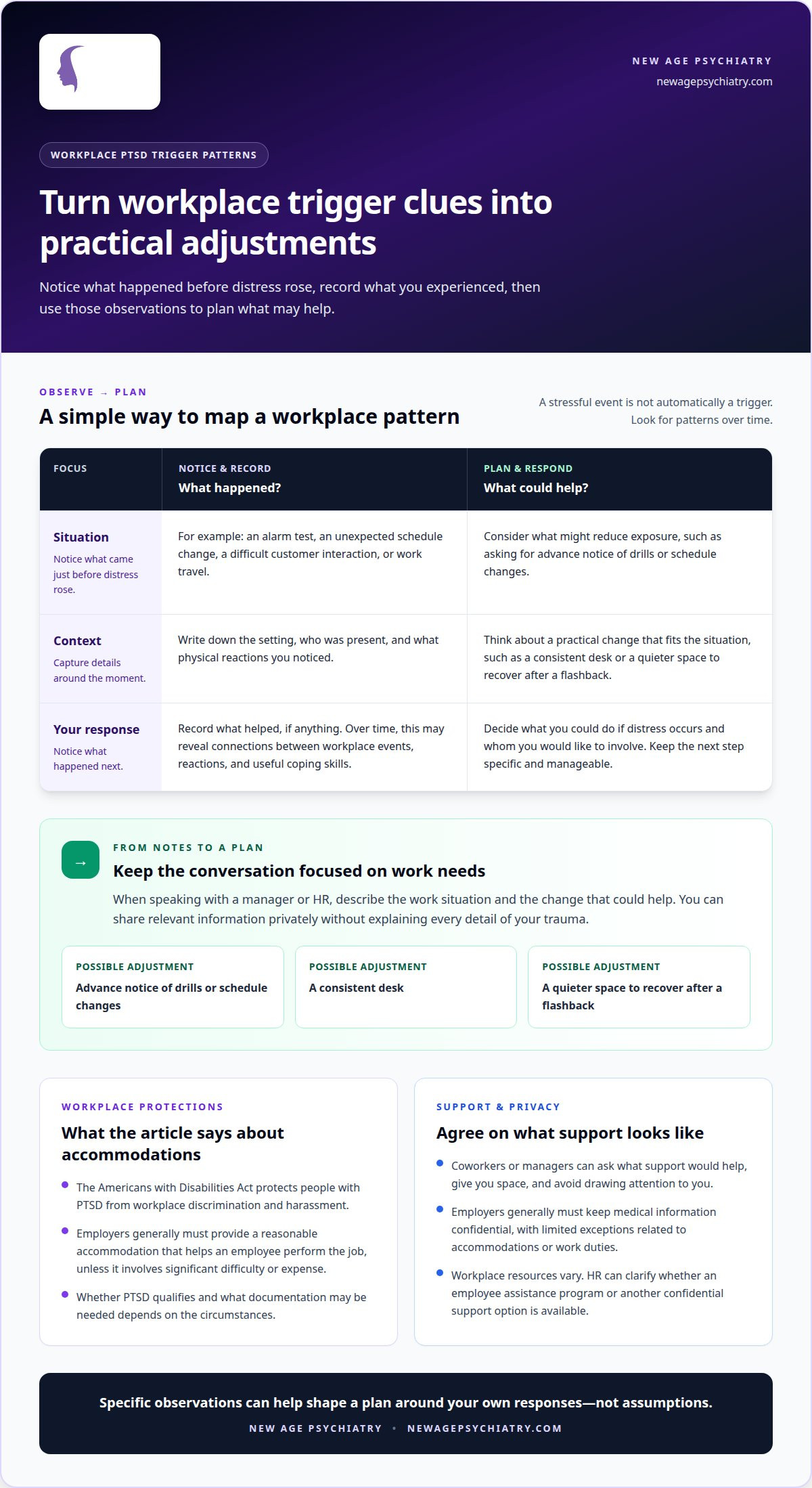
Start by noting what happens before symptoms rise: an alarm test, an unexpected schedule change, a difficult customer interaction, or work travel. Record the setting, who was present, your physical reactions, and what helped. These details can reveal patterns without assuming every stressful event is a trigger.
Planning turns your observations into practical strategies. Consider what could reduce exposure, what to do if distress occurs, and whom you’d like to involve. For example, you might request advance notice of drills or schedule changes, a consistent desk, or a quieter space to recover after a flashback.
The Americans with Disabilities Act protects people with PTSD from workplace discrimination and harassment. Employers generally must provide a reasonable accommodation that helps an employee perform the job unless it involves significant difficulty or expense. Whether PTSD qualifies and what documentation may be needed depends on the circumstances. Employers may ask medical questions after an accommodation request. Keep the conversation focused on work-related needs, such as advance notice or seating that helps you feel more secure.
When speaking with a manager or HR, describe the work situation and the change that could help, such as receiving drill notices in advance. You can share relevant information privately. Employers generally must keep medical information confidential, with limited exceptions for information needed to provide an accommodation or carry out work duties and shared with supervisors or managers.
During a trigger, coworkers or managers can ask what support would help, give you space, and avoid drawing attention to you. A trained mental health first aider may offer support while respecting your wishes. Clear, agreed-upon steps can reduce distress without requiring coworkers to know personal details.
Stigma can make conversations about mental health difficult, so focus on the task and adjustment rather than sharing more than you want to. Workplace resources vary. Ask HR whether an employee assistance program, a trained mental health first aider, or another confidential support option is available. If you’re unsure what to request, record specific triggers and their effects before the discussion.
4. Recognizing and tracking PTSD triggers
A trigger may be easier to recognize through a pattern than through one isolated event. After a difficult moment, record the setting, what happened beforehand, your feelings, physical reactions, thoughts, and any flashbacks. For example, note whether a sudden sound came before anxiety or whether a particular meeting brought up distress. Avoid judging your reaction. The goal is to collect clues.
A brief log can make coping with PTSD triggers at work more deliberate. Use a notebook or private digital note, and add an entry soon after an episode when possible. Include the situation, symptoms, what you did next, and what helped or worsened the experience. You might write, “Team meeting, raised voices, tense shoulders, stepped outside, felt steadier afterward.” This format can reveal connections between workplace events and emotions.
Look beyond obvious reminders. A person, location, smell, sound, or recurring time of year may connect with trauma. Changes in workload, supervision, or routine may also be worth noting. After several entries, review them for repeated situations and responses. When coping with PTSD triggers at work, treat a pattern as a useful lead, not proof that one event caused every symptom.
Keeping a record can feel uncomfortable, so choose a pace that feels manageable and pause if writing increases distress. In a 2013 study, 46 people with trauma recorded unpleasant recollections in daily journals; participants often didn’t recognize what triggered them. Across many days, they reported 294 uncomfortable recollections. These findings highlight why tracking may uncover associations that aren’t immediately obvious.
Bring a concise summary to a therapy appointment if you want help interpreting recurring patterns. A clinician can help connect triggers, thoughts, and reactions with a plan for managing symptoms and supporting recovery. Tracking isn’t a test, and a missed entry doesn’t invalidate what you noticed. To discuss persistent PTSD symptoms and treatment options, connect with a mental health professional.
New Age Psychiatry: PTSD Treatment
New Age Psychiatry provides psychiatric diagnosis and medication management for adults with PTSD. Consider professional support when workplace symptoms persist, worsen, or interfere with concentration, sleep, or daily routines. Notes about recurring triggers, reactions, and coping strategies can help you describe what you’re experiencing during care.
A psychiatric assessment can help clarify symptoms and guide treatment planning. If sleep difficulties or depression also affect your workday, you can discuss those concerns as part of your care. Grounding skills may help during difficult moments, while professional treatment can address the broader pattern of PTSD symptoms.
If you’d like support for PTSD symptoms affecting work, contact New Age Psychiatry to discuss PTSD treatment.
Take the Next Step Toward More Support at Work
You don’t have to solve every workplace challenge at once. A useful next step is to choose one observation or support need to bring to a conversation with a mental health professional. That can make it easier to connect daily work experiences with care that reflects your needs. Coping with PTSD triggers at work can be part of a broader treatment conversation, especially when symptoms also affect sleep, mood, or concentration.
New Age Psychiatry offers PTSD treatment, along with treatment for insomnia and depression and ADHD diagnosis and treatment. If symptoms continue to affect your work or well-being, professional support can help you consider what care may suit your situation.
Contact New Age Psychiatry for support when you’re ready to discuss a next step. You can begin with the concerns that feel most important to you.
Frequently Asked Questions
How to Identify a Trigger?
Look for a repeated connection between a situation and a change in your response. Note what was happening before distress began, then compare it with times when you felt steadier. For example, consider whether symptoms tend to follow a certain type of interaction, task, or sensory environment. A pattern may suggest a possible trigger, but it doesn’t mean every similar situation will affect you the same way.
What are common PTSD triggers at work and how can you identify them?
Workplace triggers may involve sounds, smells, places, people, dates, or situations that remind someone of trauma. Notice whether a particular environment or interaction coincides with changes in attention, emotions, or physical tension. Compare similar situations, too: a busy meeting may feel different depending on who attends or how it unfolds. This can help distinguish a possible trauma reminder from general workload stress.
What grounding techniques can help manage a PTSD trigger at work?
Choose a discreet sensory action that feels comfortable in your work setting. You might press your hands gently against the desk, notice the support of your chair, or focus on a neutral object nearby. Quietly naming its shape or color can give your attention a steady point. If a technique increases distress, stop and try a different present-focused action.
How can you create a plan for handling PTSD symptoms during the workday?
Build a simple plan around what you can do before, during, and after a difficult moment. Before work, identify a grounding option and a trusted person you could approach. During distress, use a discreet cue to pause or move to an agreed space. Then choose one small task to help you return to work. Adjust the plan as you learn which steps are practical.
What workplace accommodations can employees with PTSD request in the United States?
Possible accommodations include flexible hours, scheduled breaks, a consistent desk, modified supervision, or a quieter space. Under the Americans with Disabilities Act, employers generally must provide a reasonable accommodation that helps an employee perform the job unless it causes significant difficulty or expense. The useful request is specific to a work barrier, such as reducing distracting noise or receiving advance notice of changes.
What are the risks of disclosing PTSD to an employer?
Sharing a diagnosis can help explain a request for workplace support, but it also means relevant people may learn private medical information. Employers generally must keep medical information confidential, with limited exceptions for information needed to provide an accommodation or carry out work duties and shared with supervisors or managers. You can focus the conversation on the work impact and requested change, rather than recounting traumatic experiences or details you prefer to keep private.