

The right next step may not be a higher dose. If your anxiety medication isn’t helping enough, its side effects are disrupting your day, or your needs have changed, tell your prescriber what’s happening and ask to review your options. Knowing how to ask for a different anxiety medication starts with describing your symptoms, what has or hasn’t improved, and any concerns about taking it.
It’s understandable to want relief without feeling uncomfortable or uncertain about your treatment. Ask how medication options compare, what benefits and side effects to expect, and whether a daily or as-needed approach might suit your situation. Don’t change your medication plan without discussing it with your prescriber.
This guide explains when to raise concerns, what medication and supplement details to bring, and how to discuss alternatives, including non-medication treatments. You’ll have a clearer starting point for a practical conversation with your doctor.
Key Takeaways
- Explain what feels different, what has improved, and which side effects or concerns you want your doctor to address.
- Bring a current list of medications, vitamins, herbs, and supplements, including doses, to support a more informed review.
- Ask whether a generic option could meet your treatment needs and what differences to consider.
- Discuss medication alongside other approaches, so your care plan can reflect your symptoms, preferences, and goals.
Discussing medication benefits, risks, and side effects
Tell your psychiatrist which symptoms remain, what has improved, and which effects concern you. Ask how the options compare, what benefits to expect, and how to stop or switch safely.
Review Medication Classes and Side Effects
Ask your psychiatrist which medication classes may address your symptoms and how their benefits and side effects differ. For example, SSRIs may be used for anxiety; possible side effects include dry mouth or appetite changes.
Share how these effects affect your mental health and daily routine. Ask what improvement to expect and when to review your response; for some people, noticing a difference takes a few weeks.
Review Risks of Stopping or Switching Suddenly
Ask for a clear plan before changing or stopping medication. Stopping suddenly can leave anxiety symptoms unmanaged, and changing treatment without guidance can make it harder to tell whether symptoms or side effects are shifting.
Ask how to stop your current medication and whether the change involves tapering or another approach. Your clinician can explain the sequence and what changes to report, so you don’t have to adjust doses on your own.
- Describe your symptoms, health history, current medication, and concerns about side effects. These details help your psychiatrist weigh potential benefits and risks, consider other medicines, and discuss whether daily or as-needed treatment suits your needs.
- Mention dry mouth, appetite changes, or other effects, and ask about dose timing, taking medication with food, and interactions with alcohol, foods, or other medicines. If a side effect is difficult to manage, ask what steps to take before changing the dose.
- Ask who can manage a prescription. In the United States, psychiatric nurse practitioners’ prescribing authority depends on their scope of practice and state regulations; physician assistants may prescribe under physician supervision. A therapist can help you discuss concerns, but prescribing authority depends on professional role.
If your psychiatrist recommends against a change, ask what concerns informed that decision, what signs of improvement to watch for, and when to revisit the plan. You can also discuss other medication classes or treatment approaches that fit your symptoms and health history.
Preparing medication and supplement information for your psychiatrist appointment
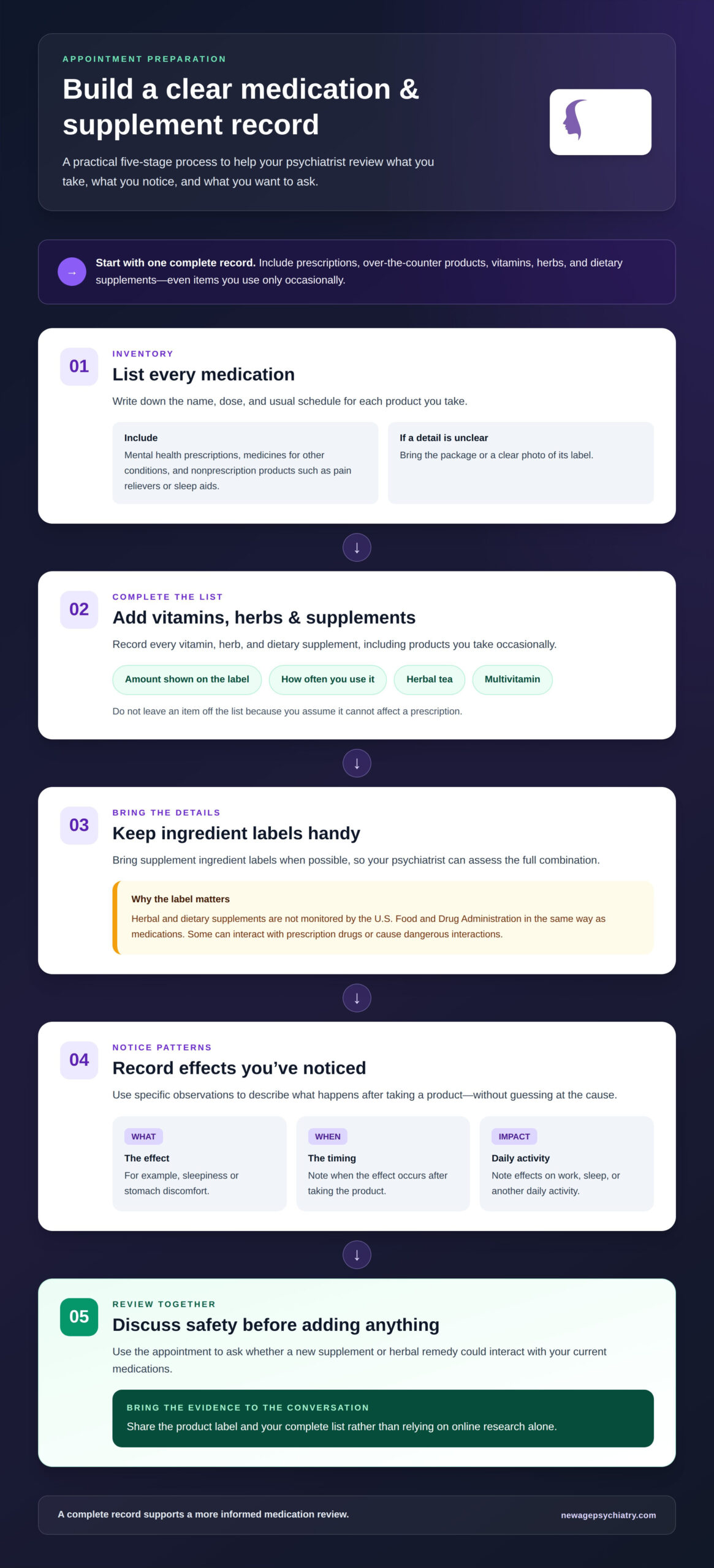
Bring an accurate record of what you take so your psychiatrist can review possible interactions and understand your treatment history. Include prescriptions, over-the-counter products, vitamins, herbs, and dietary supplements.
- Write down each medication’s name, dose, and usual schedule. Include prescriptions for mental health and other conditions, as well as nonprescription products such as pain relievers or sleep aids. If you’re unsure about a detail, bring the package or a clear photo of its label.
- List every vitamin, herb, and dietary supplement, even products you take only occasionally. Record the amount shown on the label and how often you use it. Include items such as herbal tea or a multivitamin rather than assuming they cannot affect a prescription.
- Bring ingredient labels when possible. Herbal and dietary supplements aren’t monitored by the U.S. Food and Drug Administration in the same way as medications. Some can interact with prescription drugs or cause dangerous interactions, so the full ingredient list can help your psychiatrist assess the combination.
- Note what you’ve noticed after taking each product, such as sleepiness after a dose or stomach discomfort. Record when the effect occurs and whether it affects work, sleep, or another daily activity. Specific examples help you discuss possible links without guessing at the cause.
- Use the appointment to review questions about safety before starting a new supplement or herbal remedy. Ask whether it could interact with your current medications, and share the label rather than relying on online research alone. Careful medication review can support decisions about anxiety disorders and your wider mental health. For a professional review of anxiety treatment, explore anxiety treatment options.
Discussing a generic alternative with your psychiatrist
If you’re considering how to ask for a different anxiety medication, explain what prompted the discussion, such as an unwanted effect or concerns about affordability. Your psychiatrist can help you weigh a generic option against your treatment goals and medical history.
- Name the medication you want to discuss and explain what you hope might change. For example, say whether you’re concerned about managing symptoms, tolerating side effects, or keeping up with your treatment plan. This gives your doctor a clear starting point without assuming a generic is appropriate.
- Ask whether a generic alternative is available for your current medication or another option under consideration. Ask how it compares in expected benefits and potential side effects, and whether it suits your symptoms and health history. A generic may be worth discussing, but your clinician should consider the specific medication and your circumstances.
- Prepare a direct question: “Could a generic alternative be suitable for me, and what should I consider before switching?” If you’re unsure how to ask for a different anxiety medication, this wording can start a focused conversation about your priorities and available treatment choices.
- Ask your care team how insurance may affect the cost of a proposed medication. Coverage and out-of-pocket costs depend on your plan and the medication. Your care team can help identify the medication name and details you’ll need to discuss with your insurer.
- Before changing treatment, ask your prescriber to explain the transition plan and what to monitor. Don’t stop your current medication or start another without clear instructions. If your psychiatrist recommends against a generic or another change, ask which concern matters most and what future signs might support revisiting the decision.
Medication and non-medication treatment options
Ask your psychiatrist to compare medication, psychotherapy, and combined care. A useful discussion considers your symptoms, preferences, and ability to follow each approach.
- Ask which medication options fit your symptoms and treatment goals. Doctors may use antidepressants, buspirone, or, in limited circumstances, benzodiazepines or beta blockers for short-term relief. Ask your doctor whether these medicines are appropriate for longer-term use. Ask what role each option could play and what benefits and limitations matter for your situation.
- Discuss cognitive behavioral therapy (CBT) as a non-medication option. CBT is described as the most effective form of psychotherapy for anxiety disorders, and studies show it can provide as much benefit as medication for various disorders. Ask your provider whether CBT could suit your needs.
- Ask whether exposure therapy may help address specific anxiety triggers. It gradually helps people encounter triggers and build confidence in managing situations and symptoms. If a particular situation brings on anxiety, for example, discuss whether this structured approach could support your treatment goals.
- Consider whether combining approaches makes sense. Psychotherapy and medication are the two main treatments for anxiety disorders, and some people may benefit most from both. Ask your psychiatrist how medication and therapy could work together, what progress to monitor, and when to review the plan.
- Discuss the treatment timeline before choosing an approach. Ask how long medication may be used, what changes could prompt a review, and whether a new treatment has established safety or known long-term issues. These questions help clarify the plan without assuming one option suits everyone.
- If you want professional support comparing these approaches, discuss anxiety treatment options with a psychiatric provider.
Before starting medication, ask your doctor how long you may need to take it and discuss the treatment timeline early. If you’re considering anxiety medication, ask whether other treatments, including CBT, may be appropriate. You can also ask your mental health provider whether a new treatment has established safety and whether long-term issues are known. New drugs typically have high prices, so ask whether the price is worth the added benefit before deciding if that option fits your care.
New Age Psychiatry: Anxiety Treatment
New Age Psychiatry provides Anxiety Treatment through a virtual care model, including psychiatric diagnosis and medication management for adults. If your current plan isn’t meeting your needs, a psychiatric appointment can help you discuss your symptoms, treatment history, and concerns about medication. Bring the medication and supplement details you’ve gathered, along with questions about possible alternatives and next steps.
Medication decisions are personal. A clinician can consider your health history and goals while discussing options for managing anxiety. New Age Psychiatry also provides virtual treatment for depression, insomnia, and ADHD, which may be relevant when these concerns affect your care. If you’re ready to discuss anxiety treatment, contact New Age Psychiatry.
Take the Next Step Toward Care That Fits
Raising a medication concern can open a useful conversation about what you want treatment to help you do. Consider which changes would matter in daily life, such as focusing more easily at work, sleeping comfortably, or taking part in situations anxiety has made difficult. These priorities give your next appointment a meaningful starting point.
Knowing how to ask for a different anxiety medication also means being ready to discuss what matters beyond the prescription. Explain your goals, ask about options, and work with a psychiatrist to understand a proposed plan. If your needs shift, bring that change into the conversation rather than assuming you have to manage it alone.
New Age Psychiatry offers Anxiety Treatment, along with ADHD Diagnosis and Treatment, Insomnia Treatment, and Depression Treatment. If you’re ready to discuss care, contact New Age Psychiatry. Your concerns deserve a thoughtful conversation, and taking that step can help you move forward with greater clarity.
Frequently Asked Questions
When can a psychiatrist help you consider anxiety medication?
A psychiatrist can help when anxiety symptoms persist, interfere with daily responsibilities, or remain difficult to manage with your current plan. Bring examples, such as avoiding routine activities or struggling to concentrate at work. An appointment can clarify how symptoms affect your life and whether medication, psychotherapy, or a combination is worth discussing. In Florida, New Age Psychiatry provides virtual Anxiety Treatment for adults.
What medication and supplement information should you share with your psychiatrist before changing anxiety medication?
Share each prescription and nonprescription product, its dose, when you take it, and any recent changes. Include supplements, vitamins, and herbs, even if you use them occasionally. Mention missed doses, previous medication trials, and what happened after each change. If a product’s name or ingredients are unclear, bring its container or a readable photo of the label so your psychiatrist can review the exact product.
How are anxiety medications compared for effectiveness, side effects, and time to work?
Psychiatrists compare options by considering your symptoms, health history, potential benefits, possible side effects, and treatment preferences. Ask how medication classes differ and what improvement to look for. Some people need a few weeks to notice symptom changes. For example, discuss whether a daily medicine or an as-needed option fits your needs, and agree on what changes to report at follow-up.