

A second opinion doesn’t automatically mean changing psychiatrists. Getting a second opinion on psychiatric medication usually means having another psychiatric professional independently review your diagnosis, treatment plan, or both. The consultation can clarify whether your current approach makes sense, but it doesn’t by itself change your prescription or begin ongoing care.
It’s understandable to want another perspective when treatment isn’t helping as expected, side effects are difficult, or you’re unsure about a diagnosis. Getting a second opinion on psychiatric medication doesn’t mean you’ve done anything wrong or need to leave your current psychiatrist.
This article explains how a second opinion differs from an initial evaluation or ongoing medication management, what information may be reviewed, and what to expect during a consultation. You’ll also learn how to discuss recommendations within your existing care, so you can consider your options with greater clarity.
Key Takeaways
- A second opinion can offer an independent perspective without requiring you to leave your current psychiatrist.
- Relevant evaluations, medication history, and treatment responses can help the reviewing psychiatrist understand the full picture.
- The consultation looks beyond a medication list to consider your symptoms, health history, and treatment goals.
- Understanding the difference between a second opinion, an initial evaluation, and ongoing medication management can help you decide what kind of care you need next.
Does getting a psychiatric second opinion mean I have to change doctors?
No. Getting a second opinion on psychiatric medication doesn’t require you to leave your psychiatrist. It offers another professional perspective that you can discuss with your current doctor while continuing your existing care.
Reasons to Seek Another Opinion
A second opinion may help when your diagnosis feels uncertain, symptoms worsen, or treatment causes difficult side effects. Trouble concentrating, for example, can relate to ADHD, anxiety, depression, poor sleep, trauma, or medication effects. One medication that hasn’t helped doesn’t automatically mean the diagnosis is wrong. A separate review can clarify which questions to address next.
Reviewing Diagnosis and Treatment Plans
The psychiatrist can independently review your diagnosis, medication regimen and dosages, treatment response, and options. This assessment may identify questions about side effects, interactions, or whether the plan reflects your symptoms and goals. The second opinion doesn’t itself change prescriptions or establish ongoing treatment. Share recommendations with your current psychiatrist before changing medication, so you can discuss the reasoning and plan together.
Questions About Diagnosis and Medication
Before getting a second opinion on psychiatric medication, consider what you most want clarified. Ask what supports your diagnosis, what else might explain your symptoms, and how the medication’s benefits compare with its side effects. If anxiety and sleep problems overlap, ask how each may affect treatment decisions. You can also ask what symptom changes might prompt a review of your plan.
There’s no single cost for a psychiatric medication second opinion; the fee depends on the case and is given after a quote request. Many insurance plans cover psychiatric evaluations, though coverage depends on the plan. If cost is a concern, the psychiatrist can focus the review on your main question and relevant records.
Don’t stop or change medication without planning with your prescriber. In the United States, people in immediate danger should call 911 or go to the nearest emergency room, according to the Federal Communications Commission.
Review of psychiatric records and treatment history
Reviewing records connects your symptoms with earlier evaluations, medication trials, and treatment responses. This gives the psychiatrist context beyond your current prescription list.
A review may include previous psychiatric evaluations, relevant laboratory results, medication history, and treatment summaries. The psychiatrist can compare past diagnoses with your reported symptoms, side effects, and response to each medication. For example, noting when a medication began and what changed afterward can help clarify its benefits or drawbacks. Your medical history, sleep, substance use, and goals also help explain how your circumstances affect care.
Differences in Treatment Approaches
Clinicians may interpret the same history differently or weigh treatment options in a different order. One may focus on a medication’s effects, while another considers how sleep, medical conditions, or overlapping disorders relate to symptoms. A second perspective can explain the reasoning behind each approach. It doesn’t automatically make one plan right and another wrong; it helps you understand the choices and discuss them with your current prescriber.
Adjusting Plans and Considering Alternatives
A treatment plan may need reconsideration when symptoms or life circumstances change. Shifts in sleep patterns, new medical information, or difficult medication effects can alter what feels workable. The psychiatrist can weigh these details alongside your treatment history and goals. Options for discussion might include reviewing the current regimen, considering possible medication interactions, or assessing whether simplifying it is appropriate.
A written summary can bring the review together by outlining findings and recommendations. It may explain how the psychiatrist interpreted the diagnosis, medication history, and treatment response, then identify questions or options to discuss. Share that summary with your current psychiatrist so both perspectives can inform next steps. If attention symptoms are part of the concern, ADHD diagnosis and treatment may also be relevant to the discussion.
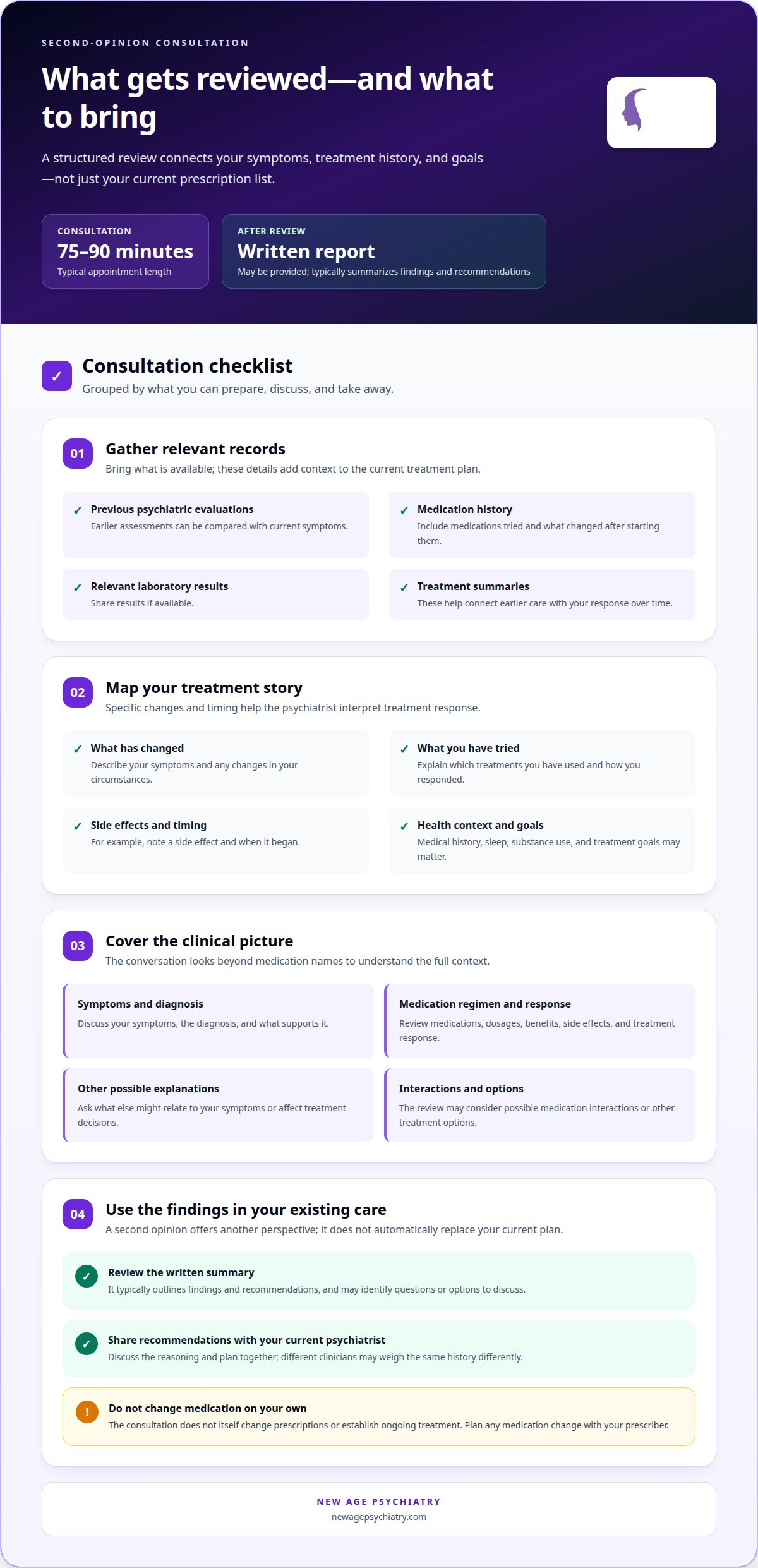
What to expect during a second-opinion consultation
A second-opinion consultation combines a clinical conversation with review of your treatment history. It typically takes 75-90 minutes and may result in a written report.
The Consultation Process and Written Reports
The psychiatrist asks about your symptoms, diagnosis, medications, side effects, medical history, and goals. These details help assess more than your current medication list. A written report typically summarizes findings and recommendations, giving you a record to discuss with your doctor. This helps connect your concerns with the reasoning behind the assessment.
Before the appointment, organize relevant evaluations, medication history, and lab results, if available. During the conversation, explain what has changed, which treatments you’ve tried, and what you want clarified. For example, describe a side effect and when it began. Specific details help the psychiatrist interpret your treatment response.
Possible Consultation Recommendations
The consultation may confirm that your diagnosis and treatment plan remain appropriate, or identify points for further discussion. Recommendations can address medication benefits, side effects, dosage, interactions, or other treatment options. If reducing medication is appropriate, a qualified prescriber should plan and monitor that change carefully. A report gives you a clear basis for discussing recommendations with your current doctor.
Finding a Second-Opinion Psychiatrist
You can seek a psychiatrist nearby or choose a telehealth consultation. Online appointments allow you to discuss your mental health concerns and treatment history remotely, while in-person consultations take place at a clinic. The format changes how you meet, not the purpose of the independent review. Choose the option that allows you to share relevant information and speak comfortably.
For a telehealth appointment, have your records and medication details available to discuss. The psychiatrist can review documents and ask follow-up questions during the consultation. If you’re comparing online and local options, consider which format makes it easiest to discuss symptoms, side effects, and your next step with a doctor.
How a second opinion differs from evaluation and medication management
A second opinion is an assessment of your existing diagnosis, medication regimen, or treatment plan by a psychiatrist who isn’t currently managing your care. It offers an independent perspective without automatically replacing your doctor or beginning ongoing treatment.
An initial psychiatric evaluation usually establishes a clinical picture for someone beginning care. The clinician asks about symptoms, history, and goals to understand the patient’s needs. For example, someone seeking help for depression may discuss mood changes, sleep, and previous treatment. The evaluation informs a diagnosis and care plan from that point forward.
A second opinion starts with an existing diagnosis or plan. The psychiatrist considers the information behind it and may agree with the original assessment or suggest questions for further discussion. For a patient uncertain about depression or a possible bipolar diagnosis, this independent review can clarify what evidence shaped the assessment. It doesn’t mean the first clinician was necessarily wrong.
Medication management differs because it involves ongoing care rather than a single review. The treating psychiatrist follows symptoms and medication response over time, then discusses whether the plan needs adjustment. A second-opinion consultation doesn’t itself make prescribing changes. Discuss medication decisions with the prescriber responsible for your care.
The distinction helps you choose the kind of support you’re seeking. If you want an independent assessment of a current diagnosis, a second opinion may address that focused need. If you need continuing monitoring and treatment decisions, medication management serves a different role. An initial evaluation, meanwhile, helps establish a clinical understanding when beginning psychiatric care.
Patients can use the written recommendations from a second opinion to guide a conversation with their current doctor. If depression is part of your care needs, explore treatment options as a possible next step.
New Age Psychiatry
New Age Psychiatry provides psychiatric diagnosis and medication management for adults. If a second opinion leaves you with questions about ongoing care, its treatment programs for ADHD, insomnia, depression, and anxiety may be relevant to your needs. The right next step depends on the concern you want addressed and whether you’re seeking continuing support after an independent review.
Bring the recommendations into a conversation with the clinician managing your care. If you’re seeking ongoing psychiatric support for ADHD, insomnia, depression, or anxiety in Florida, contact New Age Psychiatry to discuss your care needs.
Move Forward With a Clearer Care Plan
Getting a second opinion on psychiatric medication can help you approach care decisions with greater clarity. Use the recommendations as a starting point for an open conversation with your current psychiatrist. Focus on what matters most to you, such as symptom relief, manageable side effects, or a clearer understanding of your treatment options.
New Age Psychiatry offers ADHD diagnosis and treatment, insomnia treatment, and depression treatment for adults in Florida. If you’re looking for continued psychiatric care related to these concerns, contact the practice to discuss your needs and what kind of support you’re seeking.
Contact New Age Psychiatry to discuss your care needs. You deserve support that takes your concerns seriously and helps you move forward at a pace that feels right.
Frequently Asked Questions
What is a second opinion?
A second opinion is an independent psychiatric assessment of an existing diagnosis, treatment plan, or both. It gives another clinician a chance to interpret the information and explain whether the current approach fits your history and goals. For example, you might seek a focused review of one medication concern without starting ongoing care. The assessment can add context, even when the psychiatrist agrees with the original plan.
Looking for a psychiatric second opinion in California?
New Age Psychiatry provides completely virtual psychiatric care to adults residing in Florida, not California. Its telehealth services aren’t available to people living in California. If you live in Florida and want another perspective, you can discuss your diagnosis or medication concerns through a psychiatric consultation. State residency matters for this practice, even when the appointment takes place online.
What if the second opinion disagrees with my current diagnosis?
Ask what information supports each interpretation and what evidence could clarify the difference. Disagreement may reflect different readings of your symptom history, timing, or response to earlier treatment, rather than a conclusion that one clinician is wrong. Request an explanation in plain language, then discuss the perspective with your current psychiatrist before making decisions about your care.
Why might a doctor be uncertain about my diagnosis?
A diagnosis may remain uncertain when symptoms overlap or the clinical picture changes over time. For example, concentration problems can occur alongside anxiety, depression, poor sleep, trauma, or medication effects. A clinician may need more history or observations of how symptoms develop to distinguish among possibilities. Uncertainty can mean the assessment needs additional context, not that your concerns are being dismissed.
Will a Second Opinion Replace My Current Psychiatrist?
No, seeking another perspective doesn’t automatically replace your current psychiatrist or transfer your care. You can keep your existing care relationship while considering the recommendations. If you want ongoing treatment from a different clinician, discuss that separately, since a one-time review and continued medication management serve different purposes. You remain involved in decisions about your treatment relationship and next steps.
Will my current clinician be told?
Your current clinician isn’t automatically told that you sought a private second opinion. New Age Psychiatry says it won’t share information from a private psychiatric second opinion with another clinician without your permission. If you want your psychiatrist to consider the findings, you can choose to share the written summary or discuss the recommendations yourself. This lets you decide whether the second perspective becomes part of your ongoing treatment conversation.