
A private video call is only one part of confidentiality in telehealth psychiatry. HIPAA establishes rules for protected health information maintained by covered entities, including most healthcare providers, according to the U.S. Department of Health and Human Services. Privacy also depends on the technology used and whether anyone nearby can hear or see the visit. Confidentiality has limits: certain disclosures may be allowed for treatment, payment, or healthcare operations.
It’s understandable to want clear answers before sharing personal details with a psychiatrist online. This article explains what HIPAA does and doesn’t cover, how platform security and your surroundings affect privacy, and what confidentiality can look like at an initial appointment. You’ll also learn how to ask about recording, access to information, and circumstances in which it may be shared, so you can approach a first visit with a clearer sense of what to expect.
Key Takeaways
- Make your surroundings more private by choosing a secluded spot and reducing the chance that nearby people or devices can overhear.
- Understand what health privacy protections cover, where their limits may apply, and what rights you have over your information.
- Learn how device settings, secure networks, and platform safeguards can help protect a virtual psychiatry visit.
- Know what confidentiality topics may come up at an initial appointment, including recording practices and the handling of sensitive details.
Telehealth Privacy: Are Telehealth Visits Private?
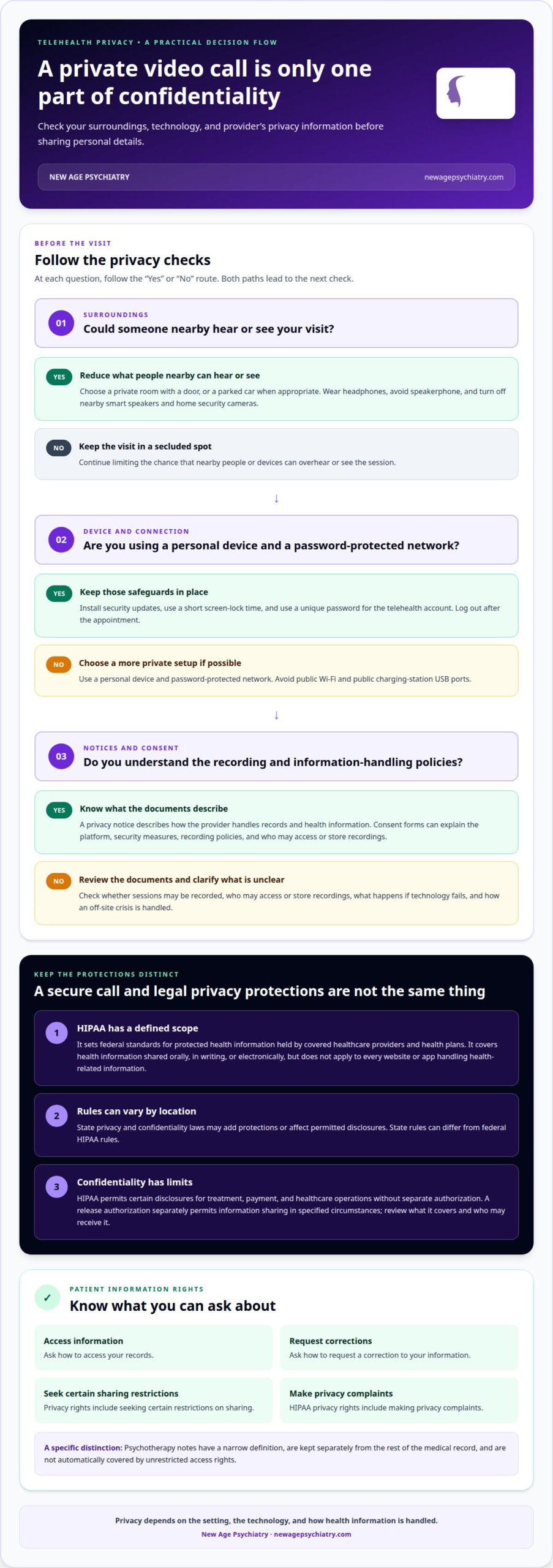
Yes. State telehealth privacy and confidentiality laws can differ from federal HIPAA rules. State laws may add protections or affect permitted disclosures. Privacy also depends on the devices, network, and surroundings used for a visit.
HIPAA and State Privacy Rules
HIPAA sets federal standards for protecting health information held by covered healthcare providers and health plans. The Health Insurance Portability and Accountability Act covers protected health information shared orally, in writing, or electronically. According to the U.S. Department of Health and Human Services, HIPAA doesn’t apply to every website or app that handles health-related information. State laws may add privacy protections or affect disclosures, so rules can vary by location. A secure video call and legal privacy protections are related, but they are not the same.
Privacy Notices and Authorizations
A privacy notice describes how a provider handles medical records and health information, while consent forms explain aspects of care and communication. Review these documents to understand the platform, its security measures, and whether sessions may be recorded. Telehealth consent can also explain what happens if technology fails and how a provider handles an off-site crisis. A release authorization separately permits information sharing in specified circumstances. Before signing, read which information it covers and who may receive it. HIPAA permits certain disclosures for treatment, payment, and healthcare operations without separate authorization.
Patient Privacy and Confidentiality Rights
Patients have rights concerning their health information. According to the U.S. Department of Health and Human Services, these include accessing information, requesting corrections, seeking certain restrictions on sharing, and making privacy complaints. These rights help you understand and address how records are handled. HIPAA doesn’t mean information can never be shared: permitted disclosures can include treatment-related communication. Ask the provider how to access your records or request a correction. Before agreeing to share information, you can also ask what a release authorization covers.
Privacy Concerns as a Care Barrier
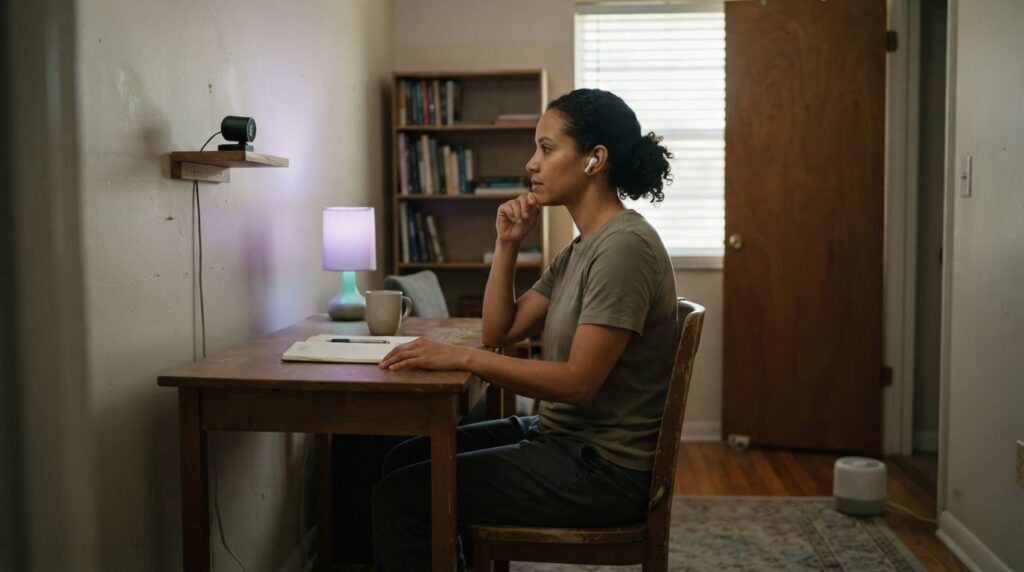
Worrying about being overheard or recorded can make it harder to discuss mental health or seek care. Practical steps can reduce exposure during a telehealth session. Choose a private room with a door, or use a parked car when appropriate. Turn off nearby smart speakers and home security cameras, wear headphones, and avoid speakerphone if others are nearby. Use a personal device and a password-protected network; avoid public Wi-Fi and public charging-station USB ports. These steps help limit what others can hear or see, while platform security and privacy rules address other parts of the visit.
HIPAA protections for psychiatric information
In the United States, HIPAA governs protected health information held by covered healthcare providers and health plans. Its rules apply to mental health records as well as other medical information.
The Health Insurance Portability and Accountability Act covers health information shared orally, in writing, or electronically. It doesn’t make every detail of psychiatric care subject to identical access rules. Psychotherapy notes have a narrow definition: they document or analyze counseling conversations and are kept separately from the rest of the medical record. Ordinary access rights don’t automatically provide unrestricted access to those separate notes.
Telehealth informed consent explains how care and electronic communication work. It can address the platform and security measures, recording policies, and who may access or store recordings. Providers should explain electronic-sharing risks, confirm a patient’s identity, and obtain consent. This discussion can help patients understand what information enters the medical record and how it may be handled.
Family Involvement and Information Sharing
Family involvement means sharing relevant health information with people supporting a patient’s care, under applicable conditions. A provider may share information with a family member when the patient agrees or when professional judgment permits it. HIPAA also allows certain disclosures for treatment, payment, and healthcare operations without separate authorization. A relative’s involvement doesn’t automatically grant access to every record or conversation. Patients can discuss their preferences and clarify which information they want shared.
Parents’ Access to Minors’ Records and Sessions
Can parents access a minor’s telepsychiatry records or sessions in the United States? It depends on applicable laws and treatment circumstances, since parental access and consent rules for minors vary. A parent’s role doesn’t establish universal access to every mental health record or session. Ask how consent and information access apply to the minor’s care, including whether separately maintained psychotherapy notes are involved. Understanding these distinctions can help families discuss privacy expectations before telehealth visits begin.
Digital platform and data security
A private room limits what people nearby can hear, while platform safeguards protect information shared electronically. Both matter during telehealth treatment.
Telehealth Platform Cybersecurity
Cybersecurity means using technical measures to protect accounts, communications, and stored health information from unauthorized access. A therapy platform may offer encryption, multi-factor authentication, and automatic logout after inactivity. These features can help protect a session and records if someone else uses the device. Patients can add safeguards by installing security updates, setting a short screen-lock time, and enabling multi-factor authentication when available. Use a unique password for each telehealth account, and log out after the appointment.
Device encryption and secure communication apps add another layer of protection. Delete saved health photos or videos when they’re no longer needed, especially on shared devices.
Choosing a Telehealth Platform
When choosing a platform, consider how it protects a visit and handles information beyond the live call. Ask the provider which platform is used, whether sessions are recorded, and who can access stored data. A HIPAA-compliant service with end-to-end encryption is recommended for telehealth. Platform privacy and security measures matter because mental health care may involve sensitive details. Clear answers about recording, access, and storage help patients understand how their information is handled during treatment.
Use a personal device when possible instead of a workplace computer. Keep its operating system and telehealth app updated.
Responding to a Data Breach
If a provider or platform reports a data breach, contact the provider through a trusted channel. Ask what information was affected, when the breach happened, and what steps are underway. Change the password for the affected account and update any other accounts using the same password. Keep the notice and related messages. These steps can help you understand the privacy concern and protect accounts that share login details. Ask how to access your health information and raise a privacy complaint if needed.
Confidentiality in initial psychiatry appointments
An initial appointment is a good time to clarify how privacy works before discussing sensitive details. HIPAA protects health information held by covered providers, but confidentiality has limits and depends on the visit’s setting, technology, and care needs.
Ask how the provider confirms your identity and handles information shared during telehealth services. Discuss who may access your medical records, how electronic information is stored, and whether sessions are recorded. If recording is possible, ask about consent, access to recordings, and how they’re stored and destroyed. Clear answers help you decide what to share and understand how information may be used for care.
Informed consent should identify the technology platform and explain its security measures. It should also address electronic communication risks, including the possibility that someone could access information on a device or account. Ask what to do if a video call drops or the connection fails. Knowing the plan helps you understand how the appointment can continue and what to do next.
Telehealth consent should also cover crisis management when a patient is off-site. The provider should establish the patient’s physical location for every session, not just the first appointment, since a patient may join later sessions from somewhere else. Discussing the location and response plan clarifies how the provider will respond if urgent concerns arise during a visit.
Confidentiality doesn’t mean information can never be disclosed. Applicable laws may permit disclosures involving mandatory reporting or a serious and imminent threat of harm. Ask the provider to explain relevant limits in plain language, including who may become involved and what information could be shared. Before ending the first conversation, clarify how to access health records and raise privacy concerns. This gives you a practical understanding of your privacy and its boundaries.
New Age Psychiatry
New Age Psychiatry provides telehealth psychiatric diagnosis and medication management for adults in Florida, with care that can begin with an open conversation about privacy. If you’re considering support for ADHD, insomnia, depression, or anxiety, you can discuss your concerns and learn how confidentiality applies to your care. Questions about the platform, information sharing, or what happens during an initial appointment are a natural part of that conversation. Clear expectations can help you feel prepared to share what matters and decide on next steps. Contact New Age Psychiatry to discuss your needs and arrange completely virtual psychiatric care in Florida.
Take the Next Step With Confidence
Feeling comfortable enough to speak openly is part of meaningful psychiatric care. Before a visit, consider what would help you feel ready to begin: a clear explanation of privacy practices, time to discuss your concerns, or a chance to understand what the first appointment involves. You can raise those needs directly. A thoughtful conversation about confidentiality in telehealth psychiatry can help establish expectations and make it easier to focus on your care.
New Age Psychiatry provides telehealth psychiatric care for adults in Florida, including ADHD diagnosis and treatment, insomnia treatment, and depression treatment. If you’re considering support, start by sharing what brings you to care and asking the questions that matter to you. You don’t need to have everything figured out before reaching out.
Contact New Age Psychiatry today to discuss your next step toward care.
Frequently Asked Questions
When Can Information Be Shared Without My Specific Permission?
HIPAA permits certain disclosures for treatment, payment, and healthcare operations without separate authorization. Applicable laws may also allow disclosures for mandatory reporting or a serious and imminent threat of harm. The specific circumstances matter. If you’re unsure about a proposed disclosure, ask the provider what information would be shared, with whom, and why. This can help distinguish routine care coordination from other permitted disclosures.
Are All Psychiatric Notes Specially Protected Psychotherapy Notes?
No. Psychotherapy notes have a narrow meaning under HIPAA: they document or analyze counseling conversations and are maintained separately from the rest of the medical record. A medication list or diagnosis in the ordinary record isn’t automatically a psychotherapy note. When asking about access to a specific document, clarify whether it belongs to your general medical record or is separately maintained psychotherapy notes.
Can Family Members Hear What I Say?
They may hear a session if they’re physically nearby, even if they aren’t involved in your care. For example, a family member in the next room could overhear a telehealth conversation through an open door. Choose a private spot, use headphones, and avoid speakerphone if others are close. Separately, a provider may share relevant information with someone involved in your care under applicable conditions, such as your agreement.
Can a Psychiatrist Record a Telehealth Appointment Without Telling Me?
Before the appointment, ask whether the platform or provider records sessions, and request consent before any recording. If recording is discussed, clarify who can access it, how it’s stored, and how it’s destroyed. You can raise this before sharing sensitive details. If a recording appears to be underway unexpectedly, pause the conversation and ask the provider to explain the recording practice before continuing.
Does HIPAA Apply to Telehealth?
Yes. HIPAA applies to protected health information held by covered entities, including most healthcare providers and health plans, whether information is shared in person or electronically. But it doesn’t cover every app, website, or individual handling health-related data. Protections depend on who provides the service and how the information is handled, not simply on whether an app relates to health.
How Does Telehealth Confidentiality Work?
Confidentiality in telehealth psychiatry depends on safeguards around the provider’s space, your surroundings, and the digital connection between them. Before a session, use a private location and a personal device when possible. During care, ask how the provider handles sensitive information and who may access it. These practical questions can help you understand privacy expectations without assuming a video appointment alone makes every part private.