

PTSD can develop after trauma, while repeated or long-term trauma may involve emotional dysregulation, relationship difficulties, and a negative view of yourself. According to the American Psychiatric Association, PTSD is considered when symptoms last over a month; complex PTSD treatment online in Florida may include trauma-informed therapy, EMDR, and psychiatric care tailored to a person’s symptoms.
If distressing memories, avoidance, mood changes, or intense emotional and physical reactions are affecting daily life, seeking support can feel like a big step. You don’t need to make sense of every experience before exploring care. Trauma-informed treatment can respect your pace.
This guide explains common PTSD and complex PTSD symptoms, how trauma-informed therapy and EMDR may help, and what online treatment can involve. It also describes how psychiatric care may fit into a treatment plan, helping you consider possible next steps and the kind of support that feels right.
Key Takeaways
- Learn how PTSD symptoms can affect emotions, relationships, thoughts, and everyday reactions, and how complex trauma may shape the experience.
- Explore how trauma-informed approaches and skills-based therapies can support emotional regulation while respecting a person’s pace.
- Understand how mindfulness and grounding exercises can help you reconnect with the present during moments of distress.
- See how EMDR uses guided eye movements to support the processing of traumatic memories.
- Find out how therapy and psychiatric care may fit into treatment, and where to turn for immediate crisis support.
What are the common symptoms of complex ptsd?
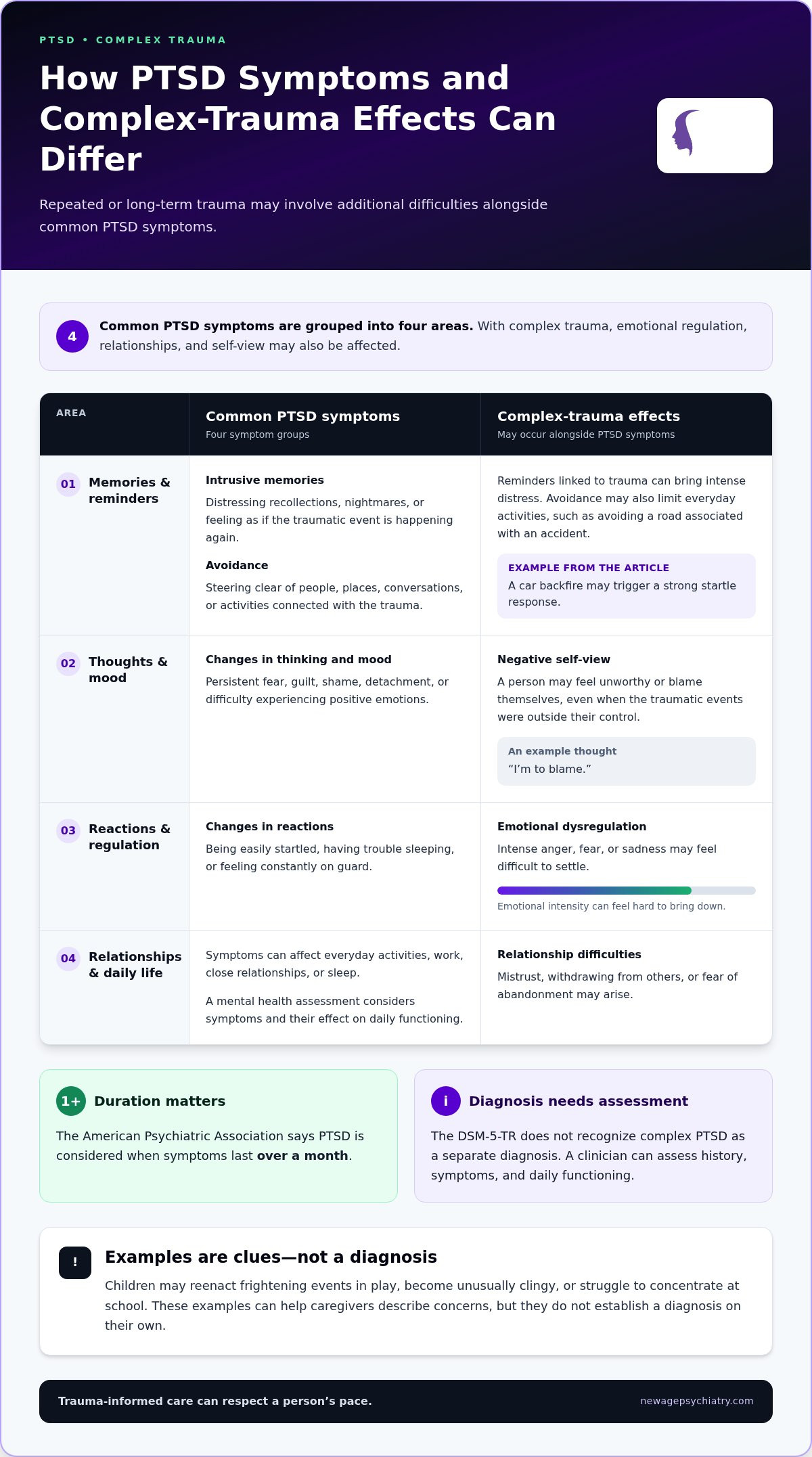
Complex post-traumatic stress symptoms can follow repeated or long-term trauma, such as ongoing abuse, neglect, or living in an unsafe relationship. Alongside common PTSD symptoms, a person may have difficulty regulating emotions, maintaining relationships, or feeling safe and worthy. These responses can affect daily life, but they don’t mean someone is weak.
PTSD symptoms are commonly grouped into four areas: unwanted memories, avoiding reminders, negative thoughts or moods, and heightened alertness or reactivity. For example, a car backfire may trigger a strong startle response, while avoiding a road linked to an accident may limit everyday activities.
- Intrusive memories: distressing recollections, nightmares, or feeling as if a traumatic event is happening again.
- Avoidance: steering clear of people, places, conversations, or activities connected with the trauma.
- Changes in thinking and mood: persistent fear, guilt, shame, detachment, or difficulty experiencing positive emotions.
- Changes in reactions: being easily startled, having trouble sleeping, or feeling constantly on guard.
With complex trauma, emotional dysregulation may involve intense anger, fear, or sadness that feels hard to settle. Relationship difficulties can include mistrust, withdrawing from others, or fearing abandonment. A negative self-view might sound like, “I’m to blame,” even when the traumatic events were outside the person’s control.
Adults may notice symptoms at work, in close relationships, or when trying to sleep. Children can respond differently: a child might reenact frightening events in play, become unusually clingy, or struggle to concentrate at school. These examples can help caregivers describe concerns, but they don’t establish a diagnosis on their own.
After a Florida hurricane, reminders may include storm warnings, heavy rain, evacuation routes, or damage to a home. Someone who experienced a dangerous evacuation might feel intense distress when another alert sounds. The event itself doesn’t determine whether someone develops PTSD; symptoms and their effect on daily life matter.
The American Psychiatric Association says PTSD is considered when symptoms last over a month. A mental health assessment can explore the person’s history, symptoms, and daily functioning. The DSM-5-TR does not recognize complex PTSD as a separate diagnosis, while clinicians may use the DSM-5 criteria when assessing PTSD symptoms. Seeking an informed assessment can help clarify what support fits.
Are there specific therapies designed for complex ptsd?
Can complex PTSD be treated through online therapy in Florida? Yes, online therapy can support trauma care when sessions focus on safety, stability, and the person’s goals. Approaches may include EMDR, dialectical behavior therapy (DBT), internal family systems (IFS), and trauma-focused cognitive behavioral therapy. DBT teaches emotional regulation and distress tolerance, while therapy can help individuals approach traumatic memories at a manageable pace.
Which Florida-licensed online therapists specialize in complex PTSD? Look for a clinician who describes trauma-informed experience and explains how treatment adapts to complex trauma. Review the clinician’s Florida license number and status through the state’s official professional-license directory. Ask about the therapy methods used, how progress is discussed, and what happens if a session brings up intense distress.
Does Florida insurance or Medicaid cover online complex PTSD therapy? Coverage depends on the plan’s telehealth benefits, provider participation, and type of service. Review your plan documents for behavioral health and telehealth terms, then compare them with the clinician’s billing information. Coverage and out-of-pocket costs vary by plan.
How do I find and verify a Florida-licensed trauma therapist online? Start with clinicians who clearly list their Florida credentials and trauma-focused approach. Verify the license in the state directory and confirm that the name and status match. Before beginning, discuss the session platform, privacy expectations, and how to reconnect if technology fails.
Being ready for online sessions involves more than having a working camera. Choose a private room, use headphones if helpful, and keep a charged phone nearby. Discuss what to do if someone enters the room, the connection drops, or a memory causes distress. A written support plan can identify a trusted person, calming activities, and steps for pausing a session.
Family education can help relatives respond steadily rather than applying pressure. For example, a partner might ask, “Would quiet or company help right now?” instead of demanding details about a traumatic event. With the individual’s consent, family members can learn about triggers, boundaries, and supportive communication without taking over therapy.
Build crisis resources into the plan before distress escalates. People in crisis or emotional distress can call or text 988 for the Suicide & Crisis Lifeline. People experiencing a medical or mental health emergency should call 911 or go to the nearest emergency room, according to the National 911 Program. These options serve different needs, so include both in a personal plan.
Psychiatric care may also be part of a broader mental health plan. Readers exploring that area can learn about low dose ketamine therapy as a separate treatment option.
Who Can Benefit from Trauma-Informed Therapy?
Trauma-informed therapy may help people affected by complex trauma, including those without a formal PTSD diagnosis. Someone may still experience fear, shame, or emotional overwhelm after a traumatic event. Childhood experiences can also shape trust, boundaries, and reactions in adult relationships. The goal is to understand trauma’s effects, not blame someone for their responses.
Support can focus on practical coping skills before exploring painful memories. For example, someone who feels overwhelmed during a difficult conversation might practice pausing, noticing body sensations, and naming the emotion. This can build awareness of early distress signals. Therapy can also help identify triggers and plan a steady response instead of relying only on avoidance.
Grounding offers a concrete way to reconnect with the present during flashbacks or intense distress. Try the 5-4-3-2-1 method by noticing:
- Five things you can see, such as a lamp or window.
- Four things you can feel, such as your feet on the floor.
- Three things you can hear, such as a fan or passing car.
- Two things you can smell, such as soap or fresh air.
- One thing you can taste, such as a sip of water.
Mindfulness and somatic approaches can support relaxation and body awareness. A simple practice is to notice your breathing and how your body feels against the chair. If focusing inward feels uncomfortable, shift your attention to a neutral object in the room. The goal is to choose a manageable anchor, not force a particular feeling.
Movement can also support coping. A 20-minute walk is one suggested strategy for PTSD symptoms. Choose a familiar, comfortable route and notice the surrounding sights or sounds as you move. Exercise is not a substitute for treatment, but regular physical activity can become one part of a wider coping plan alongside sleep, supportive relationships, and stress-management skills.
Trauma-informed care lets individuals set the pace and avoids pressuring them to discuss painful memories before they feel ready. If exposure-based work is considered, a therapist can explain its purpose and how it relates to the person’s goals. Eye movement desensitization and reprocessing, or EMDR, is another approach to processing trauma memories. These options differ, so a plan should reflect the person’s symptoms and needs.
These skills can support recovery from post-traumatic stress disorder by helping people respond to emotional distress with greater awareness. Someone might use grounding after a storm warning, pause before reacting, or take a walk after a difficult day. Tracking which strategies help can make future treatment discussions more specific and useful.
EMDR
Eye movement desensitization and reprocessing, or EMDR, is a therapy for processing traumatic memories. During treatment, a therapist guides eye movements while the person focuses on a memory or related experience. The aim is to help process and integrate the memory so it feels less disruptive in the present. For example, a reminder of a past accident may become easier to think about without the same intensity.
EMDR is more than recalling an event while following a moving object. The therapist helps the person stay oriented to the present and work at a manageable pace. Before focusing on a difficult memory, the person and therapist can discuss what feels safe, what signs indicate distress, and how to pause. This preparation matters when complex trauma involves multiple experiences or ongoing anxiety.
For complex PTSD, treatment may also address negative beliefs, emotional regulation, and relationship patterns. EMDR can focus on trauma memories, while cognitive behavioral therapy (CBT) helps identify and reframe unhelpful thought patterns. Dialectical behavior therapy (DBT) teaches skills for managing emotions and distress. These approaches have different emphases and may be considered according to the person’s goals and needs.
- EMDR: uses guided eye movements to support processing and integration of traumatic memories.
- CBT: helps examine negative thoughts and develop more balanced responses.
- DBT: builds emotional regulation and distress-tolerance skills.
A therapist may help someone notice how a memory affects daily life before choosing a focus. For instance, a person might identify that a certain sound brings up fear, disrupts sleep, or creates tension in relationships. This can guide treatment discussions without requiring them to describe every detail at once. Mindfulness and grounding can also help someone stay connected to the present during emotionally difficult work.
Session counts vary by trauma history and treatment needs. Some people with single-incident trauma may see major relief after 8-15 sessions of cognitive processing therapy or EMDR. That figure describes single-incident trauma, not a promised timeline for complex PTSD, which can involve multiple experiences and different goals. Progress may include recognizing triggers sooner or responding to a memory with less disruption.
Online EMDR requires a setup that supports attention and privacy. A quiet room, stable internet connection, and plan for interruptions can help someone focus during a session. The therapist can explain how guided eye movements work online and agree on a signal to pause. If visual tracking feels uncomfortable, discussing that response can help shape the next step.
EMDR may be one part of a broader plan, rather than the only approach. Someone managing anxiety, for example, may also benefit from skills for addressing symptoms between sessions. The key question is how a chosen method connects with the person’s current challenges, readiness, and treatment goals.
PTSD and complex PTSD treatment
PTSD care can include therapy, medication, or both. Approximately 13 million U.S. adults have PTSD during a given year, according to the U.S. Department of Veterans Affairs, National Center for PTSD. Treatment focuses on symptoms that interfere with daily life, such as sleep disruption, avoidance, or difficulty concentrating. With complex trauma, care may also address emotional regulation, relationships, and a persistent negative self-view.
A focused assessment can help establish a useful starting point. A clinician may review symptoms, trauma history, health background, and practical goals. For example, someone whose nightmares disrupt work may prioritize sleep and daytime functioning. Another person may want help managing panic in crowded places. Clear goals make it easier to discuss what changes and whether the plan needs adjusting.
Therapy options address different patterns. Cognitive behavioral therapy helps identify and reframe negative thoughts. Prolonged exposure gradually approaches trauma-related thoughts, feelings, and situations in a safe, controlled way. EMDR supports processing traumatic memories. Skills-based approaches can build distress tolerance and emotional regulation before deeper memory work. Trauma-informed care lets the person set the pace, without pressure to discuss painful events before they feel ready.
Medication may be considered for symptoms such as persistent anxiety, low mood, or sleep problems. SSRIs and SNRIs, including sertraline and paroxetine, are commonly prescribed to help reduce PTSD symptoms. Prazosin can help reduce or suppress nightmares for some people. Medication requires supervision by a psychiatrist or psychiatric mental health nurse practitioner. It may take several weeks to feel its full effect, so take it as prescribed and discuss any changes.
People seeking complex PTSD treatment online in Florida may benefit from care that addresses stabilization, memory processing, and daily functioning over time. Treatment for complex or childhood trauma can sometimes take 6 months to 2 years. The sequence matters: skills for managing distress can help someone approach difficult material while staying connected to present-day safety.
Progress is not measured only by whether memories disappear. Practical signs may include sleeping more consistently, recovering sooner after a trigger, or setting clearer boundaries in a relationship. Regular sessions and following the treatment plan help track these changes. Some people experience substantial improvements in symptoms and quality of life, while others continue managing symptoms over time.
For those considering online complex PTSD treatment in Florida, virtual psychiatric care can support evaluation and medication management as part of PTSD care. If anxiety or sleep disruption is making daily routines harder, explore PTSD treatment options as a possible next step.
New Age Psychiatry: ADHD Diagnosis and Treatment
New Age Psychiatry provides online psychiatric care for adults in Florida, including ADHD diagnosis and treatment. If attention difficulties affect work or daily routines alongside trauma-related distress, an ADHD assessment may help clarify what support could address those concerns. The practice also offers treatment for insomnia, depression, and anxiety, which can affect sleep, mood, and concentration.
Psychiatric care may be a useful next step when symptoms disrupt daily life and you want to discuss diagnosis or medication management. It can complement trauma-focused therapy, but does not replace it. New Age Psychiatry offers virtual psychiatric care for adults in Florida, including support for related concerns.
For a supportive next step, contact New Age Psychiatry to discuss your mental health needs.
Take a Steady Next Step Toward Support
You don’t need to have every part of your experience understood before choosing care. Start by identifying what feels hardest right now, such as disrupted sleep, low mood, or difficulty focusing, then consider what support could address that concern. For complex PTSD treatment online in Florida, an informed next step respects your goals and the pace you need.
New Age Psychiatry offers ADHD diagnosis and treatment, insomnia treatment, and depression treatment through virtual care for adults in Florida. These services may be relevant when attention, sleep, or mood concerns affect daily life. The right plan depends on your needs and the care you’re seeking.
If you’re ready to explore psychiatric support, contact New Age Psychiatry. Taking a first step can help make the path ahead feel more manageable.
Frequently Asked Questions
What is PTSD?
Post-traumatic stress disorder (PTSD) is a mental health condition that can develop after experiencing or witnessing trauma. It may involve intrusive memories, avoidance, shifts in mood or thinking, and heightened alertness. Symptoms can affect work, relationships, and everyday routines. Experiencing a traumatic event does not automatically mean someone will develop PTSD, and symptoms vary from person to person.
What Does Trauma-Informed Care Look Like?
Trauma-informed care recognizes that past experiences can shape how someone feels, responds, and relates to others. In practice, a clinician explains an exercise’s purpose, asks permission before exploring sensitive topics, and works with the person to set priorities. For example, someone might first focus on feeling safer in everyday routines rather than describing a painful memory in detail.
How will I know which therapy is best for me?
The best-fit therapy depends on your symptoms, goals, history, and comfort with different approaches. You might want help with nightmares, negative beliefs, or distress around reminders, and each concern may call for different tools. Discuss what you hope will change and what feels manageable. A treatment plan can be reviewed as your needs or responses to therapy develop.
What is trauma?
Trauma is an experience that overwhelms a person’s ability to feel safe or cope in the moment. It can involve a single event, such as a serious accident, or repeated experiences, such as ongoing abuse. People may respond differently to similar events. An experience’s meaning and impact depend on the person, their circumstances, and the support available afterward.
How do I know if I need help for complex PTSD?
Consider seeking professional support if reactions linked to past trauma keep affecting daily life. Examples include avoiding important activities, feeling persistently unsafe in close relationships, or struggling to manage strong emotions. You don’t need to settle on a diagnosis before asking for help. A clinician can discuss what you’re experiencing, its effect on your routines, and what kind of support may fit.
What treatments are recommended for complex PTSD?
Treatment can combine trauma-focused therapy, distress-management skills, and psychiatric care when appropriate. A plan may address current challenges before focusing on difficult memories. For instance, someone might work on sleep routines and emotional regulation while discussing an approach to trauma processing. Treatment goals, symptoms, personal preferences, and response to care all help shape the plan over time.
What types of online therapy help complex PTSD, such as EMDR, CPT, or DBT?
Online care may include EMDR, cognitive processing therapy (CPT), or dialectical behavior therapy (DBT), depending on treatment goals and the clinician’s approach. EMDR uses guided eye movements while processing memories. CPT examines beliefs connected with trauma, while DBT builds skills for regulating emotions and managing distress. You can discuss how each method works and what feels appropriate to explore.
What should I expect during an online complex PTSD assessment and treatment?
An online assessment typically involves discussing your symptoms, personal history, health, and what you want help with. You can describe concerns in your own words, such as avoiding certain situations or struggling to sleep. The clinician may use questions or screening tools to understand your symptoms and daily functioning. If treatment begins, you can discuss goals, session priorities, and ways to manage distress between appointments.