

What if the first step toward managing panic isn’t deciding whether your symptoms are “all in your head,” but finding the right kind of help? A racing heart, shortness of breath, or dizziness can feel frightening, and it’s understandable to wonder whether an episode needs emergency attention. Online help for panic attacks Florida adults can access offers a way to discuss recurring symptoms with a psychiatric provider. Virtual care is not a substitute for emergency evaluation when symptoms feel medically dangerous.
If you’re considering support, you deserve clear answers without judgment. Online psychiatric care can include an evaluation and medication management for anxiety. It’s also important to understand the limits: virtual psychiatric care does not provide emergency crisis intervention, and psychiatry is different from psychotherapy. Knowing the difference can help you choose a sensible next step.
This article explains what telehealth psychiatric care can help with, how to prepare for an appointment, and when to seek urgent help instead of waiting. It also covers how ongoing virtual psychiatric support for adults in Florida can fit into daily life.
Key Takeaways
- A panic attack can feel alarming, but one episode alone doesn’t establish panic disorder. Tracking recurring symptoms can help clarify what’s happening.
- In an online psychiatric evaluation, you can discuss symptoms, history, daily functioning, and relevant health context to explore appropriate next steps.
- Medication management is an individualized clinical decision, not a guaranteed part of care or outcome.
- Online help for panic attacks Florida adults seek can support ongoing psychiatric evaluation and follow-up, but it isn’t emergency or crisis care.
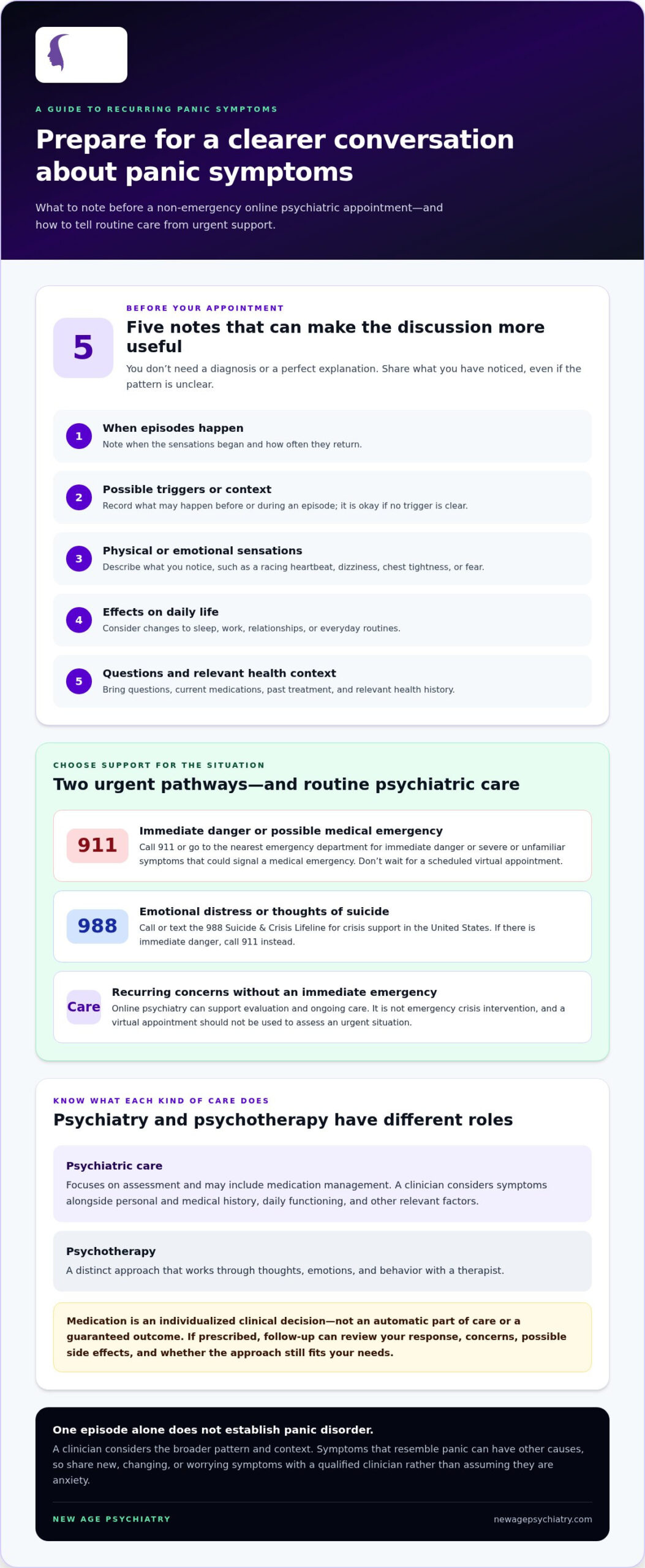
- Before a non-emergency appointment, note when episodes happen, possible triggers, physical sensations, effects on daily life, and questions you want to ask.
Online help for panic attacks in Florida: understand the concern
A sudden wave of fear can make your body feel unfamiliar and unsafe. Your heart may pound, your breathing may change, or you may feel detached from your surroundings. These sensations can be frightening, especially when you don’t know what’s causing them. Online help for panic attacks Florida adults can access may be useful for recurring concerns. First, it helps to understand what an episode can and cannot tell you.
A panic attack is a sudden surge of intense fear or discomfort accompanied by physical or emotional symptoms. An episode alone is not a diagnosis of panic disorder. Panic disorder involves recurrent, unexpected attacks and ongoing concern or changes in behavior related to them. A clinician considers the broader pattern and context rather than diagnosing from one symptom or checklist. For a general overview of understanding panic attacks, you can review how episodes, symptoms, and diagnosis are described.
What can a panic attack feel like?
Experiences differ. Possible symptoms include a racing heartbeat, sweating, trembling, dizziness, chest tightness, shortness of breath, nausea, tingling, or a sense of losing control. Some people feel intense fear; others mainly notice physical sensations. Symptoms that resemble panic can also have other causes. If something is new, changing, or worrying, share it with a qualified clinician instead of assuming it’s anxiety.
A symptom list can’t establish what’s happening for you. A clinician may ask when the sensations began, how they change, what else was happening at the time, and how they affect daily life. They may also consider relevant health history and whether further medical assessment is appropriate. You don’t need to arrive with a label or explain everything perfectly. A straightforward account of what you’ve noticed is a helpful starting point.
When is online help not the right next step?
Telehealth psychiatry supports evaluation and ongoing care. It isn’t emergency crisis intervention. If you’re in immediate danger or experiencing severe or unfamiliar symptoms that could signal a medical emergency, call 911 or go to the nearest emergency department. Don’t wait for a scheduled virtual appointment to assess an urgent situation.
If you’re in emotional distress or thinking about suicide, call or text the 988 Suicide & Crisis Lifeline for crisis support in the United States. If there’s immediate danger, call 911 instead. These options serve different needs: 988 provides crisis support, while emergency services address immediate threats to safety or urgent medical concerns. Reaching out is a practical step, not a judgment about what you’re experiencing.
Once immediate safety is addressed, online help for panic attacks Florida residents seek can be considered for recurring symptoms and follow-up psychiatric care. Keep emergency support separate from routine appointments so you can choose the right next step for the situation at hand.
How online psychiatric care can help with recurring panic symptoms
When intense episodes keep returning, an online psychiatric evaluation can help you make sense of the pattern and discuss possible next steps. The appointment is a clinical conversation, not a test you have to pass. A provider may ask what you experience, when it began, how often it happens, and whether it affects sleep, work, relationships, or daily routines.
Symptoms are considered alongside your personal and medical history. The clinician may ask about current medications, past treatment, relevant health conditions, and other factors that could shape your symptoms. This broader view helps avoid reducing a complicated experience to a single label. If your symptoms suggest that additional medical assessment is needed, the provider can discuss that with you.
What may an online psychiatric evaluation cover?
Expect questions about when episodes began, how often they happen, what tends to occur before or during them, and what you do afterward. You can describe how symptoms affect your functioning and what you hope will change. Share what you know, even if the timing or triggers aren’t clear. Assessment and treatment planning depend on your individual needs and the information available.
You don’t need to arrive certain that panic is the cause. A psychiatric evaluation considers whether anxiety care may be appropriate and what other factors deserve attention. Psychiatry focuses on assessment and may include medication management; psychotherapy is a distinct approach that works through thoughts, emotions, and behavior with a therapist. Medication isn’t the only possible part of a broader care plan.
What does ongoing medication management involve?
Medication is an individualized clinical decision, not an automatic result of an evaluation. If it’s part of the plan, follow-up conversations can review how you’re responding, any concerns or possible side effects, and whether the approach still fits your needs. Raise questions and preferences with your clinician. Decisions should reflect a discussion between you and your clinician, with follow-up shaped by the clinical plan.
Keeping notes between visits can make those conversations more useful. Record changes in symptoms or daily functioning, along with concerns you want to discuss. A brief written note can help if something feels difficult to describe. Don’t change or stop a prescribed medication without discussing it with your prescriber.
Psychiatric assessment and ongoing medication management are for planned care, not emergencies. A virtual appointment can support evaluation and follow-up for recurring symptoms, but it can’t provide emergency crisis intervention. For online help for panic attacks Florida adults can access for ongoing anxiety care, New Age Psychiatry’s telehealth anxiety care provides adults with virtual psychiatric evaluation and medication management.
Can virtual care really help? Compare psychiatry, therapy, and urgent support
Virtual care can help when the need is appropriate for a scheduled appointment. Online psychiatric care may support evaluation and follow-up for recurring panic symptoms, but it can’t respond to an emergency in real time. Match the type of support to the concern: ongoing symptoms call for planned care, while immediate danger or potentially serious medical symptoms call for urgent help.
Psychiatry, psychotherapy, and emergency or crisis support have different roles. They may complement one another, but no single option fits every situation.
| Type of support | Main purpose | Consider it when |
|---|---|---|
| Psychiatric care | Evaluate symptoms and health context; discuss diagnosis and, when clinically appropriate, medication management and follow-up. | You have recurring symptoms and want a psychiatric assessment or ongoing medication support. |
| Psychotherapy | Work with a therapist on thoughts, emotions, coping strategies, and behavior patterns. | You want structured talk-based support for understanding and responding to distress. |
| Emergency or crisis support | Address immediate threats to safety or urgent medical concerns. | You may be in immediate danger, considering suicide, or experiencing severe or unfamiliar symptoms. |
Psychiatric care and psychotherapy serve different roles
A psychiatric evaluation focuses on symptoms, history, functioning, and relevant health factors. Medication management may be discussed as one possible part of a personalized plan, not as an automatic step. Psychotherapy is a separate form of care that uses conversation and therapeutic approaches to help someone explore patterns and build coping skills. Depending on a person’s needs, psychiatric care and psychotherapy may be used separately or together. Neither replaces emergency assessment when a situation is urgent.
Choose the level of help based on immediate safety
For recurring symptoms without an immediate safety concern, a scheduled virtual psychiatric appointment may be a reasonable way to discuss evaluation and follow-up. Online help for panic attacks Florida adults consider is for ongoing care, not urgent assessment. If symptoms are severe, unfamiliar, rapidly changing, or feel medically dangerous, seek prompt medical evaluation rather than waiting for a routine appointment.
If you’re in immediate danger or believe you may need emergency medical care, call 911 or go to an emergency department. For emotional distress or thoughts of suicide, call or text 988 in the United States to reach the Suicide & Crisis Lifeline. If there’s immediate danger, call 911. You don’t need to decide on your own whether a recurring symptom pattern has a psychiatric explanation. A clinician can help assess it, while urgent services are the right route when safety cannot wait.
Prepare for an online appointment about panic attacks
A little preparation can make a virtual appointment more focused, especially if it’s hard to remember details when you’re anxious. You don’t need a perfect timeline or a clinical explanation. Brief notes can help you describe what’s happening and leave time for the questions that matter most to you.
Make a concise symptom record
Before your visit, jot down a few observations. The goal is to give the clinician useful context, not to diagnose yourself or prove that a symptom has one specific cause.
- Timing and frequency: Note when episodes began, how often they happen, and roughly how long they last.
- What you notice: Record emotional and physical symptoms, including what feels most distressing or different from usual.
- Possible context: Write down what was happening beforehand, along with relevant sleep changes, medication changes, or substance use. These details may be useful to discuss, but don’t assume they caused the symptoms.
- Daily impact: Describe whether episodes affect work, relationships, sleep, travel, or other activities.
- Your priorities: List questions and concerns, such as what the evaluation involves or what follow-up might look like.
A few words per item are enough. If you can’t remember exact dates, approximate timing is still helpful. Bring a current medication list, including prescribed medicines and supplements, and be ready to share relevant health history or prior treatment. Mention allergies or past medication concerns if they’re relevant to your care.
Set up for a private telehealth conversation
Choose a comfortable space where you can speak openly and limit interruptions. Before the visit, test your device, camera, microphone, and internet connection. Keep your notes and medication details within reach, along with any health records you think may help. If privacy at home is difficult, consider another quiet, private location where you can talk without being overheard.
For a Florida telehealth appointment, plan to be physically in Florida during the visit and be prepared to confirm your location. Telehealth care must follow applicable requirements for the clinician and the patient’s location. Raise any location questions when arranging care rather than assuming a visit can take place across state lines.
At the start of the conversation, you can say, “I’m not sure what’s causing these episodes, but here’s what I’ve noticed.” That’s enough to begin. Use your notes to return to a question if the discussion moves quickly or you feel nervous.
If you’re exploring telehealth care for depression as well as anxiety concerns, that related information may help you understand virtual psychiatric support. Adults in Florida seeking online help for panic attacks Florida can explore New Age Psychiatry’s telehealth care for an ongoing psychiatric evaluation and medication management discussion.
Explore online anxiety care with New Age Psychiatry in Florida
Recurring panic-like symptoms can leave you unsure what to do next. New Age Psychiatry provides adults in Florida with virtual psychiatric evaluations and medication management for anxiety. Care focuses on understanding your concerns and considering appropriate next steps for ongoing support. An episode doesn’t automatically mean you have a disorder, and medication isn’t the right choice for everyone.
A psychiatric evaluation is a chance to describe what you’ve been experiencing and discuss how it affects your life. Share when symptoms began, how often they arise, what you’ve noticed before or during an episode, and any relevant health or treatment history. If you’re uncertain about the cause, start with what you know and ask the clinician to help you consider the information.
Who may consider this kind of psychiatric support?
Adults in Florida who want a psychiatric evaluation or ongoing medication management for anxiety may consider virtual care. Recurring panic-like symptoms are worth discussing with a qualified clinician, particularly if they disrupt everyday activities or cause ongoing worry. That conversation doesn’t mean every episode indicates a psychiatric disorder or that medication will be recommended. Assessment and care planning depend on your individual needs and clinical context.
Think about what you want from an initial conversation. You could ask how the evaluation works, what information is useful to bring, or how follow-up decisions are made. Explain any concerns, including hesitation about medication or past treatment experiences. Clear questions help you take part in decisions without needing to arrive with a diagnosis or ready-made plan.
What to keep in mind before starting virtual care
Virtual psychiatric care is intended for planned evaluation and ongoing support. It doesn’t replace emergency services or medical evaluation when symptoms are severe, unfamiliar, or otherwise need urgent attention. If a situation involves immediate danger, seek emergency help rather than waiting for a virtual appointment. This distinction helps you use telehealth for the purpose it serves.
During an appointment, share your symptoms as openly as you can, along with relevant health history, current medications, and concerns about possible treatment options. You don’t need polished language. Describing what you notice and how it affects daily life gives the clinician useful context. Treatment decisions are individualized, and an evaluation doesn’t guarantee a particular diagnosis, prescription, or outcome.
If you’re considering online help for panic attacks Florida adults can access for ongoing anxiety concerns, New Age Psychiatry provides a virtual setting for psychiatric evaluation and medication management. You don’t need every answer before beginning. Explore online psychiatric care to learn about the next steps for discussing anxiety support.
Take the next step at your own pace
You don’t have to figure out exactly what your symptoms mean before asking for support. A useful next step is to decide what you want help understanding and bring that concern to a conversation with a clinician. If you’re considering online help for panic attacks Florida, let your questions and priorities guide the process rather than feeling pressure to explain everything in advance.
New Age Psychiatry provides adults in Florida with virtual psychiatric evaluations and medication management for anxiety as part of individualized ongoing care. An evaluation can help clarify whether psychiatric support may fit your needs, while treatment decisions depend on your circumstances and clinical discussion. This care isn’t a crisis response, so seek emergency help if a situation can’t safely wait.
Ready to discuss ongoing anxiety concerns? Explore online psychiatric care with New Age Psychiatry and take the next step toward a virtual evaluation.
Frequently Asked Questions
Can a panic attack happen without warning?
Yes. A panic attack can feel as though it starts suddenly, even if you don’t notice a clear trigger. Some episodes may follow stress or a situation that feels unsafe, while others seem unexpected. Afterward, note what you were doing, feeling, or consuming beforehand. Patterns may become clearer over time, but not finding a trigger doesn’t mean the experience isn’t real or worth discussing.
Can panic attack symptoms feel like a heart attack?
Yes. A racing heart, chest discomfort, shortness of breath, sweating, or dizziness can occur during panic and can also resemble symptoms of a heart problem. You can’t reliably distinguish the cause based only on how the sensations feel. If symptoms are severe, unfamiliar, or could indicate immediate medical danger, call 911 or go to an emergency department rather than waiting for an online appointment.
Do recurring panic attacks always mean someone has panic disorder?
No. Recurring attacks alone don’t establish panic disorder. A clinician considers the pattern, ongoing worry about future episodes, changes in behavior, and other possible explanations before making a diagnosis. For example, someone may experience intense episodes during a stressful period without meeting criteria for the disorder. If episodes affect your choices or daily routines, discussing them can help clarify what kind of support may fit.
Can caffeine or other substances contribute to panic-like symptoms?
They can contribute to sensations such as a pounding heart, shakiness, or feeling keyed up in some people, though that doesn’t prove they caused an episode. Caffeine, nicotine, alcohol, recreational substances, and changes in use may be relevant context for a clinician. Note what you used and when, including energy drinks or supplements. Don’t stop prescribed medication abruptly; discuss concerns and possible changes with your prescriber.
How can I tell whether I need emergency care instead of an online appointment?
Choose emergency care if you’re in immediate danger or symptoms are severe, unfamiliar, or could signal an urgent medical problem. Call 911 or go to an emergency department; don’t wait for a scheduled telehealth visit. For emotional distress or thoughts of suicide, call or text 988, the Suicide & Crisis Lifeline in the United States. If danger is immediate, call 911. Online help for panic attacks Florida residents use is for planned, ongoing care, not emergencies.
Can online psychiatric care include medication management for anxiety?
Yes. New Age Psychiatry provides adults in Florida with telehealth psychiatric evaluations and medication management for anxiety. A clinician reviews your situation and discusses appropriate next steps; medication isn’t automatic, and no particular prescription or result is guaranteed. Share current medications, relevant health history, and past treatment concerns so the conversation can account for your needs and preferences.