What if the sensation of letting go wasn’t a loss of control, but the exact mechanism your brain needs to reclaim its balance? For many, the idea of a dissociative experience feels intimidating. You might worry about losing touch with reality or experiencing an unpredictable “trip.” It’s natural to feel hesitant when you’re already struggling with the weight of PTSD or treatment-resistant depression. Understanding how does ketamine make you feel is the first step in moving from apprehension to empowerment.
We’re here to reassure you that the therapeutic experience is manageable, supportive, and fundamentally different from recreational use. This guide explores the physical, sensory, and emotional shifts that occur during a low-dose session. You’ll learn how this quieted state of mind allows your brain to bypass old patterns and begin the work of neural rewiring. We’ll walk through exactly what to expect during your first telehealth session, ensuring you feel prepared, safe, and ready for recovery in the comfort of your Florida home.
Key Takeaways
- Therapeutic ketamine is a managed, sub-anesthetic experience that prioritizes mental health recovery over heavy sedation.
- Gain clarity on how does ketamine make you feel by exploring the gentle, dreamlike shifts in perspective that characterize a session.
- Understand how temporary dissociation acts as a healing tool, allowing you to process trauma without the weight of immediate emotional overwhelm.
- Review the structured timeline of a typical session so you know exactly what to expect from the first few minutes to the afterglow.
- Discover the benefits of a telehealth-based approach that brings expert psychiatric support and low-dose ketamine management directly to your Florida home.
Understanding the Ketamine Experience: More Than Just a Feeling
Therapeutic ketamine is a carefully managed, sub-anesthetic experience. It isn’t designed for sedation or “tuning out” from the world. Instead, it creates a specific mental state where the brain becomes more flexible and open to new perspectives. When patients ask how does ketamine make you feel, they often expect a heavy, numbing effect similar to traditional anesthesia. In a clinical mental health context, the sensation is much lighter. It’s frequently described as a dreamlike or cinematic shift in awareness that allows you to observe your thoughts without the usual emotional weight.
This process feels different from other psychiatric medications because it targets a different part of the brain. Most antidepressants focus on the serotonin system, but ketamine works primarily on the glutamate system. This neurotransmitter is responsible for neural plasticity, or the brain’s ability to form new connections. For a comprehensive overview of ketamine and its unique mechanism of action, it’s helpful to understand that this shift in brain chemistry happens quickly. At New Age Psychiatry, we use a “guide-on-the-side” philosophy. We monitor your progress virtually, acting as a reliable partner to ensure your experience remains focused on recovery and symptom management.
The Difference Between Therapeutic and Recreational Sensation
The sensations of therapeutic ketamine are rooted in precision. We use low doses that are strictly controlled to avoid the intense, often frightening “K-hole” associated with recreational misuse. In a therapeutic setting, you remain grounded. The setting also plays a massive role in your subjective experience. Undergoing therapy in the comfort of your own Florida home via telehealth removes the clinical coldness of a traditional office. This familiar environment helps you feel safe, which directly influences how does ketamine make you feel during the peak of the session. Clinical supervision ensures that even if a session feels intense, it remains a supportive tool for healing.
What Ketamine is NOT: Addressing Common Fears
Many people worry about having “hallucinations,” but this is a common myth. You don’t see things that aren’t there. Instead, your internal thoughts may take on a more visual or symbolic quality. You might see a memory from a different angle or visualize your depression as a physical object you can step away from. You also maintain your agency. You don’t lose control of your body or your mind; you remain aware of your surroundings and can communicate if needed. These sub-anesthetic doses are significantly lower than those used in surgery, making the physical experience gentle and manageable for most adults.
Physical and Sensory Sensations: What to Expect During a Session
The physical experience of therapeutic ketamine is often described as a profound state of relaxation. You might feel a sense of weightlessness or “floating” as the tension leaves your muscles. This is a common response to the effects of ketamine on the body’s motor and sensory signals. While you remain aware of your surroundings, your physical form feels less demanding. This shift allows you to focus entirely on your internal thoughts without being distracted by bodily discomfort.
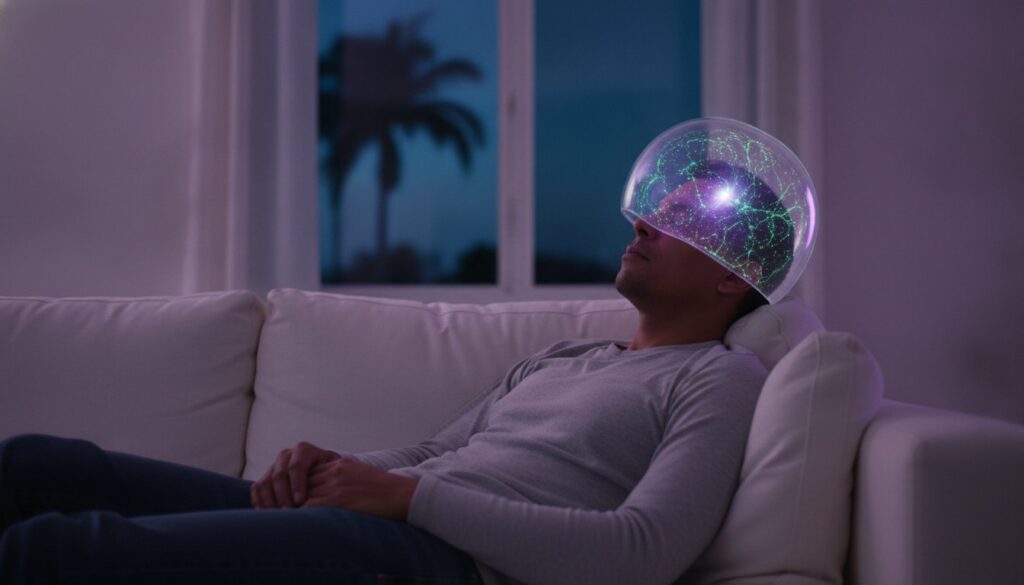
When considering how does ketamine make you feel physically, it’s also important to note the shift in sensory perception. Time often feels expansive. Ten minutes might feel like an hour, giving you ample space to process complex emotions or memories. Many patients report seeing soft colors, geometric patterns, or cinematic memories when their eyes are closed. These are not frightening hallucinations; they are more like the vivid imagery you might see just before falling asleep. Music also plays a vital role. Instead of just hearing a song, you might experience it as a three-dimensional landscape that guides your emotional journey.
Common Physical Aftereffects
As the session concludes, you may experience temporary lightheadedness or a “fuzzy” sensation. This is a normal part of the medication wearing off. Your body might feel heavy or slightly uncoordinated for a short period. Because of this, staying seated or lying down is essential for your safety. We provide clear clinical guidance on how to manage these sensations, including simple preparation tips for handling rare instances of nausea or dizziness. Our team at New Age Psychiatry works with you as a partner to ensure you feel supported through every stage of the process.
The Role of Sensory Input
Your environment significantly influences the quality of your experience. We often recommend using an eye mask to block out external light, which encourages an internal, reflective journey. Curated playlists are equally important. The rhythm and tone of the music can shape the emotional “flavor” of your session, helping you stay grounded or move through difficult memories. By creating a “safe container” in your Florida home, you can enhance your physical comfort and maximize the therapeutic benefits of the treatment. This personalized approach ensures your home environment becomes a sanctuary for healing.
The Emotional Landscape: Dissociation as a Healing Tool
Dissociation is frequently misunderstood as a negative side effect, but in a clinical context, it’s a powerful mechanism for growth. It isn’t about losing touch with reality. Instead, it’s about gaining a healthier perspective on your own mind. When you ask how does ketamine make you feel emotionally, the answer is often “lighter.” This happens because the medication facilitates a temporary departure from your usual ego and self-critical voice. This detachment allows you to view difficult memories or depressive thoughts as if they belong to someone else, viewing your life through a cleaner lens without the typical emotional fog.
This “ego softening” occurs because ketamine quiets the brain’s Default Mode Network (DMN). The DMN is responsible for our sense of self and repetitive thought patterns. When it’s overactive, it often fuels the “stuck” feeling of chronic mental health conditions. By dampening this network, ketamine allows for a profound emotional release. It’s common for patients to experience brief, cathartic tears followed by a sense of deep relief. This isn’t a sign of distress; it’s a signal that the brain is finally letting go of long-held emotional weight that previously felt impossible to move.
Observing Thoughts vs. Living Them
During the session, you enter what clinicians call an “observer state.” It feels like you are watching a film of your life rather than being the character trapped in the pain. This distance is vital for breaking the repetitive, negative loops often found in OCD or PTSD. It provides the mental space needed to analyze triggers without an immediate fight-or-flight response. This type of mental flexibility is also beneficial for those seeking Adult ADHD Diagnosis and Treatment in Florida, as it helps quiet the noise of a racing mind and allows for clearer introspection.
The Science of the ‘Neuroplastic Window’
The feeling of peace during a session is just the beginning of the healing process. It correlates with the release of Brain-Derived Neurotrophic Factor (BDNF), a protein that acts like “fertilizer” for your brain cells. This creates a “neuroplastic window” that stays open for approximately 48 to 72 hours after the session. Neuroplasticity is the brain’s ability to form new, healthier connections after a ketamine-induced quiet period. This window is the most critical time for integration, as your brain is physically more capable of adopting new habits and thought patterns than it was before the treatment began.

The Timeline: From Onset to the ‘Afterglow’
The therapeutic journey follows a predictable rhythm, allowing you to prepare mentally and physically for each phase. Understanding the progression helps demystify the experience and reduces anxiety about the unknown. When you explore how does ketamine make you feel, it’s helpful to view it as a four-step process that begins the moment the medication is administered and continues long after the session ends.
- Step 1: Onset (5-15 minutes). You will start to notice a subtle tingling in your limbs or a gentle wave of relaxation. Your thoughts may begin to slow down, and the environment around you might feel slightly softer.
- Step 2: The Peak (20-40 minutes). This is the deepest part of the dissociative and dreamlike experience. You will likely feel the most significant sensory shifts, such as weightlessness or cinematic imagery, while remaining safe in your home environment.
- Step 3: The Return (15-20 minutes). The intense sensations gradually fade. You will feel yourself becoming more grounded in the room and regaining full awareness of your physical body.
- Step 4: The Afterglow (Days 1-3). Many patients describe a lingering sense of calm, mental clarity, and “lightness” that persists for several days. This is often when the most significant mood improvements occur.
Immediate Recovery: The First Hour Post-Session
The hour immediately following the peak is a vital “integration time.” Your brain is still processing the insights and shifts that occurred during the session. We recommend resting in a quiet space, hydrating, and avoiding screens. Because the medication affects coordination and reaction times, you must avoid complex tasks or driving for the remainder of the day. This period of rest allows your body to process the medication efficiently while your mind begins to settle into its new, calmer state.
Long-Term Emotional Shifts
One of the most remarkable aspects of this therapy is that the “feeling” of relief often persists even after the drug has left your system. You might notice a “lift” in your mood, a reduction in intrusive thoughts, or an increased ability to handle daily stressors in the week following your session. For a deeper look at these outcomes, you can read our Ketamine: 2026 Guide to Therapeutic Uses and Benefits. This lasting impact is a sign that the neuroplastic changes are taking hold. If you are ready to see how this timeline fits into your recovery, schedule your virtual evaluation with New Age Psychiatry to discuss a personalized plan.
Your Virtual Ketamine Journey with New Age Psychiatry
Every successful therapeutic experience begins with a foundation of medical rigor and personalized care. At New Age Psychiatry, we prioritize a comprehensive psychiatric evaluation before any treatment plan is developed. This initial step ensures that we understand your specific medical history, current symptoms, and long-term goals. While you may be focused on how does ketamine make you feel during the session, our focus is on ensuring the medication is safe and effective for your unique brain chemistry. We act as your tech-savvy medical ally, combining the convenience of telehealth with the high standards of a licensed medical practice.
We manage low-dose ketamine prescriptions for eligible Florida adults through a streamlined virtual process. Our safety protocols are designed to protect you while you remain in the comfort of your own home. This includes dedicated monitoring and ongoing support to adjust your dosage as needed. Many of our patients find that ketamine works best when integrated into a broader mental health strategy. We often combine this therapy with ongoing medication management for conditions such as ADHD or Anxiety, providing a holistic approach to your recovery. This partnership ensures that your journey is both efficient and deeply compassionate.
Is Ketamine Therapy Right for You?
Ketamine therapy is particularly effective for those dealing with treatment-resistant depression or chronic PTSD. If traditional medications have failed to provide relief, this unique dissociative experience may offer the breakthrough you need. Candidates typically benefit most when they are ready to engage in the “neuroplastic window” that follows each session. To understand the specific requirements and the enrollment process, you can review our Telehealth Ketamine Treatment in Florida. This guide provides a step-by-step overview for residents seeking to start their journey toward better mental health.
Next Steps: Consultation and Preparation
Scheduling your virtual evaluation with a Florida-licensed psychiatrist is a straightforward process. Once your evaluation is complete and eligibility is confirmed, we help you prepare your physical space for the best possible outcome. Successful at-home sessions require a quiet environment, a comfortable place to lie down, and minimal distractions. We also provide clear information regarding the financial aspect of care. You can consult our guide on Ketamine Therapy Cost in 2026 to understand the investment in your mental health. By removing traditional obstacles to care, we make it easier for you to focus on healing and reclaiming your sense of balance.
Take the Next Step Toward Emotional Clarity
Therapeutic ketamine is more than just a temporary shift in sensation; it’s a bridge to a more flexible and resilient mind. By navigating a controlled, dreamlike state, you can step back from the heavy weight of chronic symptoms and view your life through a clearer, more objective lens. Understanding how does ketamine make you feel allows you to approach this innovative treatment with confidence. You can move forward knowing the experience is a structured, medical process designed to facilitate lasting healing rather than just short-term relief.
Our team of Florida-licensed psychiatric specialists is ready to act as your “guide-on-the-side” throughout this journey. We offer personalized low-dose ketamine protocols delivered through a secure, HIPAA-compliant telehealth platform, prioritizing your privacy and comfort. You deserve a recovery plan that respects your time and validates your unique needs. If you’re ready to explore a new path to wellness from the comfort of your home, we’re here to help you start. Schedule Your Virtual Psychiatric Evaluation Today and begin your journey toward a brighter, more balanced future.
Frequently Asked Questions
Is therapeutic ketamine addictive if I take it for depression?
Therapeutic ketamine carries a very low risk of addiction when administered under strict clinical supervision. Unlike recreational misuse, our low-dose protocols are carefully managed by Florida-licensed specialists to ensure safety and efficacy. We focus on sub-anesthetic doses that prioritize mental health recovery rather than sedation. This controlled approach helps prevent the patterns associated with substance misuse while focusing entirely on your long-term wellness and symptom management.
Will I see scary things or have a ‘bad trip’ during my session?
Negative experiences are rare during low-dose sessions because the dosage is significantly lower than what is used in recreational or surgical settings. Most patients describe a gentle, dreamlike shift in perspective rather than frightening hallucinations. If you wonder how does ketamine make you feel during a challenging moment, remember that you remain aware of your surroundings. Having a safe, familiar environment in your Florida home helps maintain a sense of calm.
How long do the effects of a single ketamine session last?
The acute physical and sensory sensations of a session typically last between 40 and 60 minutes. However, the therapeutic benefits, often called the “afterglow,” can persist for several days or even weeks. This lingering effect is due to the neuroplastic window, where your brain is more capable of forming healthier connections. While the immediate “feeling” of the medication fades quickly, the emotional lift and mental clarity provide a lasting foundation for your recovery.
Can I do ketamine therapy if I am already taking antidepressants?
Yes, many patients successfully combine low-dose ketamine with their existing antidepressant medications. Ketamine works on the glutamate system, which is different from how traditional SSRIs or SNRIs function. This unique mechanism allows it to serve as a powerful adjunct for treatment-resistant conditions. During your virtual psychiatric evaluation, we will review your current medication list to ensure that adding ketamine to your treatment plan is both safe and clinically appropriate for your needs.
Do I need someone to be with me during my virtual ketamine session?
We require that you have a responsible adult present in your home during each virtual session. While you will be in a deeply relaxed state, having a “sitter” ensures your physical safety if you need to move or hydrate. This person doesn’t need to participate in the therapy, but they act as a supportive presence. Their role is to provide reassurance and help you remain comfortable while you focus on your internal journey.
What should I do if I feel anxious during the experience?
If you feel a wave of anxiety, focus on your breathing and lean into the support of your curated music or eye mask. Remind yourself that the sensations are temporary and part of the healing process. Because you are in your own Florida residence, you have the advantage of being in a familiar, safe container. Our team provides specific grounding techniques before your session to help you manage these moments with ease.
How many sessions are typically required to feel a difference?
Many patients report a noticeable lift in their mood or a reduction in anxiety after just one or two sessions. However, a standard induction phase typically involves a series of sessions over several weeks to maximize the neuroplastic benefits. Each individual responds differently, so we tailor your protocol based on your progress. Understanding how does ketamine make you feel over time helps us adjust your management plan to ensure the best outcomes.
Can I drive myself after a ketamine session?
You must not drive or operate heavy machinery for the remainder of the day after your session. Even though the acute effects wear off within an hour, your coordination and reaction times may be subtly impaired. We recommend waiting until the following morning after a full night of sleep before getting behind the wheel. Planning for a day of rest in your Florida home ensures your safety and allows for better emotional integration.