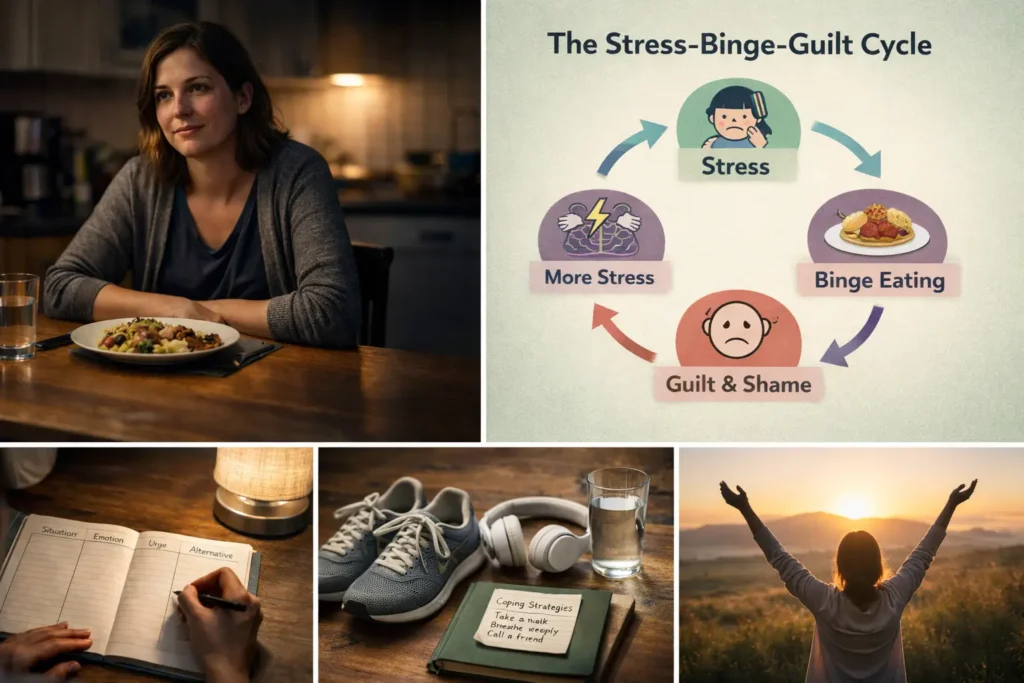
Binge eating is not simply a lack of willpower. For many people, it becomes an automatic way of coping with stress, emptiness, anxiety, or emotional pain. The problem is that the temporary relief is often followed by guilt, shame, and self-criticism, which keeps the cycle going. This article explains what binge eating can look like, why the pattern becomes so hard to break, and what therapeutic tools may help—from more structured eating and emotional regulation to self-compassion and professional support. The goal is to offer practical hope without judgment.
Binge eating often stays hidden because shame tells people to keep it secret. That secrecy can make the experience feel even heavier. But naming the pattern is often the first real step toward change.
A binge episode usually involves eating a large amount of food in a short period of time, feeling out of control while it is happening, and then feeling guilt, disgust, sadness, or emotional numbness afterward. Some people also eat quickly, eat when they are not physically hungry, or prefer to eat alone so no one will see it. This is very different from simply overeating occasionally at a celebration or having an off day.
The emotional cycle around binge eating is important to understand. It often begins with stress, anxiety, loneliness, boredom, anger, or emotional exhaustion. Eating provides temporary relief or distraction. For a moment, the mind narrows. Then the shame arrives. Thoughts like “I ruined everything,” “I have no control,” or “I’ll start over tomorrow” often appear. That shame increases emotional distress, which then makes the next binge more likely.
When restrictive dieting is added on top of this cycle, things often become worse. Hunger, deprivation, and all-or-nothing thinking can intensify urges and create even more rebound eating. That is why healing usually involves more than just “trying harder.” It requires changing the cycle itself.
One important shift is moving from judgment to observation. Instead of asking, “Why am I like this?” ask, “What was happening before this urge showed up?” Were you overwhelmed? Lonely? Running on too little sleep? Had you skipped meals all day? Were you feeling emotionally activated after a conflict or stressful interaction? These questions create insight instead of punishment.
Structured eating can help more than many people expect. Balanced meals at regular intervals can reduce physical hunger and create more stability in blood sugar and energy. This does not mean eating perfectly. It means reducing the extremes that make binge urges more intense. Consistency is often more healing than perfection.
Emotional regulation tools also matter. When an urge starts rising, it can help to have a short list of alternatives ready before you need them. That might include stepping outside for five minutes, drinking water, texting a trusted friend, taking ten deep breaths, listening to one calming song, or writing down exactly what you are feeling. These tools do not have to erase the urge instantly to be useful. Their purpose is to interrupt the automatic path.
Self-compassion is not a soft extra here. It is a central part of recovery. Harsh self-talk tends to increase shame, and shame tends to fuel secrecy and emotional pain. A more helpful response might sound like: “I’m struggling right now. That does not mean I failed. I can pause, notice what happened, and make one supportive choice next.” Compassion creates space for repair.
Professional support can make a major difference, especially when binge eating is frequent, distressing, or connected to depression, anxiety, trauma, or body-image pain. Therapy can help address the emotional roots of the cycle, challenge distorted beliefs, and build practical coping tools. Psychiatric support may also be useful when coexisting conditions are present.
It is also important to seek immediate help if eating behaviors are paired with dangerous compensatory behaviors, severe depression, or thoughts of self-harm. No eating-related struggle is too small to deserve support, and no crisis requires you to wait until things become worse.
Recovery from binge eating is not about becoming perfectly disciplined. It is about becoming more supported, more aware, and less trapped in a cycle that keeps hurting you. Healing often happens gradually—in more honest moments, steadier routines, better support, and kinder self-talk.
Binge eating is treatable, and change is possible. You are not broken, and you are not alone. Every step you take toward understanding the pattern is already a step away from shame and toward healing.