

Postpartum depression is not a personal failure, and asking for support doesn’t mean you’re failing as a parent. An online psychiatrist for postpartum depression in Florida can evaluate what you’re experiencing, consider how symptoms affect daily life, and discuss an individualized treatment plan. Help is worth seeking when sadness, anxiety, irritability, or disconnection persists or makes caring for yourself or your baby feel difficult.
It can be hard to tell whether what you’re feeling is the baby blues or something that needs clinical care, especially while sleep and routines are changing. Perinatal mental health concerns can arise during pregnancy and in the 12-month period following childbirth. This guide explains how psychiatrists support perinatal mental health, how postpartum depression differs from the baby blues, and when to reach out for help.
You’ll also learn what to expect from online psychiatric care in Florida, including assessment, treatment planning, and when to seek urgent support. This practical information can help you decide on a next step without judgment.
Key Takeaways
- Know which changes in mood or daily functioning are reasons to seek professional support.
- Learn how a psychiatrist can assess perinatal mental health and discuss treatment options during pregnancy or after birth.
- Understand how the baby blues differ from postpartum depression, including when symptoms warrant care.
- See what to consider when looking for online perinatal psychiatric care in Florida and what a first step may involve.
When should I seek treatment for postpartum mental health issues?
Seek support when sadness, anxiety, guilt, irritability, or emotional numbness persists or interferes with daily life. Symptoms can begin during pregnancy or after childbirth, and you don’t have to wait until they feel severe. A clinician can assess whether your symptoms may reflect postpartum depression or another concern, review your history, and discuss treatment options, including medication when appropriate.
Untreated symptoms can make everyday responsibilities and caring for yourself feel harder. Online psychiatric care can provide an assessment and an individualized treatment plan through virtual appointments. The psychiatrist may consider symptom patterns, sleep, stress, medical history, and your preferences, then review evidence-based options and follow-up needs. Virtual care may be available across states, but access depends on the clinician’s authorization to treat patients where they live.
For Florida telehealth, the practical licensing question is whether the psychiatrist is authorized to practice in Florida. If you’re receiving care while located in another state, the relevant authorization may differ. Confirming the clinician’s state authority helps you navigate access to online psychiatric treatment.
Outpatient psychiatric care involves scheduled appointments and treatment planning. More intensive support may be appropriate when symptoms seriously disrupt safety or daily functioning; inpatient care provides a higher level of support. A psychiatrist can assess the appropriate level, while urgent danger requires immediate emergency help.
Care should respect your identity and lived experience. For Black women and other women of color, culturally affirming support can make space for experiences of bias, family expectations, and differences in how distress is understood. Sharing what feels relevant can help shape a compassionate, individualized conversation.
If you’re thinking about harming yourself or your baby, call or text 988, or call 911, as advised by the Substance Abuse and Mental Health Services Administration. Sudden confusion or seeing or hearing things that aren’t there can signal postpartum psychosis and requires urgent medical care; call 911. In a crisis, don’t wait for a routine virtual appointment.
How can psychiatrists help with perinatal mental health?
Psychiatrists assess mental health concerns during pregnancy and the year following childbirth. They consider reported symptoms, their effect on daily life, and possible treatment options.
Care Across Pregnancy and Postpartum
Perinatal mental health covers emotional well-being during pregnancy and the 12 months following childbirth. A psychiatric assessment can help clarify what’s affecting a person’s feelings and functioning, then shape a care plan around their needs and preferences.
Florida’s figures show why support matters: one in five women experience a perinatal mental health condition such as depression or anxiety. In 2020, 15.7% of Florida mothers experienced frequent postpartum depression symptoms. Partners can also share observations about changes they notice, with the patient’s permission.
Recognizing Perinatal Symptoms
Symptoms may include ongoing emotional distress or changes that interfere with daily life and well-being. During an appointment, a psychiatrist may ask when the changes began, how they affect your routine, and whether they started during pregnancy or after birth.
That conversation helps distinguish a possible mental health condition from temporary strain or another concern that needs attention. Sharing examples, such as difficulty completing usual responsibilities or a persistent change in mood, gives the clinician useful context. The assessment can also consider your history and current stressors.
Treatment Timing and Medication
Seek an assessment when symptoms persist, disrupt daily functioning, or concern you during pregnancy or postpartum. Discussing them with a psychiatrist can help clarify the pattern and identify a treatment plan suited to your circumstances.
Do Florida telepsychiatrists prescribe medication for postpartum depression? Medication may be considered when clinically appropriate. A psychiatrist assesses your symptoms, health history, and individual needs before discussing whether medication fits your treatment plan.
Treatment may involve therapy, medication, or both, depending on individual needs. A psychiatrist can explain medication options, discuss follow-up, and adjust the plan as circumstances change. If you want, a partner can help share observations or practical concerns.
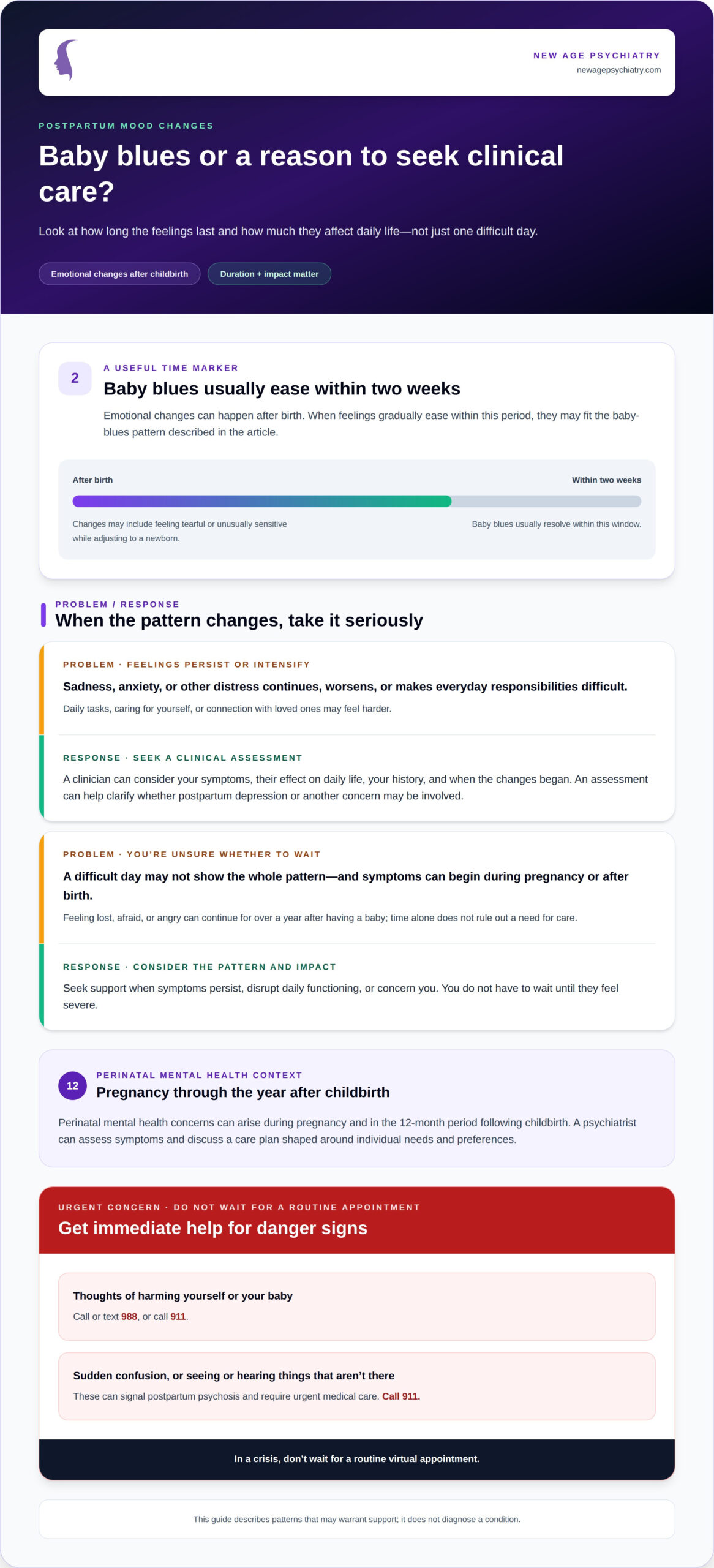
Distinguishing postpartum depression from the baby blues
The baby blues and postpartum depression can both involve emotional changes after childbirth, but they differ in duration and impact. Baby blues usually resolve within two weeks after birth. Feelings that persist, intensify, or interfere with daily life deserve clinical attention, especially when sadness or anxiety makes routine responsibilities feel overwhelming.
Consider the pattern, not just one difficult day. You might feel tearful or unusually sensitive while adjusting to a newborn, then gradually feel more like yourself. With postpartum depression, distress may persist or make daily tasks and connection with loved ones difficult. Feeling lost, afraid, or angry can continue for over a year after having a baby, so time alone doesn’t rule out a need for care.
These differences can help guide the next step:
- Baby blues: Emotional changes appear after birth and usually ease within two weeks.
- Possible postpartum depression: Sadness, anxiety, or other distress persists, worsens, or disrupts daily functioning.
- Urgent concern: Thoughts of harming yourself or your baby require immediate crisis support.
You don’t have to work out the difference alone. A clinician can ask when symptoms began, how often they occur, and how they affect daily life. Describing whether distress is easing or remains overwhelming gives a clearer picture than focusing on a single moment. An assessment can also consider whether another mental health concern may be contributing.
If symptoms continue beyond the usual baby-blues period, contact a healthcare provider rather than waiting for them to pass. A psychiatrist can assess whether postpartum depression may be present and discuss treatment, including medication management when appropriate. The aim is to match care to your symptoms and circumstances, not to label every difficult feeling as a disorder.
Choosing online perinatal psychiatry care in Florida
When looking for an online psychiatrist in Florida, prioritize a clear fit over a polished profile. Consider whether the clinician offers a suitable virtual format and whether psychiatric assessment and medication management address your needs.
Choosing Available Online Psychiatry Care
Check whether the psychiatrist describes experience with pregnancy, postpartum concerns, or perinatal mental health. A general depression listing may not explain how care addresses childbirth-related changes, breastfeeding questions, or shifting symptoms.
Before booking, review what the appointment covers, including assessment, treatment planning, medication discussions, and follow-up. Ask how the clinician considers breastfeeding and other personal health factors when discussing medication. Also consider whether virtual psychiatric care fits your needs, including whether you want therapy alongside psychiatric care or need a different level of support.
Credentials and Patient Reviews
What credentials and patient reviews should I look for when choosing a Florida online psychiatrist? Review the psychiatrist’s credentials, specialty background, and authorization to practice in Florida. The profile should explain the clinician’s role and relevant experience clearly, rather than relying on broad claims of expertise.
Patient reviews can provide context about communication, appointment structure, and whether treatment discussions felt respectful. Look for specific examples, such as clear explanations or attentive follow-up, instead of relying on a star rating alone. Reviews reflect individual experiences, so compare them with the clinician’s stated services and approach.
Use the profile and first appointment to assess fit. Notice whether the psychiatrist asks about your symptoms, health history, treatment preferences, and practical challenges. A focused conversation should leave room for questions and explain how treatment decisions are made.
Perinatal care may involve several clinicians. With your consent, coordination with an obstetric clinician or primary care professional can help account for health changes during pregnancy and postpartum. Clarify who handles follow-up and how concerns between appointments are addressed.
Choose a clinician who discusses your situation directly, including medication considerations during breastfeeding when relevant. If you’re ready to explore virtual psychiatric care, connect with New Age Psychiatry to discuss your mental health needs.
New Age Psychiatry: Depression Treatment
New Age Psychiatry provides Depression Treatment through virtual psychiatric care for adults, including assessment and medication management. If low mood, anxiety, or changes in daily functioning continue after childbirth, an evaluation can help clarify your concerns and discuss appropriate treatment options.
An appointment can focus on your symptoms, health history, and treatment preferences. The assessment can help determine whether depression treatment fits your needs and whether concerns such as anxiety or insomnia should also be discussed. Treatment decisions are individualized, with medication considered when appropriate.
For ongoing postpartum concerns that are not an emergency, contact New Age Psychiatry to discuss psychiatric care.
Take a Thoughtful Next Step Toward Care
You don’t need to have every answer before seeking psychiatric support. Start by describing what has changed, what feels hardest right now, and what kind of support feels manageable. These details can begin a focused conversation about your mental health and possible care.
If you’re looking for an online psychiatrist for postpartum depression in Florida, consider whether virtual psychiatric care fits your circumstances and preferences. New Age Psychiatry provides Depression Treatment, as well as ADHD Diagnosis and Treatment and Insomnia Treatment. An evaluation can help clarify which concerns you want to address and whether psychiatric care suits your needs.
Taking a first step can be simple. Contact New Age Psychiatry to discuss your care. You deserve support that treats your experience with compassion and takes your concerns seriously.
Frequently Asked Questions
What is postpartum depression and what should I know about it?
Postpartum depression is depression that develops during pregnancy or after childbirth and can affect mood, thoughts, and everyday functioning. It may make routine responsibilities feel harder or create distance from people you care about. It isn’t a measure of how much you love your baby. A mental health professional can assess your symptoms and discuss care suited to your situation.
What types of mental health challenges do new mothers experience in postpartum?
New mothers may experience depression, anxiety, persistent worry, irritability, emotional numbness, or difficulty feeling connected. Some also report unwanted intrusive thoughts, which can feel frightening or shameful. Mention the thoughts and their impact to a clinician so they can understand the situation without judgment. If thoughts involve immediate danger to you or your baby, call or text 988, or call 911, as advised by the Substance Abuse and Mental Health Services Administration.
Can I be seen by telehealth?
Yes. New Age Psychiatry provides virtual psychiatric care for adults residing in Florida, including evaluation and medication management. Before your appointment, consider what you want help with, such as mood changes, anxiety, or sleep concerns, and be ready to discuss relevant health history. If you’re in immediate danger, seek emergency support rather than relying on a scheduled virtual visit.
Do you treat perinatal anxiety and intrusive thoughts?
New Age Psychiatry provides Anxiety Treatment for adults through telehealth. During an evaluation, describe when anxiety or intrusive thoughts occur, how distressing they feel, and whether they affect daily routines. The clinician can assess your concerns and discuss appropriate psychiatric care. Intrusive thoughts can mean different things; thoughts about harming yourself or your baby that create immediate danger require crisis help, not a routine appointment.
How Can Pregnancy and Childbirth Impact Mental Health?
Pregnancy and childbirth can coincide with hormonal shifts, disrupted sleep, stress, and changes in relationships or social support. These pressures can affect emotional well-being, particularly when several changes happen together. For example, difficulty sleeping may make existing anxiety or low mood feel harder to manage. Sharing changes in your health, routine, and support can help a clinician understand what may be contributing to distress.
Which online psychiatrists treat postpartum depression in Florida?
New Age Psychiatry provides virtual psychiatric care for adults in Florida, including Depression Treatment. If you’re looking for an online psychiatrist for postpartum depression in Florida, describe your symptoms and postpartum circumstances during an evaluation. The psychiatrist can assess your concerns and discuss medication management when appropriate. This service is for ongoing psychiatric care, not emergency crisis intervention. Seek immediate help if there’s imminent danger.