

Looking capable on the outside doesn’t mean anxiety is easy to manage. An online psychiatrist for high-functioning anxiety can assess how persistent worry, tension, or trouble concentrating affects your daily life, even if you’re keeping up with work and responsibilities. If you’re wondering whether you can begin without a referral, the next step is to understand how an online assessment works and how your insurance plan may shape access to care.
It can be hard to ask for support when you’re still meeting expectations. You don’t need to dismiss what you’re experiencing just because others may not see it. A psychiatric evaluation gives you space to discuss your symptoms, history, and goals with a professional.
This guide explains what an online anxiety assessment may involve, how medication management and insurance coverage fit into care, and what can help you decide whether telehealth is right for you. You’ll also learn how a psychiatrist can consider your individual needs when discussing treatment options.
Key Takeaways
- Notice how worry, tension, or difficulty concentrating affects daily life, even when you’re keeping up with responsibilities.
- Learn how a psychiatric assessment can consider your symptoms, history, and screening tools such as the GAD-7.
- Understand which insurance benefits and plan details can shape coverage for online psychiatry and medication management.
- Explore what telehealth anxiety care may involve and how treatment planning can reflect your needs and goals.
Recognizing anxiety symptoms and effects on daily functioning
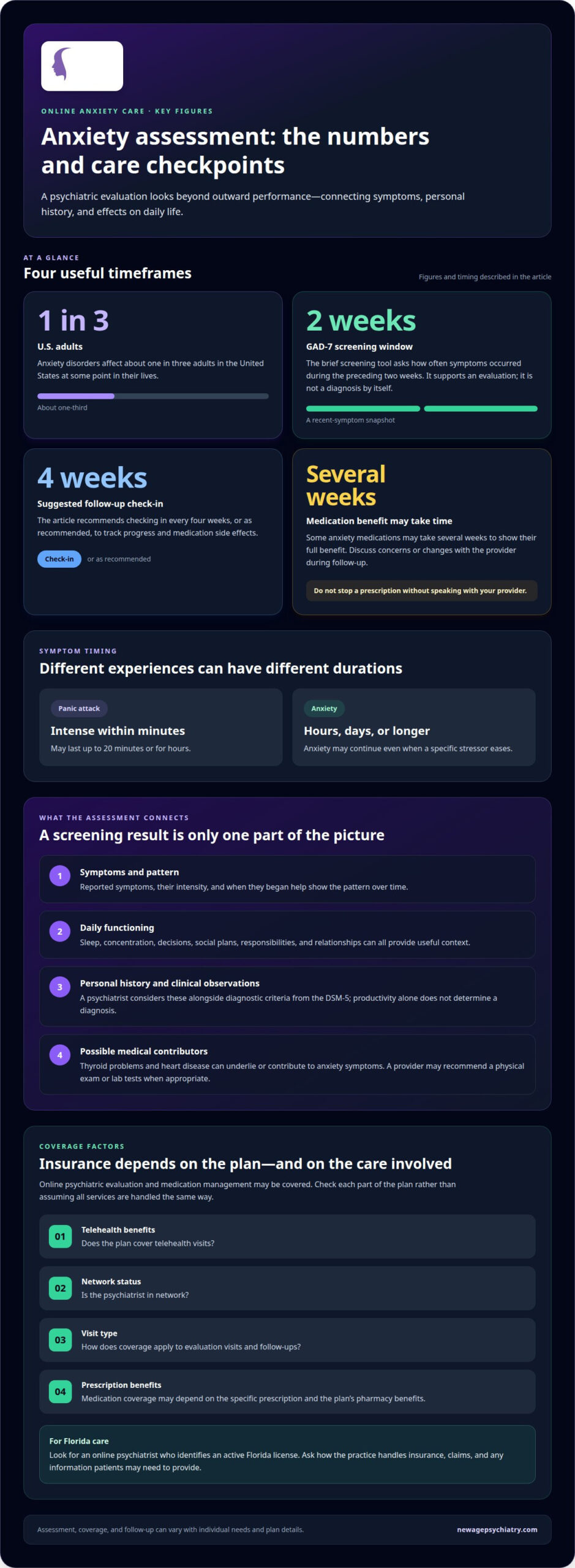
High-functioning anxiety can be difficult to recognize because work, caregiving, or daily tasks may continue despite distress. Anxiety disorders affect about 1 in 3 adults in the United States at some point in their lives. Persistent worry, racing thoughts, muscle tension, irritability, or trouble concentrating can still affect mental well-being and relationships. For example, someone may meet every deadline but lose sleep replaying conversations or fearing mistakes.
Stress often relates to a specific demand, such as a busy work period. Anxiety may continue even when that demand eases, while burnout-like exhaustion can make ordinary responsibilities feel harder. These experiences can overlap, so a psychiatric assessment considers the pattern, intensity, and impact of symptoms rather than performance alone. A panic attack can feel intense within minutes and may last up to 20 minutes or for hours. Anxiety itself may last for hours, days, or longer.
Anxiety disorders can involve different symptom patterns. A clinician considers the person’s reported symptoms, clinical observations, and criteria from the Diagnostic and Statistical Manual of Mental Disorders (DSM-5). The GAD-7 is a brief screening tool that asks how often symptoms occurred during the preceding two weeks. It can help organize information, but it is not a diagnosis by itself. Assessment also considers how symptoms affect sleep, decisions, social plans, and responsibilities.
Tracking symptoms over time can make follow-up conversations more specific. A clinician may review changes in worry, sleep, concentration, or avoidance, alongside stressful events and daily functioning. The GAD-7’s two-week timeframe offers one structured way to discuss recent symptoms; examples from work or home can add useful context. Lifetime Insight advises considering help when anxiety symptoms persist for more than 2 weeks. Ongoing monitoring can show whether symptoms are easing, staying consistent, or interfering more with daily life.
Does insurance cover online psychiatry and medication management?
High-functioning anxiety describes anxiety symptoms that can exist alongside continued work and daily responsibilities. Diagnosis depends on a clinical evaluation, not on whether someone appears productive. A psychiatrist considers reported symptoms, personal history, clinical observations, and criteria from the Diagnostic and Statistical Manual of Mental Disorders (DSM-5) to determine whether an anxiety disorder fits.
Insurance may cover online psychiatric evaluation and medication management, but coverage depends on the individual plan. Key factors include whether telehealth visits are covered, whether the psychiatrist is in network, and how the plan treats evaluation visits, follow-ups, and prescription benefits. Medication coverage may also depend on the specific prescription and the plan’s pharmacy benefits. These are separate parts of the overall coverage picture.
For Florida care, look for an online psychiatrist who identifies an active Florida license and explains their approach to anxiety evaluation and follow-up. Ask how the practice handles insurance, including whether it submits claims and what information patients may need to provide. Clear answers about session types and medication management help you understand the care process before beginning.
An evaluation looks beyond a screening result. A psychiatrist may ask when symptoms began, how they affect sleep or concentration, and whether they coincide with stressors or other health concerns. Thyroid problems and heart disease, for example, can underlie or contribute to anxiety symptoms. A provider may recommend a physical exam or lab tests if a medical condition could mimic or contribute to those symptoms.
To understand coverage, identify the plan’s telehealth, mental health, and prescription benefits, then consider how each applies to the intended care. A GAD-7 screening can support an evaluation, while the psychiatrist’s assessment connects those answers with personal history and daily functioning. This broader process helps distinguish anxiety from other possible contributors and guide a diagnosis and care plan.
Online psychiatric assessment and anxiety care
Telepsychiatry connects patients with a psychiatric professional for assessment, care planning, and follow-up. The right format depends on the needs and urgency of each situation.
Online Psychiatric Assessment
During an online assessment, a psychiatrist can discuss symptoms, personal history, daily functioning, and treatment goals. They may use a screening tool such as the GAD-7 alongside a broader clinical evaluation. If symptoms could reflect a medical condition, the provider may recommend a physical exam or lab tests. Share relevant history and questions so the session can focus on your concerns.
Telepsychiatry and Ongoing Anxiety Care
Follow-up helps the psychiatrist assess changes in anxiety, sleep, concentration, and medication symptoms. The article recommends checking in every 4 weeks, or as recommended, to track progress and side effects. Some anxiety medications may take several weeks to show their full benefit. Don’t stop a prescription without speaking with your provider; discuss changes or concerns during follow-up.
Comparing Online, App-Based, and In-Person Care
Online psychiatry involves appointments with a psychiatric professional who can assess symptoms and discuss medication management. Therapy apps may offer digital exercises or structured support, but they aren’t the same as an individual psychiatric evaluation. In-person care allows appointments at a physical location. Consider whether you need a psychiatric assessment, therapy, medication discussions, or a format that fits your situation.
Benefits, Risks, and Privacy Concerns
Telepsychiatry can connect patients with a professional without traveling to an office, but technology or privacy interruptions may affect a session. According to the U.S. Department of Health and Human Services, HIPAA governs the privacy and confidentiality of information shared with a medical provider, with an exception when a person is deemed a danger. For a medical or mental health emergency, call 911 or go to the nearest emergency room. In the United States, people experiencing crisis or emotional distress can call or text 988 for the Suicide & Crisis Lifeline.
Online anxiety evaluation through telehealth
Telehealth can connect adults with psychiatric care through a remote evaluation and follow-up. For someone managing work while experiencing anxiety, the useful question is whether the assessment can examine symptoms, health history, and daily impact, rather than relying only on outward performance. Providers can use that discussion to understand the situation and develop a treatment plan suited to the person’s needs.
A thorough online evaluation includes more than a brief conversation about worry. The psychiatrist can ask when symptoms began, how they affect sleep or concentration, and whether depression or other concerns occur alongside anxiety. A screening tool such as the GAD-7 may support the assessment, while clinical judgment considers the full history. If a medical condition could contribute to symptoms, a provider may recommend a physical exam or lab tests.
Telehealth also gives patients a way to discuss progress and treatment questions from their own setting. Follow-up conversations can review symptom changes, medication effects, and whether the treatment plan still fits. Some anxiety medications may take several weeks to show their full benefit, so patients should discuss concerns with their provider rather than stopping a prescription on their own. The timing of follow-up depends on the care plan and clinical needs.
Practical details matter, too. A stable connection and private space can help patients speak openly during a remote session. For care in Florida, the psychiatrist’s ability to provide care in the patient’s state matters; insurance network status can also affect coverage. Telehealth does not replace every part of evaluation, since a physical exam or lab work may be recommended when symptoms call for it. The clearest takeaway: remote care can support psychiatric assessment, while the treatment plan should reflect both mental and physical health needs.
If persistent anxiety is affecting your daily life, explore online anxiety care as a next step in discussing assessment and treatment options.
New Age Psychiatry: Anxiety Treatment
New Age Psychiatry provides anxiety treatment through telehealth, including psychiatric diagnosis and medication management. If anxiety is affecting your sleep, focus, or ability to manage daily responsibilities, an assessment can help clarify your symptoms and discuss appropriate care. Your concerns, health history, and treatment goals help shape that conversation.
Anxiety can overlap with insomnia, depression, or ADHD. Discussing the symptoms affecting you most can help focus the conversation on care options. Medication decisions are individual and should be reviewed with a psychiatric professional, including questions about benefits, side effects, or prescription changes.
If you’re ready to discuss anxiety care, contact New Age Psychiatry to take the next step.
Take the Next Step Toward Support
You don’t have to wait until anxiety disrupts every part of life to talk with a psychiatric professional. An online psychiatrist for high-functioning anxiety can help you explore what’s affecting your well-being and consider care that reflects your needs and goals. New Age Psychiatry offers virtual psychiatric appointments for adults in Florida. Book an evaluation to discuss your concerns and possible next steps.
Anxiety may not be the only concern affecting how you feel. New Age Psychiatry also offers ADHD diagnosis and treatment, insomnia treatment, and depression treatment. These concerns can overlap with anxiety and may be worth discussing during an evaluation.
Choose a next step that feels manageable, whether that means preparing a few questions or describing what you hope will change. Start a conversation with New Age Psychiatry about your care needs. Seeking support is a meaningful step toward understanding your options.
Frequently Asked Questions
Can I see a psychiatrist without a referral?
Often, you can arrange a psychiatric appointment directly, but referral requirements may depend on your insurance plan and the practice’s process. For example, a plan may require a primary care referral for specialist coverage even when a psychiatrist accepts direct appointments. Before scheduling, review your plan’s referral rules and understand whether they affect coverage, access, or both.
Can online therapists prescribe medication?
Therapists who provide therapy alone generally don’t prescribe medication; psychiatric prescribers can assess whether medication may be appropriate. Some online services focus on therapy, while others provide psychiatric evaluation and medication management. New Age Psychiatry offers virtual psychiatric care, medication management, and counseling for adults in Florida.
What are the symptoms of anxiety?
Anxiety symptoms can include persistent worry, restlessness, difficulty concentrating, irritability, and physical tension. They may also shape behavior: someone might repeatedly seek reassurance before making a routine decision or avoid a presentation despite being prepared. The pattern matters. A clinician considers when symptoms occur, what situations bring them on, and whether they interfere with relationships, work, or everyday choices.
What can I expect from my first psychiatry appointment?
Your first appointment usually includes a conversation about what prompted you to seek care, your health history, and what you hope will improve. You can describe a specific example, such as worry that makes it hard to delegate at work. Bring a list of current medications and questions you want answered. The psychiatric professional can use this context to discuss possible next steps.
Are controlled substances prescribed?
A controlled medication may be considered only when the prescriber determines it fits the patient’s clinical needs and applicable requirements. New Age Psychiatry limits controlled medication prescriptions to a 30-day supply; refill requests may be made after 23 days, and patients may go up to 90 days without a follow-up appointment for controlled substances. A follow-up appointment is needed for medication adjustments.
Can an online psychiatrist diagnose and treat anxiety in the United States?
Yes. Online psychiatric care can include evaluation, diagnosis, and treatment when provided to adults in the state where they reside. An online psychiatrist for high-functioning anxiety can assess how symptoms affect daily life and discuss care options. New Age Psychiatry provides virtual psychiatric evaluations and anxiety treatment for adults residing in Florida.