

What if the next step beyond an SSRI isn’t simply another pill? Alternatives to SSRIs for depression in Florida include tricyclic antidepressants, MAOIs, TMS, and Spravato. Each works differently, and symptom improvement can begin on different timelines.
If an SSRI hasn’t helped enough or its side effects are difficult to manage, it’s understandable to explore other options. Comparing alternatives to SSRIs for depression in Florida means looking beyond speed: medication precautions, treatment schedules, prior responses, and your health history all matter.
This article explains how these treatments compare, what each may involve, and when symptoms may start to improve. It also explores how a professional can help you consider a next step that fits your needs.
Key Takeaways
- Compare antidepressant options by their side effects, interactions, and the practical demands of treatment, not just by how they differ from SSRIs.
- Recognize when depression may need a different treatment approach and what factors shape consideration of TMS or Spravato.
- Understand why the pace of symptom change varies and which signs of progress can help guide treatment discussions.
- Use a psychiatric evaluation to connect your symptoms, health history, and treatment preferences with a considered next step.
Tricyclic antidepressants
Tricyclic antidepressants are an older class of medication used to treat depression. Like selective serotonin reuptake inhibitors, they affect neurotransmitter reuptake, but their side effects and interactions differ. A psychiatrist weighs potential benefits against your health history, current medications, and daily needs. For example, another medication or a physical health condition may influence which option is appropriate.
The choice should reflect the symptoms you want to address and the side effects that matter most. A clinician may review sleep, energy, anxiety, previous medication responses, and other prescriptions before recommending an antidepressant. If a medication causes unwanted effects or hasn’t helped, discuss that before changing or stopping it. This helps the prescriber assess whether another medication or a non-medication approach may suit you better.
Psychotherapy can be used to treat depression without antidepressants, either on its own or as part of a broader care plan. Options include cognitive behavioral therapy, interpersonal therapy, and behavioral activation, which address patterns in thinking, relationships, or daily activity.
Evidence-based non-medication options in Florida include psychotherapy and transcranial magnetic stimulation (TMS). TMS uses magnetic pulses to stimulate brain regions associated with mood regulation, and clinicians may consider it when antidepressant medication hasn’t helped or isn’t a preferred approach.
Supplements and natural remedies don’t have one proven effect for everyone with depression. They can also interact with prescription medications, so tell your prescriber about products such as St. John’s wort before combining treatments.
If you cannot swallow a medication, a clinician can review whether a suitable formulation may be given through an enteric tube. The prescriber or pharmacist needs to check the specific medication and formulation. Don’t crush tablets unless their instructions allow it.
For additional resources or help connecting with mental health services, people in the United States can call the Substance Abuse and Mental Health Services Administration’s National Helpline at 1-800-662-4357. For immediate assistance, people in the United States can call the National Suicide Prevention Lifeline at 988, according to the Substance Abuse and Mental Health Services Administration.
Treatment-resistant depression
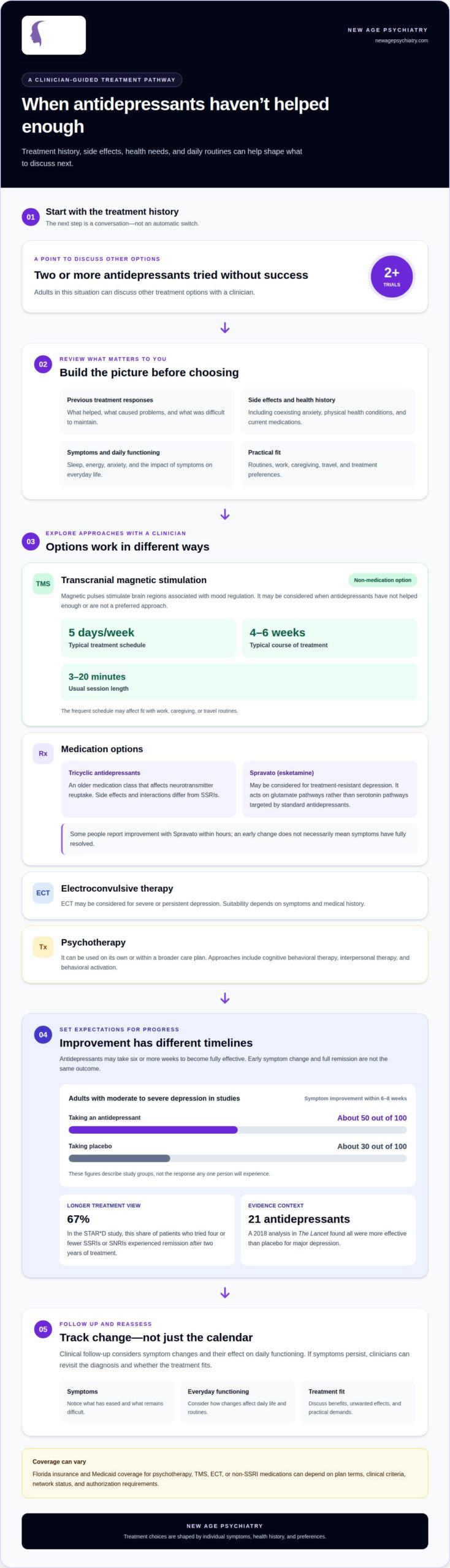
Traditional antidepressants don’t provide adequate relief for everyone with depression. Treatment history, daily demands, and responses to previous care help shape what comes next. Adults who have tried two or more antidepressants without success can discuss other options with a clinician.
Choosing depression treatment with a psychiatrist based on your history, tolerance, and lifestyle
A psychiatrist considers previous medications, side effects, coexisting anxiety, and routines before recommending treatment. Potential benefits need to fit your health history and what you can manage day to day. If you’re considering alternatives to SSRIs for depression in Florida, share which treatments helped, caused problems, or were difficult to maintain.
For a treatment discussion in Orlando, describe past medication responses and how symptoms affect daily life. Look for a licensed psychiatrist or therapist whose focus includes depression and who explains options clearly. A clinician-guided review of depression treatment options can help organize that conversation.
Spravato and ECT as Treatment Options
Spravato, the brand name for esketamine, may be considered for treatment-resistant depression. It acts on glutamate pathways rather than serotonin pathways targeted by standard antidepressants. Some people report improvement within hours, but an early change doesn’t necessarily mean symptoms have fully resolved.
Electroconvulsive therapy (ECT) is another option clinicians may consider for severe or persistent depression. Suitability depends on symptoms and medical history. In Orlando, a psychiatric evaluation can help clarify whether ECT or another approach fits the person’s needs. These choices are among the alternatives to SSRIs for depression in Florida that may enter a discussion after prior treatments have not helped enough.
TMS may also be considered when antidepressants haven’t helped enough. Traditional treatment is typically delivered five days per week for four to six weeks, with sessions usually lasting three to 20 minutes. The schedule can affect whether TMS fits work, caregiving, or travel routines.
Florida insurance and Medicaid benefits vary by plan and treatment. Coverage for psychotherapy, TMS, ECT, or non-SSRI medications can depend on plan terms, clinical criteria, network status, and authorization requirements.
If depression symptoms are severe or include thoughts of suicide, seek immediate assistance by calling 988 in the United States. The Substance Abuse and Mental Health Services Administration identifies 988 as the number for immediate assistance.
Effectiveness and timing of symptom improvement
Antidepressants rarely provide a clear measure of progress after the first dose. They may take six or more weeks to become fully effective, and serotonin reuptake inhibitors follow this general timeline. A 2018 analysis in The Lancet examined 21 antidepressants and found all were more effective than placebo for major depression. That finding compares groups, not the response any one patient will experience.
In studies of adults with moderate to severe depression, about 50 out of 100 people taking an antidepressant noticed symptom improvement within six to eight weeks. About 30 out of 100 people taking placebo improved during that same period. Improvement and remission are different outcomes: symptoms can ease without fully resolving. Clinical follow-up considers both changes in symptoms and their effect on daily functioning.
The STAR*D study suggested that 67% of patients who tried four or fewer SSRIs or SNRIs experienced remission after two years of treatment. This longer timeframe shows why treatment response can involve more than one medication trial. If symptoms persist, clinicians can revisit the diagnosis, medication fit, side effects, and other mental health factors instead of assuming one failed treatment predicts every future response.
The time it takes to notice a response also differs by treatment. TMS symptom relief tends to develop gradually, with a typical onset of one to six weeks. Spravato may begin working within hours to days, while conventional antidepressants often need several weeks. A faster initial change does not automatically mean complete remission. Treatment schedule, clinical response, previous medication trials, and daily demands all help frame progress.
During follow-up, describe specific changes, such as improved sleep, concentration, or ability to complete routine tasks. Clinicians use these examples alongside symptom patterns to assess whether treatment is helping. If depression remains difficult to treat, reviewing previous responses can guide discussion of another medication or a non-medication approach, rather than relying on speed alone.
MAOIs
Monoamine oxidase inhibitors, or MAOIs, are antidepressants that work differently from selective serotonin reuptake inhibitors. A psychiatrist may consider them for major depressive disorder when other medications have not provided enough relief. Their potential benefits must be weighed against dietary limits and medication interactions.
MAOI treatment requires careful attention to tyramine-containing foods. Mayo Clinic warns that tyramine and some medicines can interact with MAOIs and cause dangerous or deadly reactions. Before treatment, the prescriber reviews current medications, supplements, and eating habits. This helps identify potential interactions and whether the restrictions fit your routine.
Some antidepressants and other medications can also interact with MAOIs. Switching between treatments therefore needs a clinician-directed plan, not an overlap or abrupt change made independently. Share a complete medication list, including nonprescription products, so the provider can assess risks and plan the transition.
The practical demands matter. If your work involves frequent meals away from home, dietary restrictions may be difficult to manage. You may prefer a structured plan and feel comfortable following food guidance closely. A psychiatrist considers these lifestyle factors alongside symptoms, prior treatment response, and side effects when discussing whether an MAOI is suitable.
MAOIs are not the only option after an antidepressant has failed. For resistant depression, a clinician may also discuss approaches such as TMS or Spravato, which differ in delivery and how they work. Psychotherapy can also be part of a care plan, either alongside medication or as a separate treatment approach.
Before starting an MAOI, ask the prescriber to explain food precautions, medication interactions, and how follow-up will work. If you’re weighing treatment options, schedule a depression treatment consultation to discuss your symptoms and treatment history.
New Age Psychiatry: Depression Treatment
New Age Psychiatry provides depression treatment for adults in Florida seeking professional guidance on medication options and next steps. A virtual psychiatric evaluation can connect your symptoms, treatment history, side effects, and daily routines to a care plan tailored to your needs. If sleep difficulties or anxiety also affect your well-being, share that context during the conversation.
Consider reaching out when depression symptoms persist, a medication causes difficult side effects, or you want to understand available treatment approaches. You don’t need to have a preferred option already. Describing what you’ve tried and what matters to you is a useful starting point.
Contact New Age Psychiatry to discuss depression treatment and the support that may fit your situation.
Make your next treatment conversation count
Choosing among alternatives to SSRIs for depression in Florida isn’t only about finding a different medication. It’s also about identifying what you want to change in daily life, which effects you can tolerate, and what kind of care fits your priorities. Bringing those concerns to a psychiatric consultation can help turn uncertainty into a clearer, more personal discussion.
Mental health symptoms can overlap. Sleep problems or attention concerns may affect how you describe your needs, so include them in the conversation. New Age Psychiatry also offers insomnia treatment and ADHD diagnosis and treatment, which may be relevant when these concerns accompany depression.
You don’t need to arrive with a treatment decision already made. Start by sharing what feels hardest, what you’ve tried, and what you hope will improve. Contact New Age Psychiatry to discuss a thoughtful next step and move forward with support.
Frequently Asked Questions
How Effective Are Spravato and TMS?
TMS and Spravato may be considered when depression hasn’t responded adequately to standard medication. They aren’t interchangeable: treatment delivery, medical considerations, and personal preferences differ. Some people with treatment-resistant depression report improvement within hours after beginning supervised Spravato treatment, while TMS relief tends to develop gradually. A clinician weighs prior treatment response and health history when discussing which approach may fit.
What if symptoms return?
If symptoms return after improvement, contact your prescriber for a review rather than stopping or changing medication independently. Mayo Clinic advises consulting a health care provider before stopping antidepressants because some can cause withdrawal-like symptoms unless tapered gradually. A follow-up can review changes in mood, sleep, daily functioning, treatment consistency, and life circumstances, then determine whether the care plan needs adjustment.
What non-SSRI medications are used to treat depression, and how do they compare?
Options include tricyclic antidepressants, MAOIs, and bupropion. They differ in how they work, potential side effects, and medication or food interactions. For example, MAOIs require attention to tyramine-containing foods and some medicines, while bupropion is among the antidepressants not frequently associated with sexual side effects. A prescriber compares these considerations with your symptoms, other medications, and previous treatment experiences.
What are the risks and side effects of non-SSRI depression treatments?
Risks depend on the treatment. MAOIs can interact dangerously with tyramine-containing foods and some medicines, so dietary guidance and a full medication review matter. Antidepressants also carry an FDA warning about possible suicidal thoughts or behavior, with increased risk noted for people under 25, especially early in treatment or after a dose change. Report new or worsening symptoms promptly to the prescriber.