

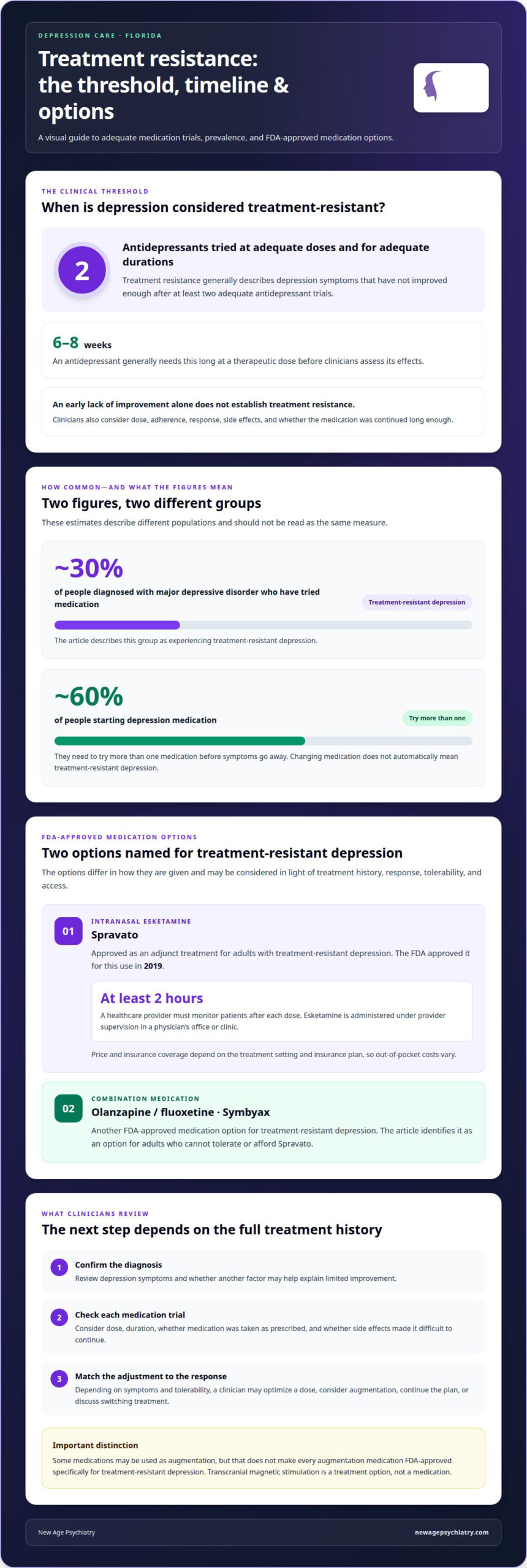
Treatment-resistant depression is commonly defined as depression that has not improved enough after trying two antidepressants at adequate doses and for adequate durations. For people seeking medication for treatment-resistant depression in Florida, FDA-approved options include olanzapine/fluoxetine (Symbyax) and intranasal esketamine (Spravato).
When depression persists despite treatment, hearing that another medication trial may be needed can feel discouraging. It does not mean you have failed or that care has run out of options. Antidepressants generally need six to eight weeks before clinicians assess their effectiveness. Decisions also consider your response, side effects, and how well a medication fits your needs.
This article explains how treatment-resistant depression is defined, which factors may be associated with it, and which medications are FDA-approved for it. It also covers how clinicians may adjust or change treatment, and why the next option depends on your history and response so far.
Key Takeaways
- Learn why treatment resistance depends on an adequate medication trial, not simply on feeling unchanged after starting treatment.
- Understand how clinicians consider diagnosis, adherence, dose, response, and side effects when evaluating what to try next.
- Find out which medications have FDA approval for treatment-resistant depression and how approved options may differ from other medication strategies.
- See how depression treatment can support a personalized discussion of your symptoms, treatment history, and next steps.
What is treatment-resistant depression?
Treatment-resistant depression generally means depression symptoms haven’t improved after at least two antidepressants at adequate doses and durations. The treatment history helps clinicians decide whether to adjust medication or consider another option.
Adequate Antidepressant Trials
An adequate trial means taking an antidepressant at a therapeutic dose for long enough to assess its effects, generally at least six to eight weeks. Limited improvement early in treatment does not, by itself, establish treatment resistance. Clinicians often try first-line antidepressants before considering other medication strategies. They also review whether you took the medication as prescribed and whether side effects made it difficult to continue.
Adjusting or Switching Antidepressants
Dose adjustment means changing the amount of a current antidepressant to improve its effect or manage side effects. If symptoms have not improved, clinicians may review adherence and optimize the dose before or while considering augmentation. If first-line treatment is not tolerated, switching to another treatment may be an option. A partial response may lead to continuing the plan or considering a different approach. The decision depends on symptom changes, tolerability, and treatment history, not just the medication name.
Spravato’s price and insurance coverage depend on the treatment setting and your insurance plan, so out-of-pocket costs vary. Confirm benefits and expected charges before starting treatment.
In Florida, look for a psychiatrist or clinic that evaluates depression and reviews your previous medication trials. Ask whether its care includes an assessment for treatment-resistant depression.
Esketamine is administered under healthcare-provider supervision in a physician’s office or clinic. To find treatment, seek clinics in your area that provide supervised Spravato care.
Starting Spravato involves a clinical evaluation and supervised dosing visits. A healthcare provider must monitor patients for at least two hours after each dose. Discuss visit logistics and transportation with the clinic.
For immediate safety support, people in the United States thinking about suicide can call 988 to reach the Suicide and Crisis Lifeline, according to the Substance Abuse and Mental Health Services Administration.
Definition and prevalence of treatment-resistant depression
About 30% of people diagnosed with major depressive disorder who have tried medication experience treatment-resistant depression. The term describes persistent depression symptoms despite adequate treatment, not a personal failure or a single test result. According to the National Institute of Mental Health (NIMH), depression that doesn’t improve after at least two antidepressants may fit this definition. The response to treatment and the quality of each trial matter.
Prevalence figures describe different groups, so they don’t always match exactly. About 60% of people starting depression medication need to try more than one before symptoms go away. That doesn’t mean every person who changes medication has treatment-resistant depression. A switch may happen because of side effects, limited benefit, or other clinical considerations. The distinction depends on the treatment history and whether each medication was tried adequately.
Diagnosis involves reviewing the depression diagnosis and the response to past treatments. Florida’s 2023-2024 adult major depressive disorder guidelines advise reevaluating the diagnosis after two or more treatments fail. Clinicians also consider whether medication was taken as prescribed and whether dose or duration could explain limited improvement. A thorough review helps distinguish persistent symptoms from an incomplete trial or another factor affecting care.
Treatment resistance may prompt a discussion of options beyond another antidepressant alone. Depending on your treatment history, care may include psychotherapy, ketamine, or brain stimulation. Transcranial magnetic stimulation uses magnetic pulses, while ketamine is a medication-based approach. These options differ in how they are delivered and considered, and they are not interchangeable or suitable for everyone. Evidence and your previous response help guide the discussion.
Recognizing the pattern gives adults a clearer basis for discussing next steps. A review of symptoms, medication trials, and tolerability can help guide depression care. Depression treatment can provide a setting to discuss those concerns and treatment history.
FDA-approved medications for treatment-resistant depression
For people considering medication for treatment-resistant depression in Florida, FDA-approved options are narrower than the broader range of approaches clinicians may consider. Knowing the difference can help adults discuss treatment choices in light of response, tolerability, and access.
Medication Options Beyond Spravato
For adults who can’t tolerate or afford Spravato, olanzapine/fluoxetine, sold as Symbyax, is another medication approved for treatment-resistant depression. Florida’s 2023-2024 guideline summary also identifies FDA-approved second-generation atypical antipsychotics as options to consider after an inadequate response to first-line treatment. Some medications may be used as augmentation, meaning they’re added to an antidepressant. That doesn’t make every augmentation medication FDA-approved specifically for this disorder.
Spravato, the brand name for intranasal esketamine, is approved as an adjunct treatment for adults with treatment-resistant depression. The FDA approved it for this use in 2019. Other antidepressant medications and augmentation strategies may be considered based on prior response and tolerability. Transcranial magnetic stimulation is a treatment option, but it isn’t a medication.
Medication Risks and Monitoring
Medication risks depend on the specific drug and the person’s health history. The Florida guideline summary reports increased dropout with cariprazine augmentation, and with quetiapine at 300 mg daily. These findings make tolerability part of treatment planning, not a secondary concern.
Spravato requires supervised administration, with monitoring by a healthcare provider for at least two hours after taking it. Coverage for Spravato and other depression medications depends on your insurance plan and its rules, so Florida Medicaid and private insurance benefits may differ. Include medication, monitoring, and coverage details in your treatment discussion.
Medication for treatment-resistant depression in Florida may involve discussing Symbyax or other medication strategies when Spravato is not suitable. The choice depends on your treatment history and tolerability. Discuss the benefits and risks of each option, including whether augmentation or a different approach fits your care.
Defining Treatment-Resistant Depression & Medication Changes
The National Institute of Mental Health describes treatment-resistant depression as depression that doesn’t improve after multiple treatment options. In practice, clinicians review what treatments were tried, how long they lasted, and whether symptoms changed. Florida’s 2023-2024 adult guidelines advise reevaluating the diagnosis after two or more treatments fail. That review can help clarify whether limited improvement reflects the treatment plan, tolerability, or another factor.
Timing helps guide decisions. For adults with major depressive disorder, no response after four weeks of initial treatment calls for dose optimization and moving to Level 2. A partial response at two to four weeks may support continuing treatment for another two to four weeks or moving to Level 2. These decision points distinguish an early check-in from a conclusion that treatment isn’t working.
Tolerability also affects the next step. For a person with treatment-resistant depression who cannot tolerate first-line treatment, the Florida guideline summary recommends switching treatment. If the medication is sufficiently tolerated, clinicians may consider an adjunctive strategy, taking the patient’s preferences into account. An adjunct adds another treatment to the current plan rather than replacing it. The choice depends on whether the main concern is side effects, limited benefit, or both.
When Level 1 and Level 2 treatments are ineffective or not well tolerated, Florida’s 2023-2024 guidelines recommend seeking psychiatric consultation. Consultation can help review the diagnosis, prior medication trials, dose changes, and remaining options. This step is especially relevant when several treatment adjustments haven’t led to enough improvement. It gives the care team a structured way to reconsider the plan instead of repeating an approach that has not helped.
If you’re weighing a medication change, schedule a depression treatment evaluation to discuss your symptoms and treatment history.
New Age Psychiatry: Depression Treatment
New Age Psychiatry provides adults in Florida with completely virtual psychiatric evaluations and medication management, including depression treatment. If symptoms persist after medication trials, an evaluation can review your diagnosis, treatment history, response, and side effects. This provides a basis for a focused discussion of options and next steps, without assuming the same approach suits everyone.
Depression symptoms can overlap with concerns such as anxiety or insomnia, which may be relevant to a broader assessment. Your care can take these concerns into account while focusing on why you are seeking support. Bring questions about previous medications and how you responded to each trial to your appointment.
If you’d like support reviewing your depression treatment and possible next steps, contact New Age Psychiatry.
Take the Next Step With a Clearer Plan
Choosing medication for treatment-resistant depression in Florida is also an opportunity to clarify what you want treatment to help you do. Consider which changes matter most in daily life, which side effects have been difficult, and what questions you still have about your care. These priorities can make a discussion of next steps more focused and personal.
You do not need to choose a medication before seeking support. Sharing what you have tried, what felt manageable, and what you hope might change gives your care team useful context. You can take the process one decision at a time.
For a supportive conversation about depression treatment and your next steps, contact New Age Psychiatry. Your experience matters, and asking for help is a meaningful place to begin.
Frequently Asked Questions
What Are Some Other Treatments That May Help?
Other approaches may include psychotherapy alongside medication or brain stimulation when medication has not helped enough. Talk therapy can help people discuss emotional concerns and develop coping strategies. Repetitive transcranial magnetic stimulation (rTMS) and electroconvulsive therapy (ECT) are procedures, not medications. A useful discussion compares these approaches in light of your treatment history, preferences, and support needs.
What medications are approved for treatment-resistant depression in the United States?
FDA-approved medication options for treatment-resistant depression include olanzapine/fluoxetine (Symbyax) and intranasal esketamine (Spravato). Spravato is used alongside an antidepressant for adults with treatment-resistant depression. Clinicians may consider other medications as add-ons, but a medication used for augmentation is not necessarily FDA-approved specifically for this condition. Distinguishing approved uses from other clinical uses helps clarify what a treatment is intended to address.
How do esketamine (Spravato), oral antidepressants, and augmentation medications compare for treatment-resistant depression?
Spravato is nasal esketamine administered under healthcare-provider supervision; oral antidepressants are taken by mouth. Augmentation means adding another medication to an existing antidepressant rather than replacing it. These approaches differ in how they are delivered and the role they play. A treatment discussion can compare continuing or switching an oral medication, adding an adjunct, or considering supervised esketamine based on your past response and tolerability.
Where in Florida is esketamine (Spravato) available, and how do patients find certified treatment centers?
Esketamine is administered under healthcare-provider supervision in a physician’s office or clinic. In Florida, seek a local clinic that provides supervised Spravato care.