

PTSD can strain relationships, make social connection harder, and disrupt daily life over time. The long-term side effects of untreated PTSD may include social withdrawal, persistent anxiety or depression, substance use, and ongoing physical health concerns. Effects vary, but they can affect both the person with PTSD and those close to them.
If you’ve noticed distance, tension, or changes in how you or someone you care about responds to everyday situations, it can be hard to know what’s behind them. PTSD symptoms aren’t a personal failing, and relationship struggles don’t mean care or connection is out of reach.
This article explains how PTSD symptoms can affect communication, trust, and social life, and how withdrawal can deepen loneliness. It also explores possible long-term effects on health and daily functioning, helping you understand when professional support may be useful.
Key Takeaways
- Notice how intrusive memories, sleep disruption, or difficulty regulating emotions may affect connection and everyday interactions.
- Learn how withdrawing from loved ones can deepen loneliness, and why maintaining supportive connections matters.
- About 80% of people diagnosed with PTSD struggle with another disorder, according to The researchers reporting the estimate.
- Explore how professional support for PTSD and related concerns may help address symptoms affecting relationships and daily life.
PTSD symptoms and symptom categories
The American Psychological Association defines trauma as an emotional response to a terrible event, such as abuse, sexual assault, or a car accident. Post-traumatic stress disorder can involve 20 symptoms recognized in the DSM-5. Symptoms may begin weeks, months, or even years after trauma, so a delayed response doesn’t rule out PTSD.
PTSD symptoms often fall into patterns: reliving the event, avoiding reminders, changes in thoughts or mood, and feeling persistently on edge. Flashbacks may last minutes or even days. Nightmares and intrusive thoughts can disrupt sleep and make reminders harder to manage. These patterns help explain how PTSD can affect emotions, behavior, thinking, and physical health.
Stress-related symptoms can appear in different ways. For example:
- Emotional: agitation, frustration, moodiness, loneliness, low self-esteem, feeling overwhelmed, or avoiding others.
- Cognitive: racing thoughts, constant worry, forgetfulness, difficulty focusing, disorganization, poor judgment, or pessimism.
- Behavioral: appetite changes, procrastination, avoiding responsibilities, or nervous habits such as pacing and fidgeting.
- Substance-related: increased alcohol, drug, or cigarette use as a way of coping with distress.
One example is someone who feels tense after a reminder, struggles to concentrate at work, then avoids a social plan. These responses can overlap; one difficulty doesn’t explain the whole picture. A mental health provider assesses symptoms against DSM-5-TR criteria to diagnose PTSD. If symptoms continue beyond one month, contact a healthcare provider to discuss them.
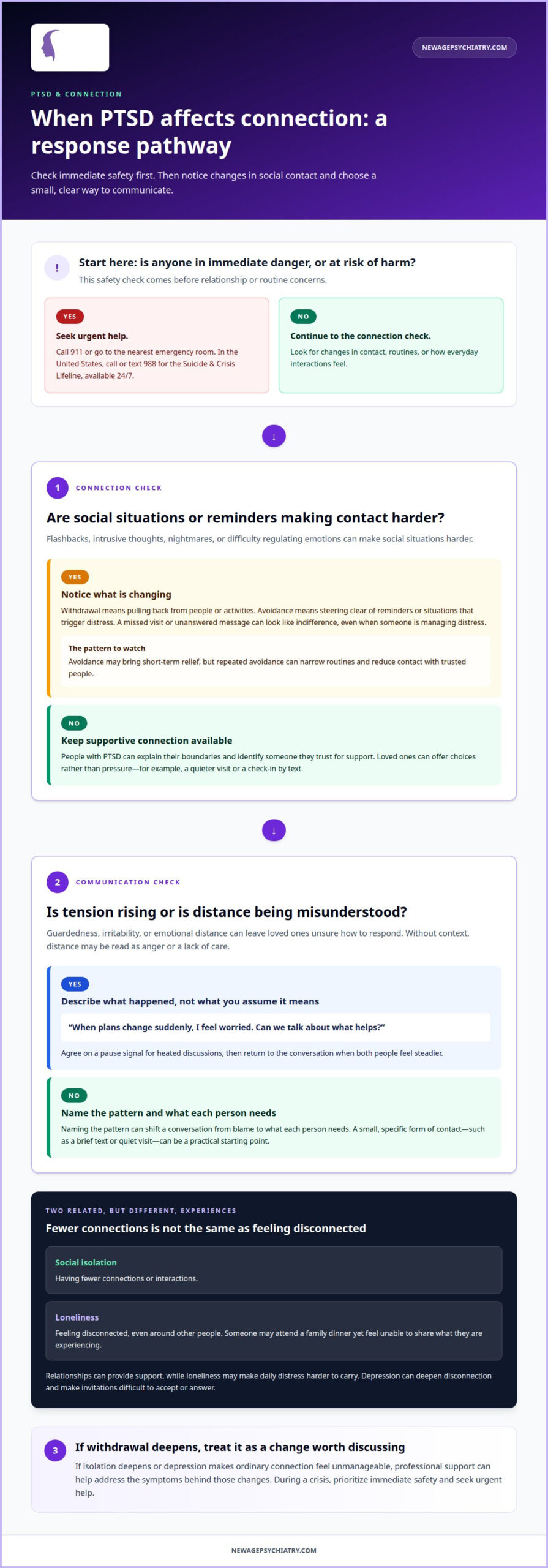
Seek urgent help if you’re in immediate danger or at risk of harming yourself or someone else: call 911 or go to the nearest emergency room. In the United States, call or text 988 for the Suicide & Crisis Lifeline, available 24/7.
How does PTSD affect relationships?
PTSD can change how partners, relatives, and friends experience everyday connection. After a traumatic event, someone may seem guarded, irritable, or emotionally distant. A reminder can interrupt a conversation and leave loved ones unsure how to respond. For instance, a crowded family gathering may feel unsafe, prompting someone to leave without explanation. Loved ones may feel helpless, frustrated, or resentful, even when they want to help.
These reactions can overlap with depression, anxiety, other mood disorders, and sleep problems. Poor sleep may reduce patience, while anxiety can make ordinary disagreements feel threatening. Someone who avoids discussing plans may be protecting themselves from reminders, not rejecting a partner. Without context, relatives may interpret distance as anger or a lack of care. Naming the pattern can shift the conversation from blame to what each person needs.
Substance use can become another coping strategy. Alcohol or drugs may seem to quiet distress briefly, but using them to manage PTSD can worsen symptoms over time. Substance use disorder may also coexist with PTSD, making emotional regulation and trust more difficult. A partner might focus on the drinking while the trauma remains unaddressed. Care that addresses PTSD alongside substance use can support both concerns. This context helps explain the cycle without excusing harmful behavior.
When tension rises, describe observable behavior rather than assigning motives. Try: “When plans change suddenly, I feel worried. Can we talk about what helps?” Agree on a pause signal for heated discussions, then return to the conversation when both people feel steadier. Loved ones can offer choices instead of pressure, such as a quieter visit or a check-in by text. People with PTSD can explain their boundaries and identify someone they trust for support. These steps can make communication clearer and reduce avoidable misunderstandings.
Social withdrawal and relationship difficulties
PTSD-related flashbacks, intrusive thoughts, nightmares, and difficulty regulating emotions can make social situations harder. Avoidance may bring short-term relief, but pulling away can increase isolation.
Social Isolation and Loneliness
Social isolation means having fewer connections or interactions, while loneliness is the feeling of being disconnected, even around other people. Someone may attend a family dinner yet feel unable to share what they’re experiencing. That distinction matters: relationships can provide support, while loneliness may make daily distress harder to carry. Depression can deepen disconnection, making invitations difficult to accept or answer.
Withdrawal and Avoidance
Withdrawal means pulling back from people or activities; avoidance means steering clear of reminders or situations that trigger distress. Someone might stop taking a familiar route, decline a gathering, or avoid talking about the traumatic event. Each choice may ease immediate discomfort, but repeated avoidance can narrow routines and reduce contact with trusted people. Noticing which situations prompt withdrawal can help identify patterns without treating them as deliberate rejection.
Relationship Difficulties
When withdrawal limits time together, loved ones may struggle to understand the change. A missed visit or unanswered message can seem like indifference, even when the person is managing distress. Over time, fewer conversations may leave both sides unsure how to reconnect. One practical step is to agree on a small, specific form of contact, such as a brief text or quiet visit, rather than expecting an immediate return to every routine.
If isolation deepens or depression makes ordinary connection feel unmanageable, professional support can help address the symptoms behind those changes. During a crisis, prioritize immediate safety and seek urgent help. Recognizing chronic withdrawal as a change worth discussing can help people seek care before social disconnection becomes their only response to distress.
Long-term effects of untreated PTSD
When PTSD symptoms persist, they can affect anxiety, mood, sleep, and physical health. The long-term side effects of untreated PTSD may also shape work, routines, and close relationships.
PTSD often occurs alongside other mental health concerns. About 80% of people diagnosed with PTSD struggle with another disorder, according to The researchers reporting the estimate. Depression, anxiety, and substance use can add difficulties, while chronic pain or sleep problems may complicate daily life. These overlapping concerns can influence thoughts, feelings, and the ability to keep up with responsibilities.
Long-Term Physical Health Effects
Long-term physical effects are health problems associated with ongoing PTSD and chronic stress. PTSD is associated with chronic pain, heart disease, and obesity, while stress can also bring headaches, muscle tension, stomach problems, or insomnia. For example, persistent sleep disruption may make ordinary tasks harder and affect overall well-being. Noticing physical changes alongside PTSD symptoms gives a healthcare provider useful context for assessing care needs.
Suicide Risk and Self-Harm
Suicide risk and self-harm are serious safety concerns that can occur alongside PTSD. PTSD is associated with suicidal thoughts or attempts, and depression or substance use can add further strain. If you or someone else may be in immediate danger, call 911 or go to an emergency room. In the United States, call or text 988 for the Suicide & Crisis Lifeline.
Effective PTSD care may include psychotherapy, medication, or both. Cognitive behavioral therapy can help people change unhelpful thoughts and behaviors and build coping strategies; EMDR and exposure therapy are also used. Antidepressants may help manage PTSD symptoms, including anxiety and depression. Recovery remains possible after years without care, though each person’s experience and timeline differ. A psychiatric assessment can help identify symptoms and discuss treatment options. Explore PTSD treatment to take a step toward support.
New Age Psychiatry: ADHD Diagnosis and Treatment
New Age Psychiatry offers PTSD treatment for adults whose symptoms continue to affect daily life, relationships, or well-being. A psychiatric evaluation can help clarify symptoms and inform a treatment plan, including medication management when appropriate. Since PTSD may occur alongside anxiety, depression, or sleep problems, support can also address these concerns through anxiety treatment, depression treatment, or insomnia treatment.
Seeking care can be a reasonable next step when distress persists, disrupts routines, or feels difficult to manage alone. Treatment needs differ, and discussing symptoms with a psychiatric provider can help identify suitable options in a supportive, nonjudgmental setting.
You’re welcome to contact New Age Psychiatry to discuss getting support.
Take a Supported Step Toward Feeling Better
You don’t need to have every answer before seeking help. Start by describing what feels hardest right now, such as sleep, mood, focus, or managing everyday responsibilities. Talking clearly about these concerns can help identify what needs attention and what support may fit.
The long-term side effects of untreated PTSD can feel daunting, but seeking care is a practical step toward addressing ongoing distress. New Age Psychiatry offers ADHD Diagnosis and Treatment, Insomnia Treatment, and Depression Treatment, as well as PTSD treatment for adults in Florida. If symptoms are disrupting your routine or making connection harder, discuss your concerns with a psychiatric provider.
Contact New Age Psychiatry to take a thoughtful next step. Support can begin with one honest conversation, and moving forward at your own pace is worthwhile.
Frequently Asked Questions
Does treating PTSD improve physical health?
PTSD treatment can address symptoms affecting sleep, stress, and daily routines, which may support overall well-being. It doesn’t guarantee that a physical condition will improve or resolve. For example, someone experiencing persistent insomnia alongside PTSD can discuss both concerns with a healthcare provider. Treatment planning can consider mental and physical health together, including ongoing pain or other health concerns.
Is exposure to psychological trauma related to poor physical health?
Yes, trauma and PTSD are associated with physical health concerns, although exposure alone doesn’t mean someone will develop a particular illness. Chronic PTSD has been associated with conditions such as heart disease, obesity, and chronic pain. Someone experiencing ongoing symptoms can mention physical changes during a healthcare visit, including when they began and how they affect everyday activities. This gives the provider useful context.
What can I expect if I have PTSD?
PTSD affects people differently, and symptoms may change in intensity or appear well after a traumatic event. You might notice that certain reminders make concentration, sleep, or daily plans more difficult. A mental health provider can discuss your experiences and how they affect daily functioning to assess whether PTSD may explain them. Prepare by noting patterns, concerns, and questions you want addressed.
What are the long-term psychological effects of untreated PTSD?
Persistent PTSD may contribute to ongoing anxiety, depression, emotional distress, and difficulty concentrating or managing daily responsibilities. Some people also experience substance-use problems or increased isolation. These effects aren’t the same for everyone, and having PTSD doesn’t mean every complication will occur. If changes in mood, thinking, or behavior interfere with work or personal life, discuss them with a healthcare provider.
How does untreated PTSD affect relationships, work, and daily functioning?
PTSD can make it harder to maintain routines, focus on tasks, or feel present with other people. For instance, disrupted sleep and concentration difficulties may make work assignments challenging, while avoidance can lead someone to miss plans or appointments. These changes can cause misunderstandings with coworkers and loved ones. Identifying which parts of daily life feel most affected can guide a conversation about support.
Does untreated PTSD increase the risk of depression, anxiety, or substance use disorders?
PTSD can occur alongside depression, anxiety disorders, and substance use disorder. Because these conditions may overlap, it can help to describe the full picture rather than focusing only on trauma-related symptoms. For example, tell a provider if anxiety is disrupting sleep or if alcohol has become a way to cope. A thorough assessment can help identify concerns and guide appropriate treatment options.