
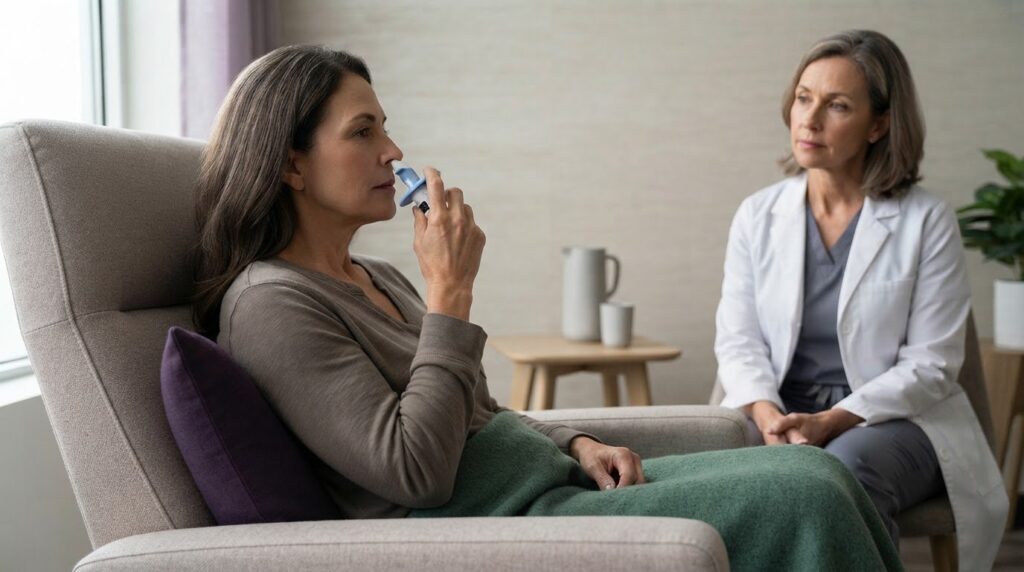
Preparing for your first ketamine session at home starts with a clinical screening and a clear plan for your medications, surroundings, and support. An at-home ketamine session should never take place without a monitor present. If you feel anxious about what might happen, thoughtful preparation can help you feel more settled without needing to predict or control the experience.
It’s understandable to want practical answers before a first treatment, especially because ketamine therapy and Spravato may involve different arrangements. This guide explains how eligibility is assessed, what to discuss before treatment, and how to prepare for a session. You’ll also learn how to make your space comfortable and what to do if anxiety or a difficult moment arises.
Key Takeaways
- Review your health history and medication list with your care team so they can assess whether treatment is appropriate for you.
- Plan ahead for substance-use guidance, post-session rest, and a safe return to your usual activities.
- Set up a quiet, comfortable space with practical support in place before your session begins.
- Learn simple ways to respond to anxiety or unsettling sensations during a first ketamine experience.
Who is eligible and safe for ketamine-assisted treatment?
Begin with a clinical review of your health history, medications, and treatment plan. This helps identify potential safety concerns before treatment begins.
Avoid Alcohol and Recreational Substances
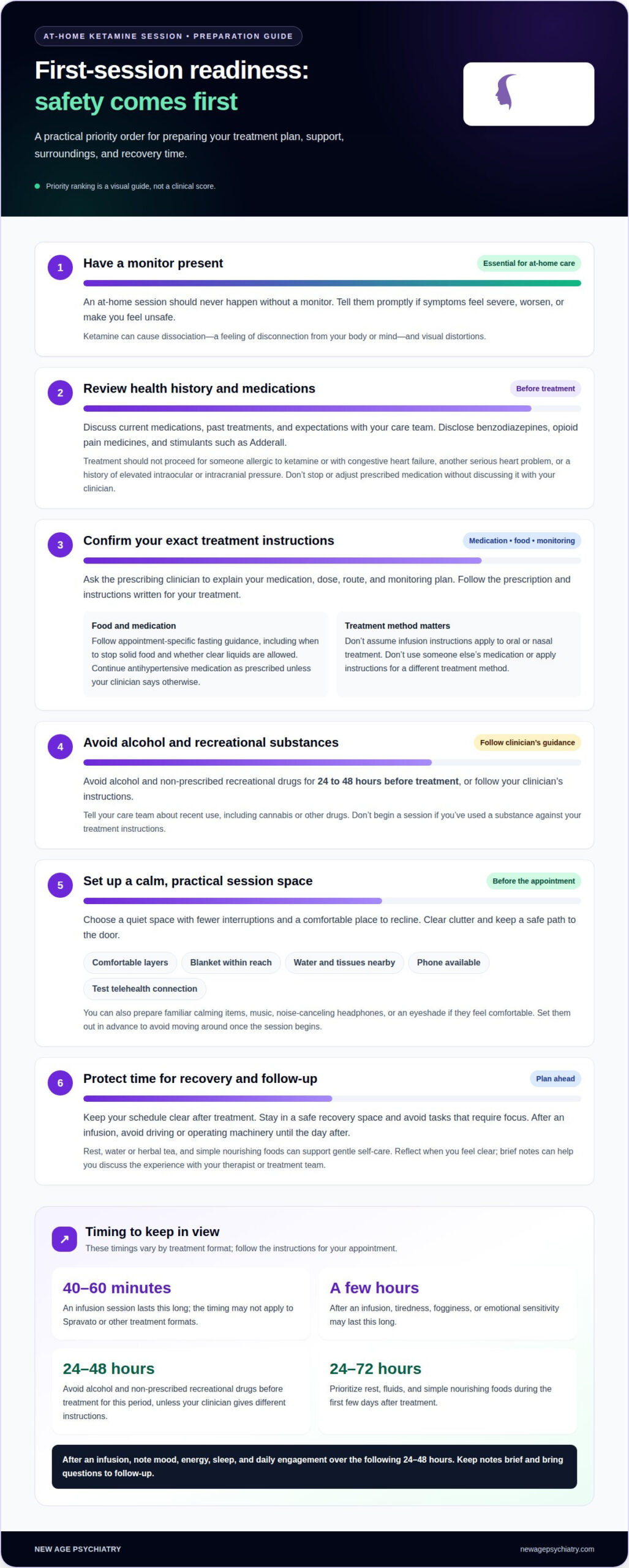
Avoid alcohol and non-prescribed recreational drugs for 24 to 48 hours before treatment, or follow the clinician’s instructions. These substances can affect your response and make it harder to assess symptoms. Tell the care team about recent use, including cannabis or other drugs, rather than withholding it. Don’t begin a session if you’ve used a substance against your treatment instructions.
Review Legal and Prescribing Rules
Ask the prescribing clinician to explain your medication, dose, route, and monitoring plan. In the United States, follow the prescription and instructions written for your treatment. Don’t use someone else’s medication or apply infusion instructions to a different treatment method. Clarify the practical instructions before an at-home session, and keep your treatment plan accessible during the appointment.
- Share health conditions and medications. Before treatment, discuss your current medications, past treatments, and expectations. Ketamine treatment should not proceed for someone allergic to ketamine or with congestive heart failure, another serious heart problem, or a history of elevated intraocular or intracranial pressure. Don’t stop or adjust prescribed medication without discussing it with your clinician. Disclose benzodiazepines, opioid pain medicines, and stimulants such as Adderall, as some treatment instructions address them specifically.
- Follow food and medication instructions. Fasting guidance can differ by treatment method. Follow the instructions for your appointment, including when to stop eating solid food and whether clear liquids are allowed. Avoid heavy or overly processed food beforehand. Don’t assume instructions for an infusion apply to oral or nasal treatment. Continue antihypertensive medication as prescribed unless your clinician gives you different instructions.
- Confirm monitoring and know what to report. An at-home session should never happen without a monitor present. Ketamine can cause dissociation, or a feeling of disconnection from your body or mind, and visual distortions. During an infusion, these effects usually subside within minutes. Tell the monitor promptly if symptoms feel severe, worsen, or make you feel unsafe so they can respond clinically.
How do I prepare for my first ketamine therapy or Spravato session?
During a first session, ketamine may change how your body or surroundings feel. Preparing for your first ketamine session at home also means setting aside time afterward, so you aren’t expected to return immediately to your usual routine.
Understand Session Duration and Journaling
Ask how long your appointment and recovery period are expected to take. A ketamine infusion session lasts 40 to 60 minutes, though this timing may not apply to Spravato or other treatment formats. Once you feel settled, note your mood, energy, sleep, and engagement with daily activities over the following 24 to 48 hours. Keep the notes brief; you don’t need to interpret each feeling right away.
- Make room for recovery. After an infusion, tiredness, fogginess, or emotional sensitivity may last for a few hours. Stay somewhere safe and avoid driving or operating machinery until the day after the infusion. For at-home care, remain in your recovery space and avoid tasks that require focus. Preparing for your first ketamine session at home means keeping your schedule clear instead of planning errands or work afterward.
- Choose gentle self-care. Take things slowly while returning to ordinary awareness. During the first 24 to 72 hours, prioritize rest, water or herbal tea, and simple nourishing foods. A slow walk or gentle stretching can offer light movement when you feel ready. Notice changes in sleep, energy, and emotional state without demanding an immediate explanation.
Plan Integration, Self-Care, and Follow-Up
Reflect when you feel clear, and bring any questions to a follow-up conversation. You don’t need to assign a fixed meaning to the experience. Brief notes about what stood out can help you discuss it with a therapist or treatment team. Ongoing support from a trained professional can help connect those reflections with daily life and future care decisions.
To explore care options, learn about low-dose ketamine therapy.
Preparing a comfortable, uncluttered session space
Before your appointment, choose a calm setting and make practical arrangements for privacy and support. A clear, quiet space can reduce interruptions and help you focus on the experience.
Choose Comfortable Clothing
Wear loose, comfortable clothes that won’t distract you while resting. Choose layers, such as a soft sweater over a light shirt, so you can adjust to the room’s temperature without getting up. Keep shoes, tight waistbands, and anything that needs frequent adjustment out of the way. Place a blanket nearby, within easy reach, before your session begins.
- Prepare the room. Choose a quiet space where household noise and outside interruptions are less likely. Put away clutter, clear a safe path to the door, and keep your phone available for treatment-related communication. Arrange a comfortable place to recline, with water and tissues nearby. For a telehealth session, test your device and connection before the appointment.
Gather Relaxation and Calming Items
Set out familiar items that help you feel grounded, such as a favorite blanket or comforting pillow. Prepare music in advance; instrumental tracks or songs with unfamiliar words can reduce lyrical distractions. Keep noise-canceling headphones and an eyeshade nearby if they feel comfortable. Avoid choosing items that require you to move around once the session begins.
- Arrange support and set an intention. At-home ketamine treatment should never happen without a monitor present. Have a trusted, supportive person available, and agree on how you’ll communicate if you need help. Before the session, choose a simple intention, such as staying curious or moving toward healing. Treat it as a gentle focus, not a task to complete or a result you must experience.
Anxiety and difficult moments during a first session
Anxiety can rise when ketamine changes how your body or surroundings feel. Before treatment begins, agree on a simple response plan with your monitor.
- Discuss dose-related anxiety beforehand. Tell the prescribing clinician what worries you, such as feeling detached or losing control. They can take your concerns into account when planning the first experience, including whether a low dose is appropriate. Share your psychiatric history and depression symptoms openly, since these details help shape your care. Write down your questions before the appointment.
- Use a familiar grounding cue. If anxiety builds, focus on a steady breath or a calming sound. Headphones can soften distracting noise, but make sure you can still communicate with your monitor. A supportive person can calmly remind you that unusual sensations may be part of the experience. The therapist’s role is to provide a supportive anchor, not to guide you through every sensation.
- Tell your monitor what is happening. Ketamine is dissociative and can cause disconnection from your body or mind, or visual distortions. During an infusion, these effects usually subside within minutes. If you feel frightened, nauseated, or unable to settle, say so rather than trying to manage it alone. Don’t stand or move around while disoriented.
- Agree on a response plan in advance. Decide how you’ll get your monitor’s attention and where they’ll stay during the session. Keep the treatment team’s contact method accessible, and make sure your monitor knows how to reach them. If distress continues after the session or affects your mental health, record what happened and discuss it with your clinician within the next 24 hours.
If anxiety is affecting daily life beyond treatment, explore anxiety treatment options.
New Age Psychiatry: ADHD Diagnosis and Treatment
New Age Psychiatry provides ADHD diagnosis and treatment for adults seeking assessment and ongoing psychiatric care in Florida. If attention concerns affect work, relationships, or daily routines, a structured evaluation can help clarify what support may fit. The practice also offers depression, anxiety, and insomnia treatment for adults.
Consider reaching out when symptoms persist, disrupt everyday life, or leave you unsure about what to do next. A clinician can discuss your concerns and relevant treatment options in light of your care goals. This is a route to ongoing support, not emergency crisis care.
Visit New Age Psychiatry to learn more or get in touch.
Choose a Thoughtful Next Step
Preparing for your first ketamine session at home can also be an opportunity to clarify what support you want afterward. Consider the changes you hope to work toward, what has felt difficult lately, and what you’d like care to make room for. You don’t need polished answers. Honest reflections can make a conversation with a psychiatric professional more useful.
Keep your next step manageable. Write down one concern, one goal, and one question about ongoing care. If depression, attention challenges, or sleep difficulties remain part of your experience, bring them into the discussion. Your needs deserve attention as a whole, without pressure to have everything figured out before seeking support.
When you’re ready to discuss care, contact New Age Psychiatry. Take the process at your pace. Reaching out can be a meaningful step toward feeling more supported.
Frequently Asked Questions
First, why should I choose at-home treatment?
At-home treatment may allow you to receive care in familiar surroundings, with greater privacy and fewer travel demands. Those benefits matter only if the prescribed treatment and your health circumstances make home care appropriate. Before choosing this setting, understand who will monitor you, how you’ll communicate during the session, and what support is available afterward. Convenience is not a substitute for a clinical safety plan.
How should I feel going into my first session?
You don’t need to feel completely calm or certain before beginning. Curiosity, nervousness, or mixed emotions can all arise when approaching a new mental health treatment. Focus on what you can control: identify one concern to discuss, clarify how to contact your monitor, and give yourself permission not to force a particular outcome. Your emotional state is information to share, not a test you need to pass.
What if I have a difficult moment or a ‘bad trip’ during ketamine therapy?
Tell your monitor promptly if fear, nausea, or disorientation becomes difficult to manage. Use a brief grounding cue, such as noticing your breathing or listening to a familiar calming track, while your monitor stays with you. Ketamine can cause dissociation or visual distortions, and these effects during an infusion usually ease within minutes. Don’t try to walk around while disoriented; follow the response plan agreed on before treatment.
How should you prepare your home before a first prescribed at-home ketamine session?
Choose a quiet room where you can remain undisturbed, and make sure your monitor can stay present throughout the session. Silence doorbells and notifications, let household members know you need privacy, and keep your phone available for treatment-related communication. Place necessary items within reach before starting. Avoid cooking, supervising children, or handling responsibilities that could interrupt the session or demand your attention.
What should you eat, drink, and avoid before taking ketamine?
Use the food and fluid instructions provided for your prescribed treatment method. Guidance for an infusion may not match instructions for oral ketamine. Avoid alcohol and non-prescribed recreational substances for 24 to 48 hours beforehand, or follow your clinician’s instructions. Avoid caffeine on the treatment day, and drink water in the days leading up to treatment. Don’t change medication or fasting plans on your own.
How long should you fast before an at-home ketamine session?
There isn’t one fasting interval for every at-home treatment method. Some infusion instructions call for avoiding food for 4 hours beforehand, but that timing shouldn’t automatically be applied to oral ketamine. Follow the written directions for your specific prescription, including any instructions about clear liquids. If your instructions seem inconsistent, resolve that before taking the medication rather than improvising on session day.