

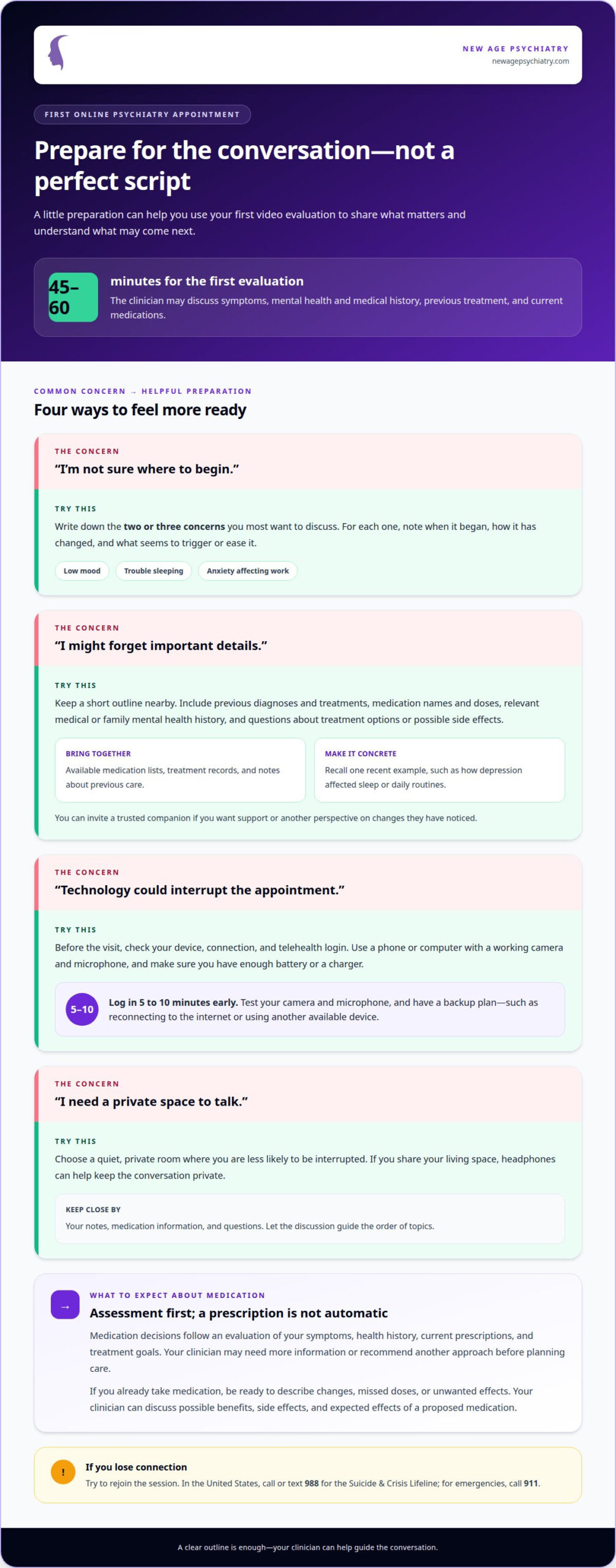
A first online psychiatric appointment typically lasts 45 to 60 minutes. You’ll meet by video and discuss your symptoms, mental health and medical history, previous treatment, and current medications. Knowing what to expect from an online psychiatric appointment can help you feel more prepared to share what’s been going on.
It’s natural to wonder whether you’ll receive a prescription at your first visit, how virtual care works, and what happens after the evaluation. A first appointment doesn’t always end with a prescription: your clinician may need more information before recommending a treatment plan.
This guide explains how to prepare, what an evaluation may cover, how prescribing works, and what follow-up can involve. You’ll also learn what virtual care can and can’t do, so you can approach your appointment with a clearer picture of the process.
Key Takeaways
- Plan for a first video evaluation of 45 to 60 minutes, and note two or three concerns you most want to discuss.
- Medication decisions follow an assessment of your symptoms, health history, and current medications; the first visit may focus on gathering information and planning care.
- Virtual appointments can support ongoing psychiatric care, with coordination involving your primary care physician or therapist when useful.
- Follow-up appointments help track progress and shape next steps. If you’re in crisis in the United States, call or text 988; for emergencies, call 911.
How long does the first online psychiatry appointment last?
A first online psychiatric evaluation often takes longer than later appointments. It often takes longer than later visits because the clinician explores your mental health history, symptoms, previous treatments, current medications, and concerns. The video session may include an initial evaluation of your mental health state, rather than focusing only on one symptom.
Prepare a short written outline to help you recall important details during the conversation. Note two or three concerns you most want to address, such as low mood, trouble sleeping, or anxiety affecting work. For each symptom, record when it began, how it has changed, and what seems to trigger or ease it. Include past diagnoses, medication names and doses, previous treatments, and relevant medical or family mental health history. Add questions about the evaluation, treatment options, or possible side effects.
- Gather available medication lists, treatment records, and notes about previous care.
- Write down one recent example, such as how depression affected sleep or daily routines.
- Invite a trusted companion if you want support or another perspective on changes they have noticed.
Set up your technology before the appointment. Use a phone or computer with a working camera and microphone, a stable internet connection, and enough battery or a charger. Test the camera and microphone, then log into the telehealth platform 5 to 10 minutes early. Choose a quiet, private room where you won’t be interrupted. If you share your living space, headphones can help keep the conversation private. Have a backup plan for connectivity problems, such as reconnecting to the internet or using another available device.
Keep your notes nearby, but let the discussion guide the order of topics. If you lose connection, try to rejoin the session. In the United States, people in crisis can call or text 988 for the Suicide & Crisis Lifeline, and emergencies can be directed to 911, according to the Substance Abuse and Mental Health Services Administration.
How Do Online Psychiatrists Prescribe Medication?
An online psychiatrist may prescribe medication after evaluating your mental and physical health. A first appointment doesn’t always end with a prescription: your clinician may need more information or recommend another approach. Part of what to expect from an online psychiatric appointment is a discussion of your symptoms, health history, current prescriptions, and treatment goals.
Medication Prescribing and Dose Adjustments
Medication prescribing is a clinical decision based on your evaluation, not an automatic result of meeting online. In the United States, online psychiatrists may prescribe medication without an in-person visit, subject to Drug Enforcement Administration updates. This option may be available through online care, depending on applicable prescribing requirements. Your psychiatrist can explain a proposed medication’s possible benefits, side effects, and expected effects before discussing a treatment plan.
Most medications can be prescribed electronically after an online visit, while some prescriptions require an in-office appointment. Dose adjustments depend on your symptoms, response, and side effects. Prepare to describe changes since starting or adjusting medication, including missed doses or unwanted effects. Knowing what to expect from an online psychiatric appointment includes understanding that the clinician uses these details to guide prescribing decisions.
History and Treatment Planning
Your history and treatment plan connect symptoms with your personal, social, family, and medical circumstances. Your psychiatrist may ask about daily routines, relationships, family mental health history, medical conditions, previous treatments, and current prescriptions. These details can help guide treatment choices and show whether further assessment is needed before prescribing.
Bring specific examples to the conversation. Explain when a symptom began, how it affects work or sleep, and whether a medication caused nausea or drowsiness. Your psychiatrist may gather more information, order lab work, or consider your response to non-medication strategies. This discussion helps shape next steps around your health history, treatment priorities, and medication concerns.
Is telehealth psychiatry as effective as in-person care?
Telehealth psychiatry can offer the same clinical quality and scope of care as in-person psychiatry. The main difference is the format: you speak with a licensed provider by video instead of meeting in an office. That format can make ongoing care easier to fit around work, travel, or anxiety about leaving home.
Convenience matters, but so does coordination with the people involved in your care. You can tell your psychiatrist about your primary care physician or therapist and what each person is addressing. When appropriate, your psychiatrist may coordinate care by sharing relevant treatment information. Let your provider know what support you already have and what you would like to address.
Follow-up visits with the same provider can track progress and support adjustments to your care plan. For example, you might discuss whether anxiety symptoms have changed and whether your current approach still fits. If you prefer virtual appointments, continuity through video can make regular conversations simpler. Telehealth may include psychiatric evaluation and medication management without travel to an office.
Telehealth appointments with New Age Psychiatry are for patients located in Florida. Your location matters for care and prescribing, so be prepared to confirm that you’re physically in Florida during your appointment. If you travel or move out of state, you may not be able to continue appointments while there.
Virtual visits also have practical limits. Internet or device problems can interrupt a session, and online care provides less direct human contact than an office visit. Privacy can vary with the platform and your surroundings, so a private room helps protect the conversation. Insurance coverage also varies, and some insurers may not cover online psychiatric care.
For complex needs or crisis situations, a psychiatrist may recommend in-person follow-up or coordination with local providers. Telehealth and office care can therefore work as complementary approaches, rather than an all-or-nothing choice. Your symptoms, treatment needs, access to support, and preference for virtual or in-person conversation all help shape the appropriate format.
Treatment planning and follow-up appointments
Your first evaluation may lead to an initial plan, a preliminary diagnosis, or further assessment before a diagnosis is formalized. The next steps depend on what your conversation and history reveal.
Diagnosis and Treatment Planning
A treatment plan connects the evaluation’s findings with practical next steps for your psychiatric care. A provider may discuss medication, further assessment, therapy or counseling, and relevant lifestyle adjustments. If symptoms need closer review, additional lab work or a referral to another specialist may be recommended. A preliminary diagnosis can help guide care, while more information may be needed before formalizing it. Ask which concerns the plan addresses and what progress will look like.
Collaborative Planning
Collaborative planning means shaping care around your symptoms, goals, and medical history. Share what feels manageable, what has helped before, and any concerns about medication or therapy. For example, explain whether sleep, work, or relationships are affected. You can also tell your provider about your primary care physician or therapist so relevant health information can support a connected approach.
Before ending the appointment, clarify the next step: further assessment, a medication plan, therapy, or another visit. If the plan includes medication, ask what effects or side effects to track. For ongoing or recurring concerns, follow-up with a mental health professional can help you review your progress and care plan over time.
Follow-Up Visits and Next Steps
Follow-up visits review progress and help adjust the treatment plan as your needs change. Once a care plan is established, online follow-up sessions often last 20 to 30 minutes. A visit may be scheduled within a few weeks of the initial appointment; ongoing medication management is typically scheduled monthly. After your appointment, follow the agreed plan, record changes in symptoms or side effects, and keep questions for the next visit.
If you’re ready to discuss ongoing psychiatric care, explore virtual psychiatric care as a next step.
New Age Psychiatry: ADHD Diagnosis and Treatment
New Age Psychiatry provides virtual ADHD diagnosis and treatment for adults, including psychiatric evaluation and ongoing medication management. If attention, organization, or impulsivity concerns affect daily life, an assessment can help clarify what may be contributing and guide next steps. Treatment is shaped around your symptoms, history, and goals.
New Age Psychiatry also provides treatment for insomnia, depression, and anxiety. These services may be relevant when sleep, mood, or anxiety concerns accompany attention difficulties. A psychiatric evaluation can help connect those concerns and inform an individualized care plan.
To discuss a virtual psychiatric evaluation or ongoing care in Florida, contact New Age Psychiatry.
Choose a Meaningful Next Step
Before moving forward, consider what you’d like to make easier in daily life. You might want to stay engaged at work, feel more rested, or make more space for relationships. Naming one meaningful goal gives your conversations a personal starting point beyond symptoms or labels.
Understanding what to expect from an online psychiatric appointment can help you approach care with a clearer idea of what you want support to make possible. You don’t need to have every answer ready. Start with the concern affecting you most, then discuss the progress you hope to work toward with a mental health professional.
New Age Psychiatry provides virtual psychiatric care for adults seeking support with mental health concerns. If you’re ready to explore whether its approach fits your needs, contact New Age Psychiatry. Taking the next step can begin with a straightforward conversation about what matters to you.
Frequently Asked Questions
What Is Virtual Psychiatry?
Virtual psychiatry is psychiatric care delivered remotely, usually through a secure video appointment. A clinician can discuss mental health concerns, assess symptoms, and plan care without meeting in the same room. Depending on the clinician and your needs, care may involve evaluation, diagnosis, medication management, or continued monitoring. It’s a way to access psychiatric support from a private location with an internet connection.
What technology do I need for a telehealth psychiatry session?
You’ll need a phone, tablet, or computer with a working camera and microphone, plus a stable internet connection. Use the device you’re most comfortable speaking on, and plug it in if its battery is low. Before joining, open the appointment platform and allow camera and microphone access. Headphones can make it easier to hear clearly and keep your conversation private.
Will I receive a diagnosis after my first session?
You may receive a preliminary diagnosis after the first session, but a clinician may need more information before making a formal diagnosis. For example, symptoms that overlap across conditions can call for additional questions, records, or lab work to consider medical causes. Ask what the current assessment suggests and what information would help clarify it. The next step may be further evaluation rather than a final diagnosis.
What happens during an online psychiatric appointment?
Your clinician may begin by confirming your identity and current location, then ask what brought you to the appointment. You’ll discuss symptoms, relevant health history, and previous care. The clinician may explain the telehealth platform and confidentiality practices, then review possible next steps. Depending on your needs, the visit may focus on assessment, treatment options, or what additional information would help.
How should I prepare for a telepsychiatry appointment?
Choose a private place where you can speak openly, and keep a glass of water and your notes within reach. Write down the questions you most want answered, such as how progress will be measured or what to do if symptoms change. If you feel nervous, note the first concern you want to discuss so you have an easy place to begin.
How much does an online psychiatric appointment cost in the United States?
There isn’t one standard cost for online psychiatric appointments across the United States. Payment may involve a copay per session or paying upfront and seeking reimbursement through an insurance claim, depending on the provider and plan. In Florida, New Age Psychiatry’s service fees are separate from medication purchases; insurance may be used for medication at a pharmacy. Review the practice’s listed service fees before booking.