

A depression prescription isn’t a one-time decision. It is part of an ongoing clinical process shaped by your symptoms, health history, and response to care. If you’re considering depression medication management St. Petersburg, you may be wondering whether medication is appropriate, what side effects could mean, and how care can fit into your schedule.
A psychiatric evaluation helps inform recommendations, but it doesn’t mean you’ll automatically be prescribed medication. Your concerns and preferences are part of the conversation, and follow-up gives you and your clinician a chance to review how you’re doing and discuss next steps. This guide explains what an evaluation may involve, how medication management and follow-up work, and what to discuss if you’re concerned about side effects or finding an appropriate treatment. New Age Psychiatry provides virtual psychiatric care for adults in St. Petersburg and across Florida, so you can attend appointments remotely.
Key Takeaways
- Depression medication management St. Petersburg can involve an evaluation, an individualized treatment plan, and clinician-guided follow-up, not just a prescription.
- Symptoms, sleep, daily functioning, health history, and past treatment may all inform medication decisions.
- Medication response, possible side effects, and personal preferences vary. Non-medication supports may also be part of care.
- For a virtual follow-up, prepare symptom notes, a current medication list, questions, and a private appointment setup.
- New Age Psychiatry provides adult depression evaluations and medication management through telehealth in Florida.
Depression Medication Management in St. Petersburg: What It Covers
Considering medication can bring questions or mixed feelings. You may wonder whether it fits your situation, what a clinician will consider, or whether choosing medication means giving up other forms of support. These are reasonable concerns. Depression medication management St. Petersburg is a process for evaluating care with a psychiatric clinician, not a promise that medication will be recommended.
Medication management generally includes a psychiatric evaluation, treatment planning, prescription management when appropriate, and follow-up. A clinician considers your symptoms, health history, other relevant health factors, and preferences before discussing possible approaches. The plan can be reviewed as your needs and response become clearer. This ongoing review matters: medication management is more than receiving a prescription once and leaving it unchanged.
Psychiatric medication management and psychotherapy serve different purposes, and they aren’t necessarily alternatives. Medication care focuses on evaluating and managing psychiatric medication. Psychotherapy involves working with a therapist on emotional, behavioral, or life concerns. Some people consider one form of support, both, or neither at a particular time. The discussion should reflect your circumstances and priorities, rather than assuming one approach suits everyone. For an overview of medication categories and uses, see Antidepressant medications.
What does depression medication management include?
The process can include reviewing symptoms and health history, discussing treatment options, and deciding together whether medication management is appropriate. The clinician can explain potential benefits and risks in the context of your health and priorities, and address questions about side effects. Follow-up gives you and the clinician a chance to discuss what you’re noticing and whether the plan still fits. Any medication changes should be guided by your clinician, not by general information alone.
When might an adult consider psychiatric medication care?
Persistent low mood, reduced interest in activities, or changes that disrupt daily life may be reasons to seek an evaluation. These experiences don’t determine a diagnosis on their own or mean medication is right for everyone. An assessment can help clarify what may be contributing to how you feel and what support could be considered. Adults in St. Petersburg can access New Age Psychiatry’s adult psychiatric evaluations and depression medication management through telehealth in Florida.
How a Psychiatric Evaluation Guides Depression Medication Decisions
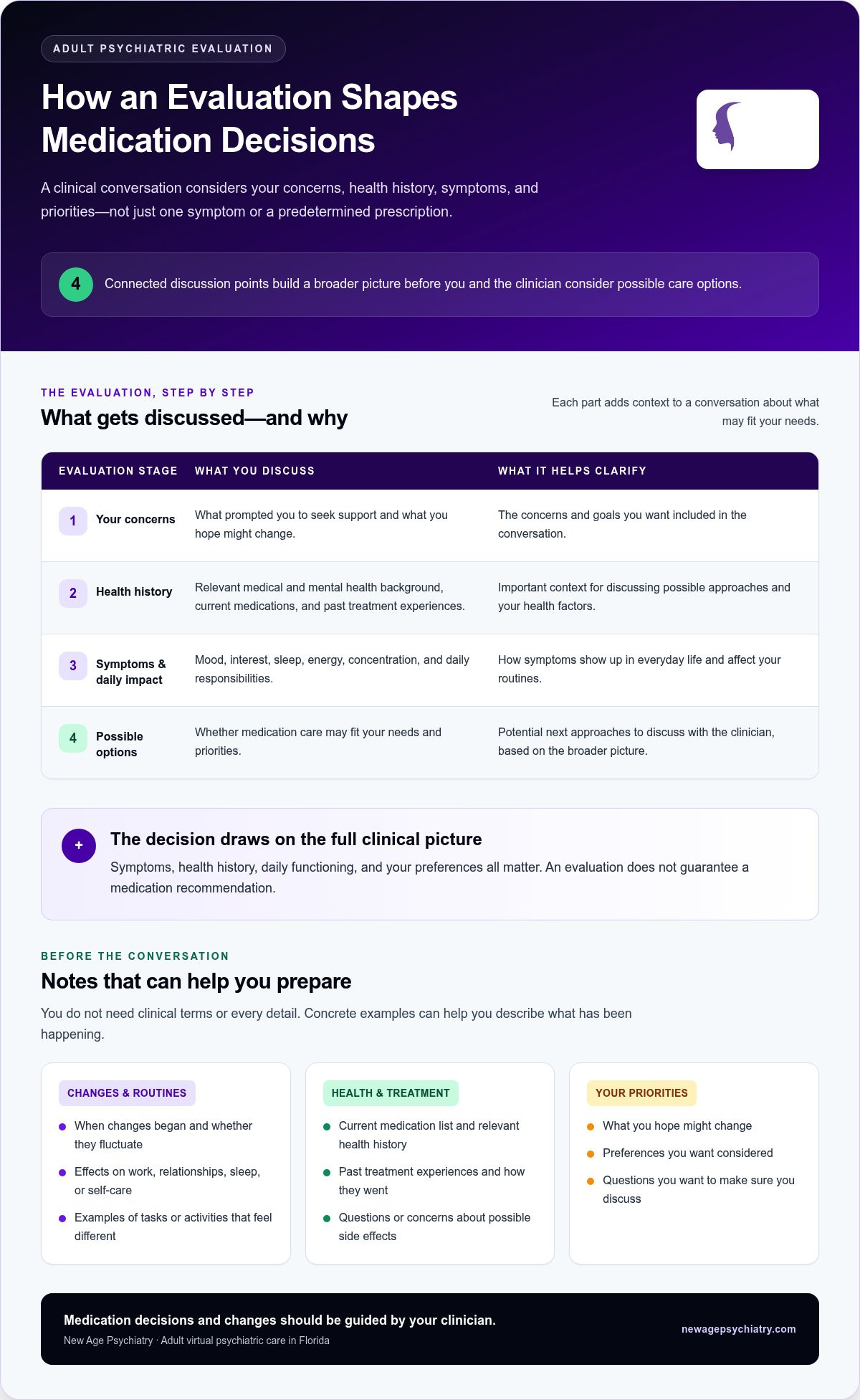
An evaluation is a conversation and clinical assessment, not a shortcut to a predetermined prescription. For adults exploring depression medication management St. Petersburg, the clinician learns what has been happening and considers how symptoms, health history, and personal goals fit together. Depression can affect people in different ways, so specific examples help inform the discussion of possible options.
The discussion often follows a clear sequence:
- Discuss your concerns. Explain what prompted you to seek support and what you hope might change.
- Review your health history. Share relevant medical and mental health background, current medications, and past treatment experiences.
- Assess symptoms and daily impact. The clinician may ask about mood, interest, sleep, energy, concentration, and daily responsibilities.
- Consider possible options. With the broader picture in view, you and the clinician can discuss whether medication care may fit your needs and priorities.
Medication decisions should account for the full clinical picture, including symptoms, health history, daily functioning, and your preferences. That context makes the conversation more considered than matching one symptom to one treatment. The National Institute of Mental Health on Depression also offers general information about symptoms, diagnosis, and treatment approaches.
What information may come up during the first evaluation?
A little preparation can make it easier to describe what’s been going on. Consider noting when changes began, whether they fluctuate, and how they affect routines such as work, relationships, sleep, or self-care. Bring a list of current medications and relevant health history, along with what you’ve tried before and how it went. Write down questions or concerns you want to make sure you discuss.
You don’t need to organize every detail or know clinical terms. Concrete examples are useful, such as finding it harder to complete usual tasks or losing interest in activities you previously enjoyed. Share what matters to you, including concerns about possible side effects or preferences around treatment. Your perspective is part of the evaluation.
How are medication options discussed?
A clinician considers your symptoms, history, health factors, and treatment goals when discussing possible options. The conversation may cover potential benefits and risks, side effects to watch for, and how follow-up can help assess your experience. There isn’t one medication or plan that suits everyone, and an evaluation doesn’t guarantee a particular recommendation.
Ask how a proposed plan would be monitored and what to do if you have concerns. Medication decisions and changes should be made with your clinician’s guidance. If you’re ready to explore an evaluation, New Age Psychiatry’s adult telehealth psychiatric care offers a virtual starting point for Florida residents.
Depression Medication Options and Common Concerns: What to Weigh
It’s common to wonder whether medication is necessary, what taking it might involve, or whether side effects could affect your routine. An evaluation doesn’t guarantee a prescription, and the same medication won’t work the same way for everyone. Recommendations depend on the individual assessment, health factors, treatment history, and what matters to you.
Medication care and non-medication supports have different purposes, but they don’t have to be treated as competing choices. Medication may be considered as one way to address depression symptoms, while psychotherapy can offer space to work on emotional patterns, coping strategies, and life challenges. Other supportive steps may also matter to an individual’s care. The American Psychiatric Association on Depression describes treatment approaches that can include medication and psychotherapy. Which options make sense depends on the person and the clinical discussion, not a universal ranking.
For adults considering depression medication management St. Petersburg, organize questions around these four topics before discussing a plan:
- Goals: Which symptoms or parts of daily life would you most like care to address?
- Potential benefits: What changes might the clinician hope to see, and how will you discuss whether the plan is helping?
- Possible risks: Which side effects or health considerations should be part of the decision?
- Follow-up: How will you share your experience and review tolerability or next steps with your clinician?
Will everyone with depression need medication?
No. Medication is not the only possible form of depression care, and an evaluation doesn’t automatically lead to a prescription. A clinician considers your symptoms and circumstances before discussing possible recommendations. Some people may consider medication, psychotherapy, other supports, or a combination. Preferences and clinical needs differ, so the goal is to explore what may fit your situation rather than assume one approach is best for everyone.
What if side effects or concerns arise?
Keep track of what concerns you, when you notice it, and how it affects your day. Sharing clear observations with your treating clinician can help them review tolerability and discuss next steps. Don’t stop, change, or share prescribed medication without clinician guidance. If something about the plan feels difficult or unclear, raise it directly. Follow-up is an opportunity for you and your clinician to discuss your experience and whether the plan still meets your needs.
Virtual Medication Follow-Up for St. Petersburg Adults: How to Prepare
Follow-up appointments give you a chance to explain how care is going. Adults in St. Petersburg can attend New Age Psychiatry’s psychiatric appointments remotely from an appropriate private setting in Florida. A virtual visit can fit ongoing care into daily life while leaving time to discuss symptoms, concerns, and whether the treatment plan needs reassessment.
Preparation can be simple. A few notes may help you remember details that are hard to recall during an appointment. Gather your current medication list and questions, too. You can also explore telehealth care for depression for broader information about virtual support.
How can patients prepare for a virtual follow-up?
Before your appointment, jot down changes you’ve noticed since your last discussion. You don’t need to track every moment; brief, specific observations can make the conversation more useful. Gather your current medication list and note relevant changes or questions. Writing down a few priorities can also help if you’re unsure where to begin.
- Symptom notes: Record changes in mood, sleep, energy, or daily functioning, along with concerns you want to discuss.
- Medication information: Keep an up-to-date list of medications and note relevant changes since your previous appointment.
- Questions: Write down anything you want clarified about your experience or care plan.
- Appointment setup: Choose a private location where you can speak comfortably, and test your device and internet connection beforehand.
A note such as “sleep has been more disrupted this week” or “I’m finding it harder to finish routine tasks” gives the clinician a concrete starting point. If you can’t recall an exact date or detail, share what you remember. Honest observations are more useful than trying to make your experience sound a certain way.
What should ongoing medication monitoring address?
During a follow-up, discuss symptom changes, day-to-day functioning, how well you’re tolerating the current plan, and any questions that have come up. For example, describe whether a concern is occasional or affecting your routine. The clinician can use those details to understand your experience and decide whether the plan should continue or be reassessed.
There’s no single response or timeline that applies to everyone, and follow-up timing can depend on individual circumstances. Medication adjustments are clinician-guided. Don’t change medication based on a general article or someone else’s experience. Bring your observations to your treating clinician so decisions reflect your situation.
If virtual follow-up could make ongoing care more practical, explore adult depression medication management through New Age Psychiatry.
Starting Depression Medication Management With New Age Psychiatry
If you’re ready to explore depression medication management St. Petersburg, request care through New Age Psychiatry’s virtual practice. New Age Psychiatry provides telehealth psychiatric evaluations and depression medication management for adults in Florida, including adults living in St. Petersburg. The process has clear steps, while clinical decisions remain individualized.
The care pathway generally moves through these stages:
- Request care. Begin arranging a virtual psychiatric evaluation.
- Complete an evaluation. Discuss your concerns, symptoms, health history, and previous treatment experiences.
- Discuss options. Review what the evaluation suggests and whether medication management may be appropriate for your circumstances.
- Plan follow-up. If you and the clinician develop a care plan, follow-up provides opportunities to discuss your experience and review next steps.
A prescription isn’t guaranteed, and no particular outcome can be promised. The evaluation informs recommendations, while your concerns and treatment priorities shape the discussion. You don’t need to arrive with a diagnosis or preferred medication in mind. Sharing what you’ve experienced and what you hope to address gives the clinician useful context for considering an appropriate plan.
What to expect when beginning virtual psychiatric care
The initial appointment is a structured conversation about what brings you to care and your relevant treatment history. The clinician may ask how symptoms affect daily life and what support you’ve tried before. Together, you can discuss an individualized plan based on the evaluation. Bring questions, mention concerns that feel important, and explain what you’d most like the discussion to address.
After the evaluation, the clinician can discuss recommendations and possible follow-up as part of ongoing care. The process is collaborative: ask for clarification if a recommendation or next step isn’t clear, and share preferences or concerns before making decisions. Treatment recommendations depend on clinical evaluation, so the plan may differ from what you expected at the outset.
When to seek urgent help instead of routine medication care
Routine telehealth medication management is not emergency crisis intervention. If you or someone else is in immediate danger, call 911 or go to the nearest emergency department. For a mental health crisis in the United States, call or text 988. These resources are for urgent situations, not routine appointments to review medication or discuss an ongoing treatment plan.
For a virtual starting point for adult depression care in Florida, explore depression medication management with New Age Psychiatry. An evaluation can help you understand possible next steps without assuming in advance what treatment will be recommended.
Take a Thoughtful Next Step Toward Support
You don’t have to know in advance whether medication is the right choice to explore care. A first step can be making space to talk about what’s been difficult and what you’d like help understanding. For adults considering depression medication management St. Petersburg, that conversation can help you move from uncertainty toward a clearer, personally informed decision.
Bring questions, reservations, or hopes for a particular kind of support. Your perspective belongs in the conversation, and recommendations should follow an individual clinical evaluation rather than assumptions about what everyone needs. New Age Psychiatry offers virtual psychiatric evaluations and depression medication management for adults in Florida.
Explore virtual depression care with New Age Psychiatry and take a considered first step toward support that reflects your needs.
Frequently Asked Questions
Can I get depression medication management in St. Petersburg through telehealth?
Yes. Adults in St. Petersburg can access New Age Psychiatry’s virtual psychiatric care in Florida. A remote appointment lets you discuss your concerns and explore medication management without traveling to a clinic. Telehealth doesn’t guarantee a prescription; a clinician considers your individual situation before discussing options. If you’re facing immediate danger or a crisis, seek emergency or crisis support rather than waiting for a routine appointment.
What happens during a depression medication evaluation?
A psychiatric evaluation explores your symptoms, health history, daily functioning, previous treatment, and goals. For example, you might describe how changes in mood affect concentration at work or your ability to keep up with household responsibilities. Bring your current medication list, including non-psychiatric prescriptions, so the clinician has relevant context. The evaluation informs a discussion of possible care, but it doesn’t guarantee a diagnosis or prescription.
How long does depression medication take to work?
There isn’t one timeline that applies to every medication or person. Your clinician can explain what to expect for a treatment being considered and when to raise concerns. Keep notes on changes you notice, including days when symptoms feel different, rather than relying on one difficult moment to judge the overall pattern. Attend planned follow-ups, and don’t start, stop, or adjust a prescription without guidance from the prescribing clinician.
Can a telehealth psychiatrist prescribe medication for depression in Florida?
Telehealth psychiatric care in Florida can include evaluation and medication management for adults. Whether a prescription is appropriate depends on the clinician’s assessment, your health context, and the discussion of possible options. A virtual visit doesn’t mean medication will automatically be prescribed. If you have concerns about a proposed plan, raise them during the appointment so the clinician can address your questions and discuss appropriate follow-up.
What should I do if I have side effects from depression medication?
Write down what you’re experiencing, when it started, and how it affects your daily activities, then contact the clinician who prescribed the medication for guidance. Be specific about severity and any other relevant changes. Don’t stop or change the medication on your own unless your clinician instructs you to. If symptoms are severe or create immediate danger, seek emergency help instead of waiting for a routine appointment.
Is depression medication management the same as therapy?
No. Medication management involves psychiatric evaluation, medication-related decisions, and clinical follow-up. Psychotherapy is a distinct form of care that uses therapeutic conversations and approaches to address emotional, behavioral, or life concerns. Some people may use one approach or both, depending on their needs and clinical recommendations. New Age Psychiatry provides virtual psychiatric services, including adult depression medication management; the two types of care have different roles.