

A clearer account of your nights can help make an appointment more useful. If you’re unsure how to talk to a doctor about insomnia, you’re not alone. It can be hard to describe disrupted sleep in a short visit, especially if you worry your concerns will be dismissed as stress or poor habits.
You don’t need to arrive with a diagnosis or a perfect explanation. Share when the sleep problems began, how often they happen, and how they affect your days. A sleep diary kept for one to two weeks can help you describe patterns, but don’t postpone an appointment if you haven’t kept one.
This guide covers how to prepare, describe your symptoms, and ask about possible causes and treatment options. You’ll also learn what a clinician may ask and how to discuss medication without assuming it’s the only approach. Whether you meet in person or through a virtual psychiatric evaluation, the goal is a collaborative plan with clear next steps.
Key Takeaways
- Use a brief sleep history to organize your sleep patterns, daytime effects, relevant health details, and priorities.
- When explaining insomnia, describe what happens at night, how often it occurs, and how it affects daily life.
- Discuss behavioral approaches, possible contributing conditions, and medication review in light of your individual assessment.
- Before the appointment ends, summarize the plan and clarify follow-up timing and how to report concerns or side effects.
Talking to a Doctor When Insomnia Affects Daily Life
Recurring sleep problems deserve attention when they affect your mood, concentration, safety, or daily routines. You don’t need to decide for yourself whether you have an insomnia disorder before raising the concern. The appointment is a chance to explain what’s happening, consider possible contributing factors, and discuss next steps with a clinician.
Insomnia-related concerns can include difficulty falling asleep, staying asleep, or waking too early, along with meaningful effects during the day. You might notice low energy, irritability, trouble focusing at work, or less patience with people close to you. Sleep difficulty can have different causes, and more than one factor may be involved. The overview of Insomnia describes common sleep patterns, but a clinician can assess how your symptoms fit together.
Which sleep details are useful to explain?
Describe what a typical difficult night looks like in your own words. You might take a long time to fall asleep, wake several times and struggle to return to sleep, wake earlier than planned, or sleep for what seems like enough time but still feel unrested. You don’t need to know exactly how many minutes you were awake.
Explain when you first noticed the problem, how often it happens, and whether it has changed. Mention whether it comes and goes, follows a change in your schedule, or seems connected to a change in your health or medication. Then describe what you notice the next day. For example, you may lose your train of thought in meetings, feel more anxious or irritable, struggle with usual tasks, or find it harder to stay alert. Specific examples help your doctor understand the impact, not just how many hours you slept.
When should you bring up persistent sleep problems?
Consider making an appointment if difficulty sleeping persists, gets worse, or interferes with responsibilities and routines that matter to you. There isn’t one duration that determines when everyone should seek help. Your sleep pattern, overall health, and daytime impact all matter, so describe what you’ve noticed rather than waiting for a particular threshold.
Bring up severe daytime sleepiness or any sleep-related safety concern promptly. If you’ve felt drowsy while driving, struggled to stay alert during a task, or worried that fatigue could put you or someone else at risk, say so directly. This helps the clinician understand the urgency and discuss practical next steps.
If you’re unsure how to talk to a doctor about insomnia, start with one clear sentence: “I’m having trouble staying asleep, and it’s affecting my focus and mood during the day.” Add details as the conversation continues. You don’t need a perfect explanation. The goal is to give your clinician an honest picture of your sleep and its effect on your life.
Prepare for an Insomnia Appointment With a Simple Sleep History
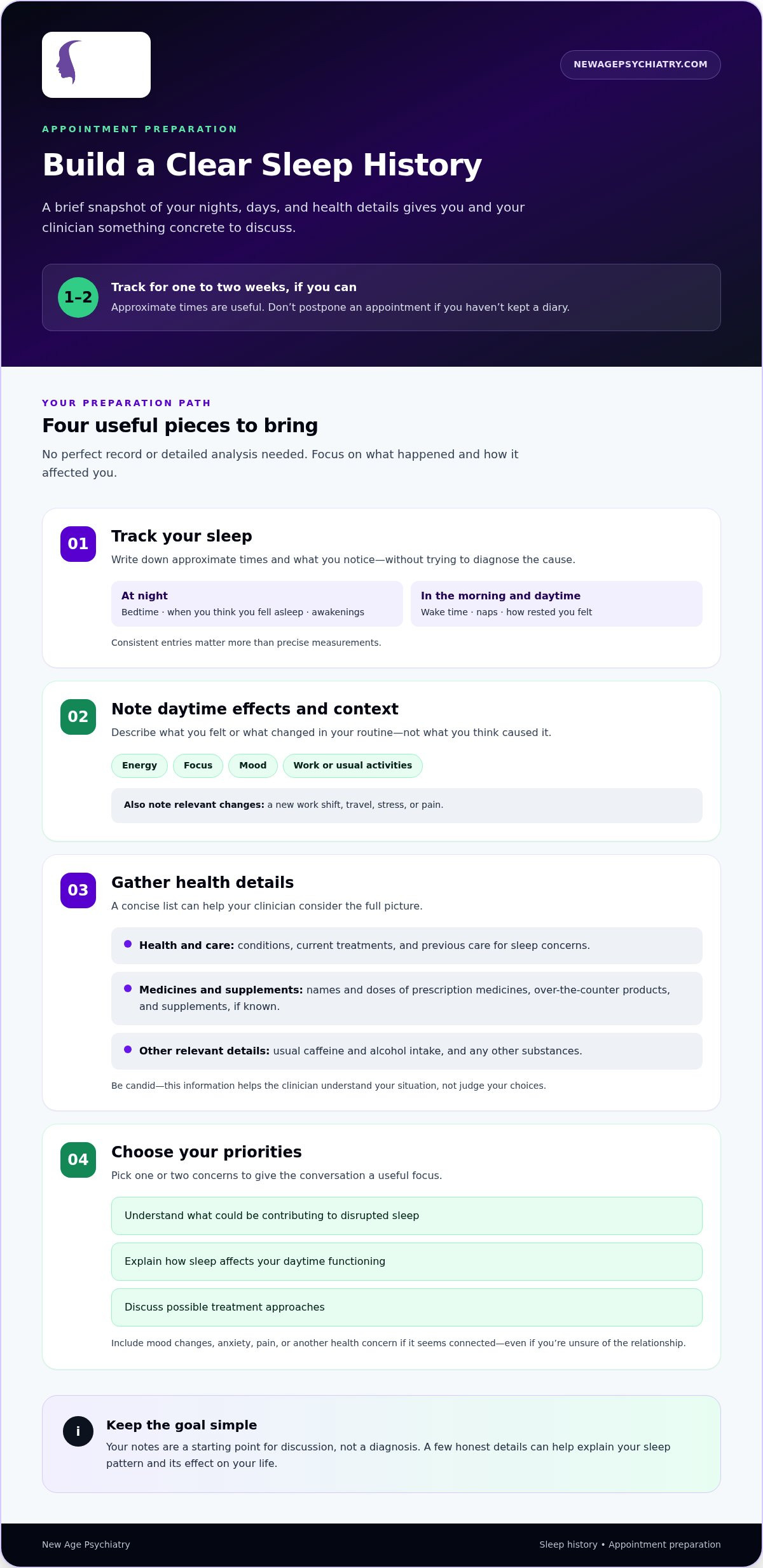
A few notes can make it easier to explain your sleep pattern without relying on memory during an appointment. You don’t need a perfect record or a detailed analysis. A brief snapshot of your nights, days, and relevant health details gives you and your clinician something concrete to discuss.
A sleep diary records patterns for discussion; it does not diagnose the cause. Keep one for one to two weeks if you can, but don’t delay an appointment because you haven’t tracked your sleep. Approximate times are useful.
What should you record before talking to a doctor?
For each day, note when you went to bed, when you think you fell asleep, when you woke for the day, and any awakenings or naps. Add a brief note about how rested you felt. Also record changes that may provide context, such as a new work shift, travel, stress, or pain. These details can help show whether your sleep problems vary with your routine or circumstances.
Focus on what happened, not what you think it means. For example, write “felt sleepy during the afternoon meeting” rather than concluding that a particular condition caused it. Note effects on energy, concentration, mood, work, or usual activities. Consistent entries matter more than precise measurements.
How can you describe health history and priorities?
Before the visit, make a concise list of health conditions, current treatments, and any previous care for sleep concerns. Include the names and doses of prescription medicines, over-the-counter products, and supplements if you know them. Note your usual caffeine and alcohol intake and any other substances that may be relevant. Be candid. This information helps the clinician consider the full picture, not judge your choices.
Choose one or two priorities to give the conversation a useful focus. You might want to understand what could be contributing to disrupted sleep, explain how it affects your daytime functioning, or review possible treatment approaches. If mood changes, anxiety, pain, or another health concern seems connected, include it, even if you’re unsure of the relationship.
- Track your sleep: Record approximate bedtimes, wake times, awakenings, naps, and how rested you feel.
- Note daytime effects: Write down sleepiness, focus or mood changes, and disruptions to work or routines.
- Gather health details: Bring your medication and supplement list, along with relevant conditions and treatments.
- Set priorities: Identify the questions or concerns you most want to address.
This preparation can make it easier to talk to a doctor about insomnia, whether your appointment is in person or virtual. Adults in Florida can discuss persistent sleep concerns and individualized next steps through a virtual psychiatric evaluation with New Age Psychiatry.
What to Say and Ask During a Doctor Visit About Insomnia
You don’t need a polished explanation to have a useful conversation. Start with the sleep difficulty, describe its pattern, and explain how it affects your everyday life. For example: “I’ve been waking during the night, and I’m more tired and unfocused during the day.” Add what you know, and be clear about what you’re still unsure of.
How can you explain insomnia without feeling embarrassed?
Use neutral, direct language, including when you discuss mood, caffeine, alcohol, medications, or other substances. These details help your clinician understand your situation. You don’t need to defend or minimize them. If you can’t identify what started the problem, say so. You might add, “I’m not sure what makes it better or worse. What information would help you understand the pattern?”
Conversation prompt to adapt, not memorize:
You: “I’ve had trouble falling asleep and often feel drained the next day. I’m not sure what’s causing it, but it’s affecting my concentration at work.”
Clinician: “Can you tell me more about when it happens and what you’ve noticed during the day?”
You: “I can. I’d also like to understand what you’re considering and what we might do next.”
Use your own words. The point is to describe your experience honestly rather than guess which answer sounds medically correct. If a detail feels sensitive, mention it plainly and ask why it matters to the assessment.
Which questions can help you understand the evaluation?
Questions can make the appointment a shared discussion. Ask what possible contributors the clinician is considering and what information supports that view. You can also ask whether another health condition, a medication, or a different sleep concern may need further evaluation. You don’t have to ask everything at once; start with the questions that matter most to you.
- “What factors might be contributing to my sleep difficulty?”
- “Is there anything in my health history or medication list that could be relevant?”
- “Could another sleep-related concern need assessment?”
- “What do you recommend as the next step, and how will we review whether it’s helping?”
If the clinician uses a term you don’t recognize, pause and ask for a plain-language explanation. Try, “Could you explain what that means for me?” or “What would that assessment involve?” You can also ask how a recommendation fits your symptoms, preferences, and health history. Understanding the reason behind a suggestion helps you make an informed decision.
Before the visit ends, make sure you understand what happens next and when progress or possible side effects will be reviewed. Knowing how to talk to a doctor about insomnia includes asking for clarity, not just sharing symptoms. A collaborative conversation leaves room for both your questions and the clinician’s assessment.
Discuss Insomnia Treatment Options Without Assuming Medication Is the Answer
There isn’t one treatment plan that fits everyone. A clinician’s recommendations depend on the evaluation, your health history, your preferences, and clinical judgment. The conversation can cover several areas. Discussing medication doesn’t mean you’ll automatically receive a prescription or that medication is right for you.
Use the appointment to understand the options and how each might fit your circumstances. These are useful topics to raise:
| Discussion topic | What you might ask |
|---|---|
| Behavioral approaches | Could a structured approach, such as cognitive behavioral therapy for insomnia (CBT-I), be relevant to my sleep pattern? |
| Contributing conditions | Could a health condition, mood concern, medication, or another sleep issue be affecting my sleep? |
| Medication review | What benefits, risks, alternatives, or follow-up would matter if we consider medication? |
CBT-I is recommended as a first-line treatment for chronic insomnia by organizations including the American Academy of Sleep Medicine and the American College of Physicians. Discuss whether it’s appropriate for you in light of your individual assessment. Reviewing medications and possible contributing conditions can also help keep the plan focused on your circumstances rather than assuming a single cause.
How can you raise concerns about sleep medication?
Be open about past experiences and concerns, including dependence, side effects, interactions, or feeling groggy the next day. Ask what benefit the clinician hopes to achieve, what risks to watch for, what alternatives may be considered, and how you’ll review whether the approach is helping. If you already take prescribed medication, don’t start, stop, or change it without discussing the change with the prescribing clinician.
What if stress, mood, or another condition may affect sleep?
Describe related symptoms and when they occur, but leave the cause open for discussion. For instance, explain whether worry tends to rise at bedtime or whether changes in mood coincide with disrupted sleep. Mental health concerns are appropriate to discuss alongside sleep; neither needs to be treated as shameful or assumed to be the explanation. If attention symptoms are also a concern, mention how and when they affect daily life so the clinician can consider them in context.
As you learn how to talk to a doctor about insomnia, remember that a collaborative plan can include questions, options, and follow-up, not only a prescription. Adults in Florida can explore New Age Psychiatry’s virtual insomnia care and discuss sleep concerns through a virtual psychiatric evaluation.
Plan Your Next Steps After an Insomnia Conversation in Florida
A useful appointment ends with a plan you can explain in your own words. Before signing off or leaving, summarize what you understood and confirm who will do what next. Ask whether you should continue tracking sleep, try an agreed approach, or arrange another evaluation, and when you’ll check in about progress.
Clarify how to raise concerns between appointments. Ask which communication route to use if sleep worsens, a treatment concern comes up, or you notice a new side effect. If the plan includes medication, make sure you know whom to contact with questions before changing how you take it. Clear follow-up steps make it easier to act without guessing.
How do you make a virtual insomnia appointment productive?
Choose a private, quiet location where you can speak openly and focus. Before the appointment, check your device and internet connection, and keep your sleep notes and current medication list within reach. Have details about supplements or other substances available too. A little preparation can help you focus on your concerns instead of troubleshooting during the visit.
Join from a place where you can stay for the appointment without interruption, and keep water or a way to jot down instructions nearby. If you’re concerned about privacy or access to the visit, raise that at the start. Telehealth arrangements and requirements can vary, so follow the instructions provided for your appointment rather than assuming every visit works the same way.
What should happen after the appointment?
Follow the plan you and the clinician agreed on, and keep noting relevant sleep patterns or treatment responses. You don’t need a complicated tracking system. Brief observations about changes in sleep, daytime functioning, or side effects can make the next discussion more specific. Use the agreed follow-up route if questions or concerns arise before then.
If the plan feels unclear, ask for a simple recap: What should I do? What should I watch for? When should we review how it’s going? You can write down the answers or repeat them back to make sure you understood. A plan is easier to follow when responsibilities and timing are clear.
Urgent safety concerns need a different response. Routine telehealth appointments are not crisis care. If you or someone else is in immediate danger, contact emergency services. In the United States, call or text 988 for support during a mental health crisis. Don’t wait for a routine appointment when urgent help is needed.
Adults in Florida seeking support with persistent sleep concerns can explore New Age Psychiatry’s virtual psychiatric care for insomnia. Knowing how to talk to a doctor about insomnia includes leaving with a clear next step and a way to follow up.
Take the Next Step Toward Better Sleep
You don’t have to explain every detail perfectly before seeking support. A conversation can begin with what feels most difficult right now, and your clinician can help you consider what to explore next. Learning how to talk to a doctor about insomnia is less about finding perfect words and more about making space for an honest discussion.
If sleep concerns are affecting your well-being, consider a virtual psychiatric evaluation. New Age Psychiatry provides remote psychiatric care for adults in Florida, including insomnia treatment through evaluation and medication management when clinically appropriate. Recommendations are individualized, and an appointment doesn’t mean medication is automatic.
Explore virtual insomnia care for adults in Florida and take a thoughtful first step toward support. Your concerns deserve attention, and a clear conversation can help you move forward.
Frequently Asked Questions
Is insomnia a valid reason to talk to a doctor?
Yes. You don’t need to prove your sleep problem is severe or arrive with a diagnosis. If poor sleep makes it harder to finish tasks, keep plans, or stay alert, those are meaningful reasons to seek guidance. Knowing how to talk to a doctor about insomnia can start with one example of what has changed in your daily life. A clinician can help decide what needs closer assessment.
How long should insomnia last before I talk to a doctor?
There’s no single waiting period that applies to everyone. Consider booking an appointment if sleep difficulties keep returning, feel distressing, get worse, or interfere with responsibilities. For example, you might explain that sleep problems began after a schedule change and continued after you returned to your usual routine. Sharing when the pattern started and how it has shifted gives a clinician useful context without requiring you to meet a fixed time threshold.
Can I ask a doctor about insomnia medication without agreeing to take it?
Yes. Asking about medication is a way to gather information, not a commitment to use it. You can ask how an option might fit your situation, what risks or interactions to consider, and what non-medication approaches could be discussed. Be clear about what matters to you, such as avoiding next-day grogginess. A prescribing decision depends on an individual assessment, and the clinician can explain the reasoning before you decide how to proceed.
What should I bring to a doctor appointment about sleep problems?
Bring information that can help fill in details you might not recall during the visit. A medication list should include prescriptions, over-the-counter products, and supplements, with doses if available. You might also bring relevant medical records or notes from previous sleep-related care. If you can’t gather everything, don’t postpone the conversation. A partial list and a few written observations can still help the clinician ask focused follow-up questions.
What happens if I forget what I wanted to say during the appointment?
It’s common to lose your train of thought during a medical visit, especially if you feel nervous. Keep a short note on your phone or paper with the two or three points you most want to address, and refer to it whenever you need to. Before wrapping up, ask the clinician to explain the agreed next step in plain language. If another concern comes to mind later, use the follow-up method discussed during the appointment.
Can I discuss insomnia with a psychiatrist through telehealth in Florida?
Adults in Florida can discuss sleep concerns through an appropriate virtual psychiatric appointment. New Age Psychiatry provides telehealth psychiatric evaluations and medication management for adults, including insomnia care. Choose a private place and keep your notes within reach so you can speak comfortably. Telehealth appointments aren’t emergency crisis care. If you face immediate danger or an urgent safety concern, contact emergency services or call or text 988 in the United States.
What if I feel embarrassed talking about insomnia or mental health?
You can use everyday language and share what helps explain your concern. Try, “I’m not sure why this is happening, but I’d like help understanding it.” You can also say that a question feels difficult to answer or ask why a detail matters. A clinician can guide the conversation. You don’t need clinical terms, an explanation of everything at once, or a complete theory about the cause.