

Can a virtual mental health evaluation for ADHD offer more than an online quiz? It can when a clinician takes time to understand your symptoms, history, and how they affect daily life. It’s reasonable to wonder whether a video appointment can be thorough, or whether difficulties with focus and organization might have another explanation.
A clinician-led evaluation is a careful assessment, not a guaranteed diagnosis. The clinician may ask when symptoms began, where they occur, and how they affect work, home life, or relationships. They may also explore whether anxiety, depression, sleep problems, or other health concerns could contribute. Your examples and questions are an important part of the discussion.
This guide explains what to expect during a virtual ADHD evaluation, what information may help you prepare, and how an assessment can inform next steps. You’ll also learn how a clinician may discuss treatment options after reviewing your needs, so you can approach the appointment with a clearer picture of the process.
Key Takeaways
- A virtual mental health evaluation for ADHD is a clinician-led assessment, not a self-test or automated quiz.
- Learn what a clinician may discuss, from symptom history to how challenges affect everyday life.
- Prepare examples of your experiences and relevant records, then confirm specific requirements with the clinic.
- Remote format alone doesn’t determine assessment quality; careful evaluation and clinical judgment matter.
- Results can guide personalized next steps, which may include considering other explanations or further assessment.
What a virtual mental health evaluation for ADHD can, and cannot, tell you
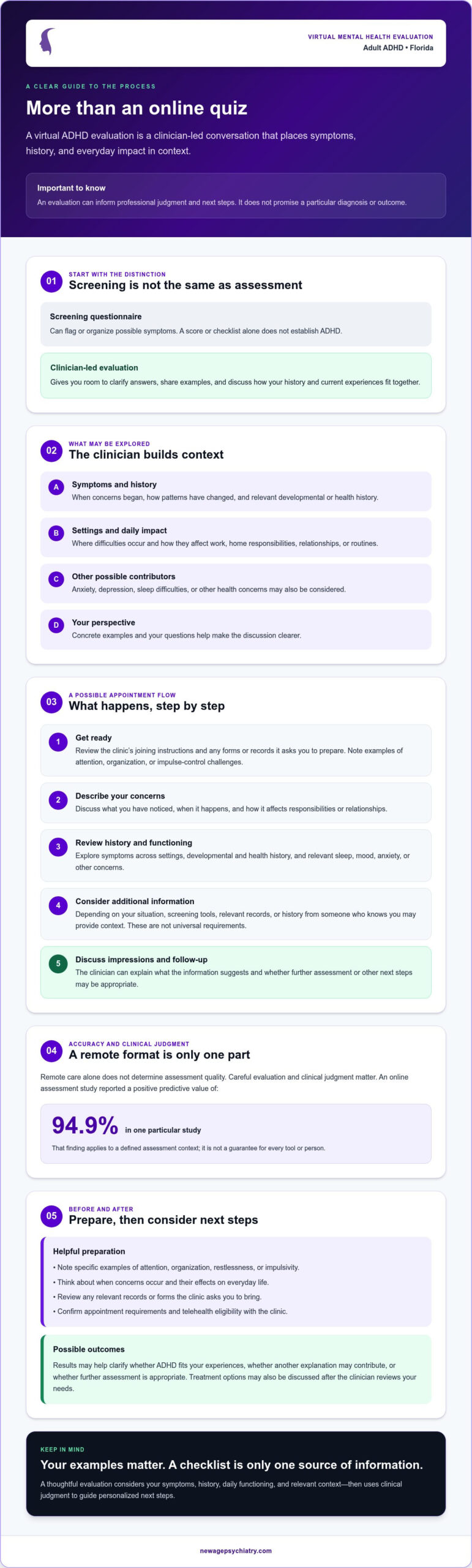
A virtual mental health evaluation for ADHD is a psychiatric assessment conducted remotely by a clinician. It gives you an opportunity to describe your concerns, answer follow-up questions, and discuss how your personal history and current experiences fit together. The clinician uses this information to guide professional judgment, not to promise a particular diagnosis or outcome.
Assessment vs. screening: A screening questionnaire can flag or organize possible symptoms. A clinical assessment places those responses in context by considering your history, daily functioning, and other relevant factors.
How a virtual ADHD evaluation differs from an online quiz
An online quiz typically asks questions and gives you a score. In a clinician-led evaluation, you can explain what a question looks like in your life, clarify your answers, and discuss patterns over time. The clinician may ask when concerns began, where they occur, and how they affect responsibilities, relationships, or routines.
Questionnaires can help organize a conversation, but no single checklist establishes ADHD on its own. A clinician may also consider whether anxiety, depression, sleep difficulties, or another health concern could contribute to similar challenges. For background on adult presentation and diagnostic history, see Adult attention deficit hyperactivity disorder.
Who may consider an adult ADHD evaluation in Florida?
Adults may consider an evaluation when concerns about attention, organization, restlessness, or impulsivity interfere with everyday life. For example, you might regularly lose track of work tasks, struggle to manage household responsibilities, or find that impulsive decisions cause problems. These experiences are worth discussing, but they don’t confirm ADHD by themselves.
New Age Psychiatry provides virtual ADHD care for adults in Florida, not pediatric evaluations. Before scheduling, confirm your telehealth eligibility and any appointment requirements with the practice. An assessment can help clarify whether ADHD fits your experiences or whether another explanation or further evaluation may be appropriate.
What happens during a virtual ADHD evaluation, step by step?
A virtual mental health evaluation for ADHD often follows a structured conversation, though the clinician may adapt it to your needs. It isn’t simply a checklist. The appointment gives you and the clinician time to review your concerns, clarify details, and consider what may be helpful next.
- Get ready for the appointment. Check the clinic’s instructions for joining the visit and any forms or records it wants you to review. Note examples of attention, organization, or impulse-control challenges and how they affect your routine.
- Describe what brings you in. The clinician may ask what you’ve noticed, when it happens, and how it affects work, relationships, or other responsibilities.
- Review relevant history and functioning. You may discuss developmental and health history, along with symptoms across different settings. The clinician may ask about sleep, mood, anxiety, or other concerns that could inform the assessment.
- Consider additional information. Depending on your situation, the clinician may use screening tools or discuss relevant records and history from someone who knows you. These are possible sources of context, not universal requirements.
- Discuss impressions and follow-up. The clinician can explain what the information suggests and whether further assessment or other next steps may be appropriate.
What the clinician may ask about
Questions may cover patterns such as losing track of tasks, difficulty prioritizing, interrupting, or acting before considering consequences. You may be asked whether these concerns occur in more than one part of life and what effects they have. Concrete examples can make the conversation clearer, even if you’re unsure how to interpret them.
The clinician may also explore earlier experiences and relevant health background. A study of a particular online assessment reported a 94.9% positive predictive value, but that result isn’t a guarantee for every tool or person. Research shows online assessments can be highly accurate in a defined context.
How history and screening tools fit into the assessment
A questionnaire can help organize information, while your answers and history help the clinician interpret it. If supporting records or collateral history may be useful, the clinician can discuss that with you. Not every patient needs to complete the same forms or provide outside documentation.
Before your appointment, ask the practice what to prepare and how the visit works. Adults in Florida considering ADHD care can review virtual ADHD evaluation and treatment details with New Age Psychiatry and confirm telehealth eligibility directly with the practice.
Is a virtual ADHD evaluation accurate enough for diagnosis?
It can be, but a remote format alone doesn’t show whether an evaluation is thorough. The important questions are whether a clinician gathers and weighs relevant information, asks follow-up questions, and applies clinical judgment. A video appointment shouldn’t reduce the assessment to a questionnaire or a quick yes-or-no decision.
A screening result can raise questions, but only a clinician’s full assessment can support a diagnostic conclusion. Screening tools may help organize symptoms, but they don’t replace a review of your history, day-to-day functioning, and other factors that could affect attention or behavior.
What supports a careful adult ADHD assessment?
A clinician may consider patterns of inattention, hyperactivity, or impulsivity, how they affect daily functioning, and whether relevant signs were present earlier in life. The DSM-5-TR provides diagnostic criteria, but applying them involves more than matching a list of symptoms. Your experiences and context matter.
Sleep problems, anxiety, depression, and physical health concerns can sometimes resemble or complicate ADHD symptoms. Exploring them helps the clinician consider whether another factor, or more than one factor, may be involved. This is part of developing a thoughtful clinical impression, not a reason to dismiss your concerns.
Telehealth is already part of adult ADHD care in the United States. The CDC’s report on CDC data on telehealth for ADHD found that nearly half of adults with ADHD had used telehealth for the condition, while about 9% had received their diagnosis exclusively through telehealth. These figures describe reported use; they don’t guarantee that every remote assessment is suitable or equally comprehensive.
When a remote appointment may need additional steps
Some histories are straightforward to discuss by video. In other cases, important questions may remain, such as when symptoms began or whether they occur across settings. Complex concerns, incomplete information, or possible overlapping conditions may lead the clinician to ask follow-up questions, review relevant records, or recommend further assessment.
That doesn’t mean the virtual appointment has failed. It means the clinician is considering what information is needed to make a responsible decision. A single appointment may not resolve every case, and a diagnosis shouldn’t be promised based on the remote format alone. The clinician determines whether virtual care is appropriate for your needs and explains reasonable next steps if more evaluation is needed.
How to prepare for your virtual ADHD evaluation
A little preparation can help you explain what’s been difficult and make the appointment more focused. You don’t need to arrive with a diagnosis or perfectly organized records. Bring useful examples, share what you know, and let the clinician guide the discussion. Requirements vary, so check with the practice about forms, records, and appointment setup before your virtual mental health evaluation for ADHD.
Information to have ready before the appointment
Make brief notes rather than trying to create a complete history. Consider when you first noticed concerns, where they tend to arise, and how they affect daily life. For example, you might describe losing track of tasks at work, difficulty keeping up with household routines, or trouble following conversations. Specific situations are often easier to discuss than broad labels such as “disorganized.”
- Symptoms and examples: Note attention, organization, restlessness, or impulsivity concerns, and their effects on work, home, relationships, or other responsibilities.
- Health background: Have a list of current medications and relevant medical or mental health history available. Include questions about sleep, mood, or other concerns you want to raise.
- Records and forms: Ask the practice whether it wants forms or supporting records before the appointment. Don’t assume outside documentation is required.
For more guidance on preparing for remote care, review this telehealth services for ADHD preparation guide.
Set up a private, workable telehealth space
Choose a place where you can speak comfortably and limit interruptions. Check your internet connection and device ahead of time, and keep notes and questions within reach. If privacy at home is difficult, consider another quiet, private location where you can talk freely. These steps can make it easier to stay focused and share details you might otherwise forget.
It’s reasonable to ask how the appointment will work and what to do if you have technical trouble. If you’re deciding what kind of clinician to consult, this adult ADHD psychiatrist guide can help you think through provider selection.
Adults in Florida considering virtual ADHD care can review New Age Psychiatry’s ADHD evaluation and treatment information and confirm appointment requirements and telehealth eligibility directly with the practice.
What happens after a virtual ADHD evaluation?
After a virtual mental health evaluation for ADHD, the clinician should discuss what they learned, what remains uncertain, and what next steps may fit your needs. The outcome isn’t always a diagnosis. The assessment may point toward ADHD, suggest that another concern needs attention, or show that more information would help clarify the picture.
Understanding results and possible next steps
Your clinician may explain how your reported symptoms, history, and day-to-day functioning informed their impression. If the available information doesn’t support a clear conclusion, they may recommend further assessment or follow-up. That isn’t a dismissal of your experience; it can be part of making sure recommendations reflect a fuller understanding.
If ADHD is identified, the clinician can discuss an individualized care plan and answer questions about available treatment approaches. Medication management may be an option, but it isn’t automatic. A prescription or specific treatment recommendation depends on assessment findings, health history, clinical judgment, and whether the option is appropriate for you. Ask what the clinician recommends, why, and what alternatives or follow-up may be relevant.
Take time to clarify anything that feels uncertain. You might ask what the assessment does and doesn’t establish, whether additional information is needed, and how to follow up with questions. You don’t need to decide on a treatment approach before you understand the clinician’s recommendations.
Considering virtual ADHD care with New Age Psychiatry
New Age Psychiatry provides virtual psychiatric evaluations and ADHD care for adults in Florida, along with medication management. Recommendations are based on an individualized psychiatric assessment. If you’re considering the practice, ask about the evaluation process, follow-up, and current medication policies. An evaluation doesn’t guarantee a diagnosis, prescription, or particular outcome.
If you’re looking for adult ADHD care, contact New Age Psychiatry to learn whether its virtual services may fit your needs and confirm telehealth eligibility. The practice doesn’t provide emergency or crisis care. If you or someone else may be in immediate danger, contact local emergency services. For urgent emotional distress, reach out to an appropriate crisis line or crisis service in your area.
Take the Next Step Toward Clearer Answers
A virtual mental health evaluation for ADHD can help you explore ongoing concerns through a clinician-led assessment, not a quiz score alone. Bringing examples of how symptoms affect daily life, relevant health history, and questions can help make the conversation more focused. The evaluation may clarify whether ADHD fits your experiences or whether another explanation or further assessment deserves consideration.
New Age Psychiatry provides virtual psychiatric evaluations and medication management for adults, including dedicated ADHD diagnosis and treatment for patients in Florida. Recommendations are individualized, and an evaluation doesn’t guarantee a diagnosis, prescription, or particular treatment plan.
If you’re considering an adult ADHD evaluation, explore virtual ADHD evaluation options with New Age Psychiatry and confirm whether the practice’s services and telehealth requirements fit your needs. Contact the practice to ask about the evaluation process and eligibility.
Frequently Asked Questions
Is a virtual mental health evaluation accurate enough to diagnose ADHD?
A virtual mental health evaluation for ADHD can support a clinician-led assessment when remote care is appropriate, but accuracy depends on a thorough evaluation and relevant clinical information. A screening questionnaire alone can’t establish ADHD. The clinician considers your symptoms, history, and how concerns affect daily functioning, then decides whether the information is sufficient. If questions remain, they may recommend follow-up or additional assessment rather than making a premature diagnosis.
What happens during an online ADHD evaluation for adults?
An online ADHD evaluation usually includes a conversation about your symptoms, when they began, and how they affect daily life, along with relevant health history. The clinician may ask follow-up questions and use questionnaires as supporting information. The process and appointment details can vary, so not every adult follows the same sequence. Before your visit, ask the practice whether it requires specific forms or records and how to share them.
Can ADHD be diagnosed in one virtual appointment?
It depends on your history, concerns, and the information available to the clinician. Some evaluations may need follow-up questions, relevant records, or further assessment before a conclusion is appropriate. A diagnosis in one visit shouldn’t be assumed or promised. A careful evaluation focuses on developing a supported clinical understanding, not meeting a predetermined appointment count. Your clinician can explain what they can conclude and whether they need more information to guide next steps.
What should I prepare for a virtual ADHD evaluation?
Write down specific examples of attention, organization, or impulsivity concerns and how they affect work, home, or relationships. Gather relevant health history and a list of current medications, and note questions you want to ask. Choose a private space with a reliable internet connection for the appointment. Preparation requirements differ, so contact the practice to confirm whether it needs forms or records before your visit.
Can a virtual ADHD evaluation include medication management?
Medication management may be discussed if it’s clinically appropriate, but an evaluation doesn’t guarantee a prescription or a particular treatment plan. The clinician considers assessment findings, health history, and individual needs before making recommendations. New Age Psychiatry offers psychiatric medication management for adults, including adults seeking ADHD care. Ask the practice about current eligibility and prescribing policies, since medication options and recommendations depend on an individualized clinical assessment.
Can I have a virtual ADHD evaluation if I live in Florida?
New Age Psychiatry provides virtual psychiatric care focused on Florida, including adult ADHD evaluation and treatment. Confirm current service availability, your eligibility, and any location-related requirements directly with the practice before arranging care. The practice serves adults and doesn’t provide pediatric care or emergency crisis intervention. If you’re facing an immediate emergency, contact local emergency services or an appropriate crisis resource rather than relying on a routine virtual evaluation.