What if the most effective place to begin your trauma recovery isn’t a clinical waiting room, but your own living room? For many survivors, the traditional medical environment feels like a minefield of triggers rather than a sanctuary for healing. This is why telehealth medication management for ptsd has transformed from a temporary convenience into a clinical gold standard. You might worry that virtual care lacks the depth of in-person visits, but research from the Journal of Clinical Psychiatry shows no significant difference in treatment satisfaction or symptom improvement between remote and face-to-face care.
It’s understandable to feel overwhelmed by the process of finding a specialized provider in Florida or wondering which medications actually work for your specific symptoms. We’re here to clear the confusion and show you how modern trauma care prioritizes your comfort and safety. You’ll discover the reality of virtual psychiatric evaluations in 2026, including the latest federal extensions for prescribing controlled medications. We’ll also look at modern options like low-dose ketamine and sleep-focused treatments, giving you a clear path toward reclaiming your peace of mind from the safety of home.
Key Takeaways
- Learn why virtual sessions can foster deep, trauma-informed connections without the stress and triggers of a traditional clinical waiting room.
- Discover how telehealth medication management for ptsd provides a safe, effective alternative to in-person exams through specialized virtual diagnostic evaluations.
- Understand the unique benefits for Florida residents, especially those in rural areas seeking expert trauma specialists without the burden of travel.
- Get practical steps on preparing your safe space and medical history for a productive and secure remote psychiatric assessment.
- Explore modern treatment options, including personalized medication plans and low-dose ketamine therapy, tailored specifically for adult trauma recovery.
Common Myths About Online PTSD Treatment
Many survivors hesitate to seek help because they believe virtual care is a “lite” version of traditional psychiatry. This misconception often keeps people trapped in a cycle of avoidance, fearing that a remote session won’t address the gravity of their experiences. In reality, telehealth medication management for ptsd offers a robust, clinically validated path to recovery that respects the unique needs of trauma survivors. By debunking these common myths, we can focus on the clinical advantages of modern, remote care.
The “Screen Barrier” Myth
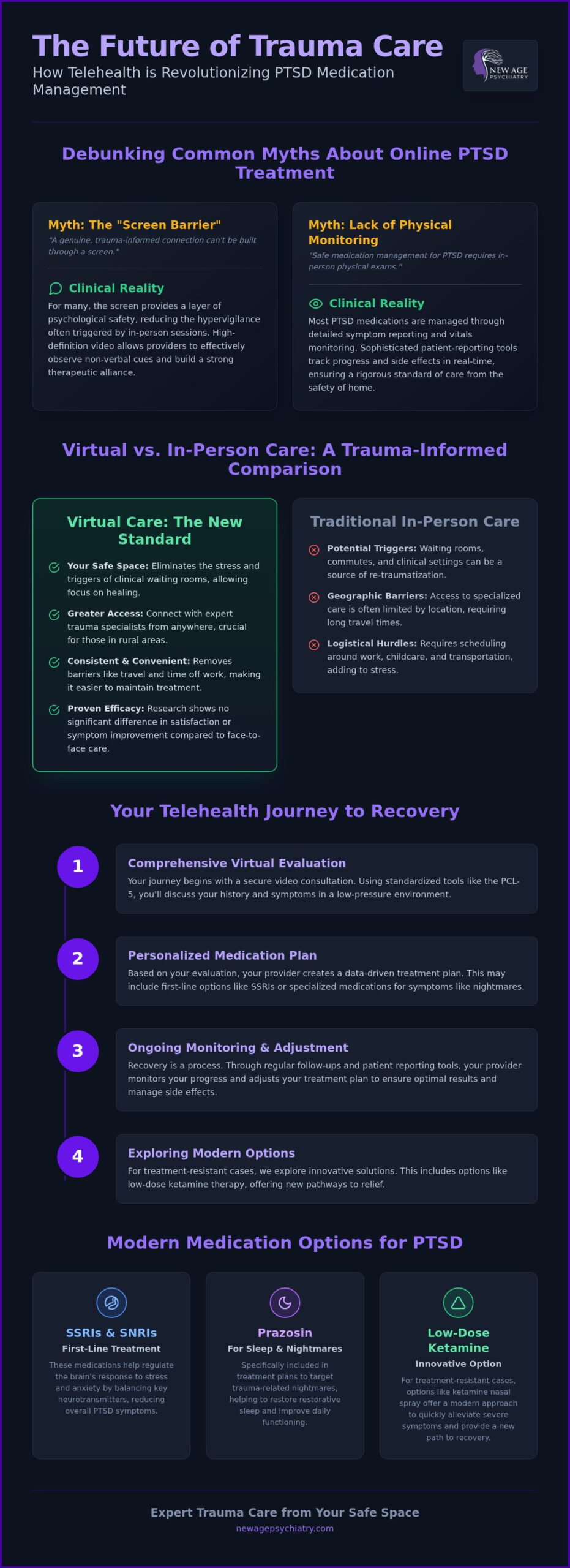
A frequent concern is that virtual doctors can’t build a genuine, trauma-informed connection through a screen. Some believe that the lack of physical presence hinders the therapeutic alliance. However, high-definition video technology allows providers to observe nuanced non-verbal cues, micro-expressions, and changes in tone just as effectively as in-person visits. For many with PTSD, the physical distance of a screen actually serves as a clinical benefit. It can reduce the hypervigilance often triggered by being in a small, enclosed room with a stranger. Research into Internet-Based PTSD Treatments confirms that remote interventions are highly effective for complex trauma, providing a layer of psychological safety that traditional offices cannot match.
Safety and Physical Monitoring in Telehealth
Another myth suggests that PTSD medication requires physical exams that can only happen in an office. While some conditions require hands-on checks, most medications used for trauma, such as SSRIs or sleep aids, are managed through detailed symptom reporting and vitals monitoring. Patients often find that ptsd medication online is easier to maintain because the barriers to attendance are removed. We use sophisticated patient-reporting tools to track side effects and progress in real-time. Florida telehealth regulations for 2026 maintain rigorous standards to ensure that every virtual prescription is backed by a thorough psychiatric evaluation. This model prioritizes safety while allowing you to remain in a controlled, comfortable environment.
The reality is that telehealth isn’t just for mild anxiety. It’s a sophisticated tool for managing complex trauma. By receiving care in your own home, you eliminate the “waiting room experience,” which is often a source of significant re-traumatization. This “Safe Space” advantage allows you to focus entirely on your recovery rather than managing the stress of a commute or a clinical setting. Telehealth medication management for ptsd creates a consistent, reliable partnership that meets you exactly where you are, both geographically and emotionally.
How Telehealth Medication Management Works for PTSD
Telehealth medication management for ptsd is a specialized, ongoing clinical partnership designed to stabilize your symptoms and support long-term recovery. It goes beyond simply receiving a prescription; it’s a collaborative process where your provider monitors your response to treatment and adjusts care based on real-time data. This modern approach ensures that you receive the same level of clinical rigor as an in-person visit while remaining in an environment where you feel most secure.
The Virtual Evaluation Process
Your journey begins with a comprehensive psychiatric evaluation conducted via secure video. During this session, you’ll use standardized trauma screening tools, such as the PCL-5, to quantify your symptoms in a digital format. This approach allows you to discuss your medical history and prior trauma in a low-pressure environment. Effective medication management is a proactive, data-driven approach to symptom relief that prioritizes your individual comfort level. Clinical research on Telemental Health for PTSD supports this model as a reliable way to deliver evidence-based care without the stress of a commute.
Providers typically consider first-line treatments like SSRIs (Selective Serotonin Reuptake Inhibitors) or SNRIs (Serotonin-Norepinephrine Reuptake Inhibitors). These medications help regulate the brain’s response to stress and anxiety by balancing neurotransmitters. For those struggling with trauma-related nightmares, prazosin is often included to improve sleep quality. For treatment-resistant cases, innovative options like ketamine nasal spray offer a modern alternative that targets different neural pathways to provide rapid relief from intrusive symptoms.
Ongoing Monitoring and Dose Adjustments
Once you start a treatment plan, the first 4-6 week follow-up window is critical. This period allows your specialist to evaluate how your body is adapting to the new medication. We focus on tracking specific symptoms such as:
- Frequency of intrusive thoughts or flashbacks.
- Reductions in hypervigilance and startle responses.
- Improvements in sleep patterns and nightmare frequency.
- Changes in emotional numbing or feelings of detachment.
Managing side effects is straightforward through direct, secure messaging and scheduled video calls. This continuous loop of communication ensures that your treatment remains personalized and effective at every stage. If you’re ready to start this journey, you can schedule a virtual consultation with a specialist today to discuss your options.
Virtual vs. In-Person Care: Which is Right for You?
Choosing between virtual and in-person care is a significant decision in your recovery journey. While traditional clinics serve a purpose, the physical journey to an office can inadvertently trigger the very symptoms you’re trying to manage. For many trauma survivors, the “Waiting Room Experience” carries a heavy psychological cost. Sitting in a public space with strangers often spikes hypervigilance, making it difficult to engage honestly once you finally see a provider. Telehealth medication management for ptsd removes these environmental stressors, allowing you to prioritize your mental energy for the actual session.
The Clinical Benefit of the Home Environment
Receiving care in your own home offers more than just convenience; it provides a distinct clinical advantage. When you’re in a “Safe Space,” your nervous system is more likely to remain regulated. This baseline of comfort often leads to more honest disclosure of trauma symptoms because you aren’t fighting the “White Coat Hypertension” effect common in clinical settings. You have the freedom to have a support pet nearby or a trusted family member in the next room. This sense of control is essential when discussing difficult memories or adjusting to new medications.
Logistics and Florida-Specific Regulations
For Florida residents, especially those in rural areas or with limited mobility, virtual care bridges a massive gap in accessibility. Finding a local specialist can be challenging, often resulting in three-month waitlists for an initial appointment. In contrast, online psychiatry for adults typically offers much faster access to care. It’s vital to ensure your provider is licensed specifically in Florida to comply with 2026 regulations. Modern telehealth technology for PTSD care allows for seamless coordination, where digital prescriptions are sent directly to your local pharmacy for immediate pickup.
Privacy is another critical factor. Many people avoid seeking help because they fear the stigma of being seen at a local psychiatric clinic. Virtual care ensures your treatment remains entirely private. However, telehealth isn’t the right fit for everyone. If you are experiencing an active crisis or require intensive inpatient care, traditional emergency services are necessary. For most adults seeking stable, long-term telehealth medication management for ptsd, the virtual model provides a discreet and highly effective path forward.
Preparing for Your Virtual PTSD Evaluation
Anxiety before a psychiatric evaluation is a natural response, especially when you’re preparing to discuss sensitive trauma. Preparing your environment and information ahead of time can significantly lower this stress and ensure your session is as productive as possible. Telehealth medication management for ptsd works most effectively when you feel empowered and ready to engage from a place of stability and focus.
Start by securing a private, quiet space where you feel completely safe to speak without being overheard. This is the foundation of your recovery environment. Next, gather your medical history. Be ready to discuss any previous ptsd medication online you’ve tried, including what helped and what caused unwanted side effects. Having these details ready prevents the frustration of trying to remember specific names or dosages during your appointment.
Technical issues are a common source of session-start anxiety, so test your camera, microphone, and internet connection at least ten minutes before your call. Finally, write down your primary goals. Are you seeking better sleep, fewer flashbacks, or improved mood stability? Having these goals written down ensures your provider can tailor your treatment plan to your most urgent needs.
Creating Your “Virtual Safe Zone”
Lighting should be soft but clear enough for your provider to see your facial expressions, which helps them monitor your emotional state. Choose a seat that makes you feel grounded, perhaps with a blanket or a stress ball nearby to use during difficult parts of the conversation. Your doctor will provide a secure, HIPAA-compliant platform to protect your privacy. If you live with others, using headphones or a white noise machine outside your door can help manage potential interruptions during sensitive trauma discussions.
Questions to Ask Your Telehealth Psychiatrist
Don’t hesitate to ask your provider about their specific experience with trauma-informed care and how they handle complex cases. If you struggle with focus or executive function alongside your trauma symptoms, you might inquire about alternative pathways like dopamine agonists and adhd to see if comorbidities are impacting your progress. It’s also vital to clarify the process for emergency contact and how to receive support between scheduled sessions.
Taking these steps puts you in control of your healing process from day one. If you’re ready to begin in a safe, controlled environment, book your virtual PTSD evaluation today to start your personalized recovery path.
Expert Trauma Care from Your Safe Space: The New Age Psychiatry Way
New Age Psychiatry approaches trauma recovery by blending clinical expertise with a commitment to patient-centered technology. We understand that for many adults, the path to healing is often blocked by the logistical and emotional hurdles of traditional medicine. Our model for telehealth medication management for ptsd is built to dismantle those barriers. We provide a space where you’re treated as a partner in your own care, rather than just a diagnosis on a chart. This partnership is grounded in transparency and mutual respect, ensuring you feel supported at every stage of your treatment.
Our practice focuses exclusively on adult mental health, ensuring our specialists are deeply attuned to the complexities of adult-onset or long-term trauma. By offering personalized medication plans that may include traditional options or innovative treatments like low-dose ketamine therapy, we provide a comprehensive toolkit for recovery. We act as your “guide-on-the-side,” offering the professional oversight you need while empowering you to take the lead in your daily management. This approach fosters a sense of agency that is often vital for those recovering from the loss of control associated with ptsd.
Why Florida Adults Choose Our Virtual Practice
Residents across the Sunshine State often face significant challenges when seeking specialized mental health care. Whether it’s the exhaustion of navigating Florida traffic or the anxiety of sitting in a public waiting room, the physical journey can be a deterrent to treatment. New Age Psychiatry eliminates these stressors by bringing high-level psychiatric care directly to your home. You gain direct access to specialists who understand the nuances of telehealth medication management for ptsd without the need for a long commute or a crowded office. Our process is designed to be seamless, moving you from your initial interest to your first prescription with speed and calm efficiency.
Taking the First Step Toward Recovery
We believe that the hardest part of recovery shouldn’t be the paperwork. You can book your evaluation directly through our website without the need for a lengthy referral process from a primary care doctor. Once you schedule your appointment, you’ll receive clear instructions and support within the first 24 hours, ensuring you know exactly what to expect. This responsiveness is part of our commitment to reducing the uncertainty that often accompanies starting a new treatment plan. We prioritize your time and your privacy, allowing you to focus entirely on the work of healing.
Reclaiming your peace of mind is a journey that requires a reliable, modern partner. If you’re ready to move forward from the comfort and security of your own home, Schedule your virtual PTSD evaluation with New Age Psychiatry today.
Reclaiming Your Peace from the Safety of Home
You’ve seen that remote care isn’t just a backup plan; it’s a clinically superior environment for many survivors. By choosing telehealth medication management for ptsd, you’re opting for a model that respects your triggers and values your privacy. From utilizing trauma-informed screening tools to exploring innovative options like low-dose ketamine, modern psychiatry is more accessible than ever for Florida residents. You don’t have to navigate the stress of traffic or clinical waiting rooms to find a specialist who understands your history.
If you’re ready to take the next step, our team is here to act as your tech-savvy medical ally. We provide specialized Florida-licensed psychiatric care tailored specifically to adult trauma. You can Begin Your Trauma Recovery Journey with a Virtual PTSD Evaluation today. Our focus remains on your comfort and long-term stability. Your path to recovery is straightforward, supportive, and starts exactly where you feel most secure.
Frequently Asked Questions
Is telehealth medication management as effective as in-person for PTSD?
Yes, telehealth is clinically proven to be as effective as in-person visits for managing trauma symptoms. A 2022 meta-analysis found no significant differences in PTSD severity or treatment satisfaction between real-time virtual care and traditional office visits. For many, telehealth medication management for ptsd is actually superior because it eliminates the stress of commuting and the potential for re-traumatization in clinical waiting rooms. You receive the same rigorous care from the security of your home.
Can a telehealth psychiatrist prescribe controlled substances for PTSD in Florida?
Yes, Florida-licensed psychiatrists can prescribe controlled substances via telehealth through December 31, 2026. This follows the extension of federal flexibilities by the DEA and HHS. While some Schedule II substances have specific state-level restrictions, many medications used in trauma recovery are accessible through virtual care. Your provider will conduct a thorough psychiatric evaluation to ensure any prescription is safe, legal, and appropriate for your specific needs under current Florida law.
What medications are typically used for PTSD in a telehealth setting?
Providers typically utilize a range of evidence-based medications to address specific trauma symptoms. Common options include SSRIs and SNRIs to help regulate mood and anxiety levels. Prazosin is frequently used to manage trauma-related nightmares and improve sleep quality. Additionally, New Age Psychiatry offers innovative treatments like low-dose ketamine therapy for adult patients who haven’t found relief through traditional pathways. Every plan is personalized to your unique medical history and recovery goals.
How do I know if my PTSD requires medication or just therapy?
The decision to start medication is usually made during your initial diagnostic evaluation. While therapy is a vital tool for processing trauma, medication can provide the neurological stability needed to engage in that work effectively. If you’re experiencing debilitating flashbacks, severe insomnia, or constant hypervigilance, telehealth medication management for ptsd can help lower your baseline stress. This allows you to function more comfortably in your daily life while you pursue long-term healing.
What happens if I have a panic attack during my virtual session?
Your psychiatrist is a trained medical professional prepared to support you through any emotional distress during a session. If a panic attack occurs, your provider will guide you through grounding exercises and breathing techniques until the symptoms subside. The benefit of virtual care is that you’re already in a controlled, safe environment. We prioritize your safety and will never rush you through a difficult moment, ensuring you feel regulated before the session concludes.
Is virtual PTSD care covered by insurance in Florida?
Coverage for virtual psychiatric care varies by provider and plan. While New Age Psychiatry does not accept insurance for our professional services, many patients find our straightforward fee structure accessible. You can still use your health insurance to cover the cost of your medications at your local Florida pharmacy. We recommend contacting your insurance carrier to see if they offer reimbursement for out-of-network telehealth services through a “superbill” or similar process.
Can I switch from an in-person doctor to a telehealth psychiatrist for my PTSD meds?
You can absolutely transition your care to a virtual provider. Many adults in Florida make this switch to avoid waitlists or to find specialists who focus specifically on trauma-informed care. During your first virtual evaluation, you’ll discuss your previous treatment history and any medications you’re currently taking. This ensures a seamless transition and allows your new provider to refine your treatment plan based on your current symptoms and past experiences.
What should I do if I have a crisis between virtual appointments?
If you experience a mental health emergency, you must seek immediate help through crisis-specific resources. New Age Psychiatry specializes in ongoing medication management and does not offer emergency crisis intervention. In the event of a crisis between scheduled appointments, please call or text 988 for the Suicide & Crisis Lifeline, contact local emergency services, or go to the nearest emergency room. We focus on your long-term stability rather than acute emergency response.